
Big Kid Room Transition: When and How
Learn when and how to transition your child from a crib to a big kid bed. This guide helps you identify readiness signals, choose the right bed type, and plan for a smooth, safe transition for your growing child.
- Identify transition signals like climbing out, reaching 35 inches tall, or your child's developmental readiness.
- Avoid making the switch during other major life changes; aim for 6-8 weeks before or after big events.
- Choose the right bed for your child: consider toddler beds for ease, twin beds for longevity, or floor beds for independence.
- Prioritize safety by transitioning immediately if your child is climbing out of the crib to prevent falls.
- Encourage your child's buy-in by involving them in choices, making the transition smoother and more exciting.
It started with a tiny foot wedged between the crib slats at 2 AM. Then the morning I walked in to find my toddler perched on top of the crib rail like a gymnast on a balance beam, grinning proudly while my heart stopped. That was the week we realized: the crib days were over, and the big kid room era was about to begin. If you are standing in a nursery wondering how on earth to transform it into a space that works for a growing, opinionated, increasingly mobile small human, you are in the right place.
The transition from nursery to big kid room is more than swapping furniture. It is a complete rethinking of the space—from safety to storage to the emotional shift of watching your baby grow up. This guide covers the timing, the practical steps, and the design choices that make the process smooth for both you and your child.
In this article (5 sections)
When to Make the Switch: Reading the Signs
There is no universal age for the big kid room transition, and anyone who tells you “exactly at age 2” is oversimplifying. The right time depends on your specific child, your family situation, and sometimes pure necessity. That said, there are clear signals that the time has come.
Safety signals are the most urgent. If your child is climbing out of the crib—or attempting to—it is time to transition regardless of age. A fall from crib height onto a hard floor is a genuine injury risk. The American Academy of Pediatrics notes that once a child reaches 35 inches tall, most standard cribs are no longer safe. If you have a DaVinci Kalani or Graco Benton convertible crib, now is when that toddler rail conversion kit earns its keep.
Developmental readiness matters too. Around ages 2.5 to 3.5, many children start expressing opinions about their space—wanting to choose their bedding, asking for specific colors, or requesting a “big kid bed” like an older sibling or friend has. This buy-in is golden. A child who is excited about their new room transitions far more smoothly than one who feels forced out of their cozy crib.
Practical triggers include a new baby arriving (and needing the crib), potty training (when kids need to get out of bed independently to reach the bathroom), or simply outgrowing the nursery storage systems. If your three-year-old’s wardrobe no longer fits in a single dresser and the toy collection has overtaken the room, it is time for a space overhaul.
One timing tip from experience: do not make the switch during another major transition. Starting daycare, welcoming a new sibling, or moving to a new house are already overwhelming. If possible, complete the room transition at least six to eight weeks before or after another big change.
The Bed: Choosing the Right Sleep Setup
The bed is the centerpiece of the big kid room, and you have more options than you might think. Each has trade-offs in cost, longevity, and how well it suits your child’s temperament.
Toddler beds ($60–$150) use the same crib-size mattress your child already sleeps on, which makes them the easiest and cheapest transition. The DaVinci Sleigh Toddler Bed ($80) and Dream On Me Classic ($65) both sit low to the ground with built-in side rails. The downside: your child will outgrow a toddler bed by age 5–6, so you are buying a bridge piece.
Twin beds ($100–$300 for the frame, $80–$150 for the mattress) are the most practical long-term choice. A twin bed can last from age 3 through the teenage years. The IKEA KURA reversible bed ($230) is a parent favorite because it can be a low bed initially and later flip to become a loft bed as your child grows—brilliant space-saving design for smaller rooms. For a simpler option, the Zinus Wen wood platform bed ($120 on Amazon) needs no box spring and has a clean, modern look.
Montessori floor beds are simply a twin mattress placed on the floor or on a very low frame (the South Shore Step One platform at $110 sits just 7 inches off the ground). This approach eliminates fall risk entirely and gives children independence to get in and out of bed freely. It is particularly popular for children under 3 who are transitioning early.
No matter which bed you choose, add removable bed rails for the first three to six months. The Regalo Swing Down bed rail ($22 at Target) folds flat for easy bed-making and prevents nighttime rollovers. Even confident climbers appreciate the security of a rail during those first weeks in a new sleep space.
Redesigning Storage for a Growing Child
Nursery storage was designed for diapers, onesies, and swaddle blankets. Big kid storage needs to handle a dramatically different inventory: an expanding wardrobe with separate tops and bottoms, a growing toy collection, books, art supplies, dress-up clothes, and whatever your child’s current obsession demands (dinosaur figurines, Magna-Tiles, stuffed animals numbering in the dozens).
The IKEA KALLAX shelf ($70 for the 4×2 unit) is arguably the most versatile piece of kids’ room furniture available. Its cubbies accept standard DRÖNA fabric bins ($6 each) for hidden storage and leave some cubbies open for display. Place it horizontally at child height so your kid can access everything independently—this is key for building tidying habits.
For clothing, shift from a single dresser to a dresser-plus-closet system. Install a low closet rod (a tension rod at 30–36 inches high costs $8–12) so your child can hang their own jackets, dress-up clothes, and frequently worn items. Use the IKEA SKUBB hanging organizer ($10) for folded items like jeans, leggings, and pajamas. Keep the dresser for underwear, socks, and seasonal items.
Create a dedicated art station even if it is just a single shelf. A cup holder with crayons, a stack of paper, and a small bin of washable markers gives creative supplies a home instead of letting them migrate across the house. The IKEA FLISAT wall storage ($15) mounts beside a desk or table and holds rolls of paper, cups of supplies, and small books beautifully.
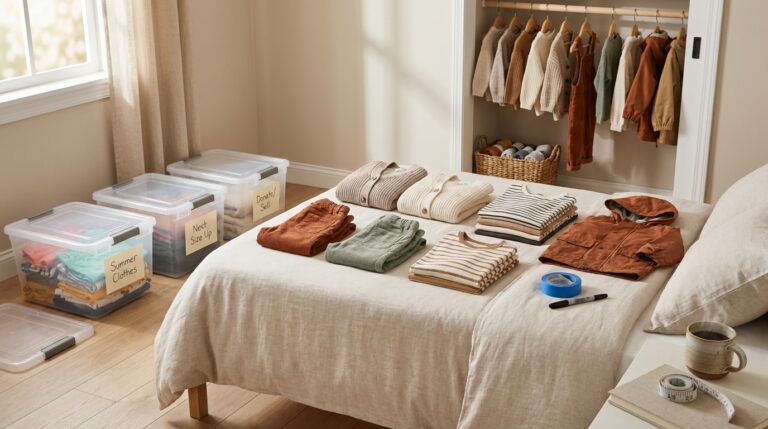
For toys, implement the rotation system. Keep one-third of toys accessible and store the rest in labeled bins in a closet or under the bed. Every two to three weeks, swap the selection. Your child gets the excitement of “new” toys, the room stays manageable, and you avoid the overwhelming avalanche of stuff that makes cleanup feel impossible.
Safety Proofing the Big Kid Room
A nursery was already childproofed, but the big kid room introduces new risks because your child now has free reign to move around the space unsupervised. Walk through the room on your hands and knees—literally—and assess it from your child’s height and curiosity level.
Furniture anchoring is non-negotiable. Every dresser, bookshelf, and tall storage unit must be anchored to the wall with anti-tip furniture straps ($8 for a pack of 6 on Amazon). This is not optional, regardless of how sturdy the piece feels. The CPSC reports that a child is injured by a furniture tip-over every 17 minutes in the United States. Use the straps that came with your IKEA furniture, or buy aftermarket ones—just anchor everything.
Window safety: If the bed is near a window, install window guards or window stops ($8–15) that prevent the window from opening more than four inches. Cordless blinds are essential—if you still have corded blinds, replace them immediately. The Redi Shade pleated cordless shades ($8 per window at Home Depot) are a fast, cheap interim solution while you shop for permanent blinds.
Outlet covers should transition from the plug-in type (which kids learn to remove) to sliding plate covers ($3–5 each) that automatically cover the outlet when not in use. Cover all outlets, not just the ones at floor level—big kids climb, and an outlet at dresser height is now within reach.
Consider a door monkey or door lever cover ($10–15) if you want to manage nighttime wandering during the adjustment period. Many parents also install a toddler clock like the Hatch Rest ($40) or LittleHippo Mella ($40) that glows green when it is okay to leave the room—this gives your child a visual cue and helps establish boundaries in a positive way.
Making It Personal: Letting Your Child Own the Space
Here is the part that makes the transition exciting instead of scary: involving your child in the design. This does not mean handing a three-year-old full creative control (unless you want a room painted entirely in neon green with dinosaur wallpaper on the ceiling). It means offering controlled choices that make them feel invested.
Let them choose between two or three bedding options you have pre-selected. The Pillowfort line at Target ($20–40 for a comforter set) has age-appropriate designs that still look stylish—think muted rainbows, simple animal prints, and geometric patterns rather than garish character bedding. The IKEA KURA bed tent ($25) turns a basic bed into a cozy fort and is one of the most beloved accessories in our house.
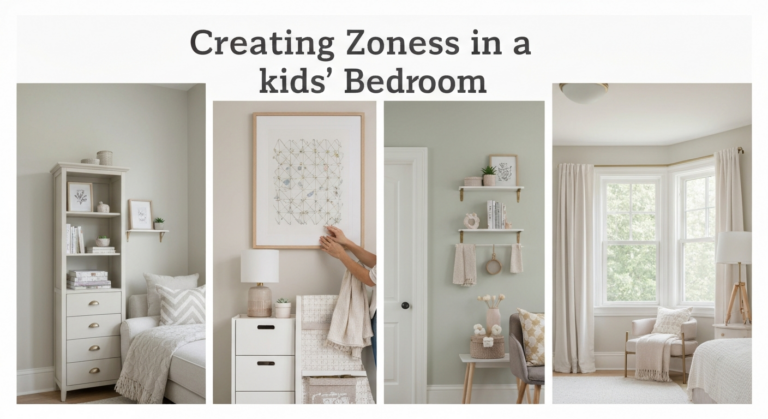
Create a gallery wall at kid height where your child’s artwork, photos, and creations are displayed. Use washi tape ($3–5 per roll) to frame pieces directly on the wall—it peels off without damage and your child can swap art whenever they want. Alternatively, the IKEA FISKBO frames ($2–4 each) with Command strips create a more polished look while still being easy to update.
A reading nook does not require a dedicated corner—it can be a pile of floor cushions beside a low bookshelf. The Brentwood Home Crystal Cove meditation pillow ($35) or a simple bean bag from Big Joe ($30 at Walmart) gives your child a cozy spot that is distinctly theirs. Add a clip-on reading light ($8–12) and a small basket of current favorite books, and you have created a space that promotes independence and a love of reading.
The most important thing to remember about the big kid room transition is that it does not have to happen all at once. Start with the bed, add safety measures, and then gradually introduce new storage and personal touches over weeks or even months. Let the room evolve as your child grows into it. Some of the best design moments in our big kid rooms happened months after the initial setup, when my children started adding their own touches—a collection of rocks on the windowsill, a hand-drawn picture taped to the mirror, a beloved stuffed animal positioned just so on the pillow every morning. That is when you know the transition is complete: when the room truly becomes theirs.
Neutral Nina
Neutral Nina is an interior design enthusiast and mom of three who proves that beautiful, organized spaces and family life can coexist. She shares practical strategies for creating calm, functional homes that work for kids and grown-ups alike.