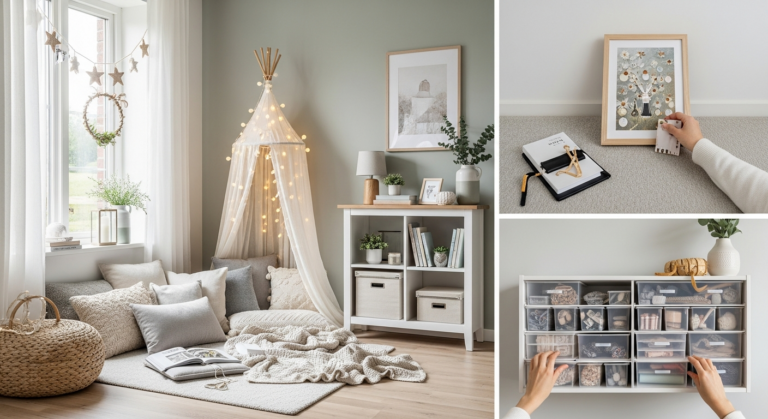

Creating a Montessori Bedroom for Toddlers
Learn how to create a Montessori bedroom for your toddler by understanding its core principles, setting up a safe floor bed, and designing child-accessible storage. This guide empowers you to foster independence and freedom in your child's space.
- Design your toddler's room around Montessori principles like freedom and simplicity.
- Choose a floor bed option and ensure the room is fully childproofed for safety.
- Transition your child to a floor bed when they show signs of readiness.
- Set up child-accessible clothing storage to encourage independence.
The Montessori bedroom isn’t just an aesthetic trend—it’s a philosophy about respecting children’s independence and creating an environment where they can thrive. A well-designed Montessori room empowers toddlers to move freely, choose their activities, and take ownership of their space.
If you’ve been intrigued by the floor bed photos on Pinterest or wondering how to create a space that grows with your child, this guide covers everything you need to know about setting up a Montessori-inspired bedroom for your toddler.
In this article (11 sections)
What Is a Montessori Bedroom?
A Montessori bedroom is designed based on the principles developed by Dr. Maria Montessori over a century ago. The core idea: create an environment suited to the child’s size and capabilities, where they can develop independence.
Key principles:
- Freedom of movement: Children can get in and out of bed independently
- Child-sized: Everything is accessible to the child, not just convenient for adults
- Order and simplicity: Clean, organized spaces with limited choices
- Natural materials: Wood, cotton, and natural fibers over plastic
- Beauty and intention: Thoughtfully chosen items that inspire calm and focus
A Montessori room isn’t about buying specific products—it’s about approaching design from your child’s perspective.
The Floor Bed: Heart of the Montessori Room
The floor bed is the most recognizable element of a Montessori bedroom, and often the most debated.
Why a Floor Bed?
Independence: Toddlers can get in and out of bed without adult help. This supports their natural sleep rhythms and growing autonomy.
Safety: No falling from height. Even the most active sleeper just rolls onto the floor.
Empowerment: Children feel ownership of their sleep space when they can access it freely.
Practical: Easier for parents too—no lifting over rails, simpler bed-making.
Floor Bed Options
Mattress on floor:
The simplest option. Place a twin or crib mattress directly on the floor. Use a waterproof mattress protector.
Budget: $100-300 for mattress
Low frame beds:
Slightly elevated (few inches) with simple frame. Adds structure without height risk.
Budget: $150-500
House beds:
Frame shaped like a house. Aesthetic appeal, some structure, still low.
Budget: $150-400
Floor bed frames:
Minimal frames that elevate mattress slightly for airflow. Montessori-specific designs available.
Budget: $100-300
[SHOP THE LOOK]
- Floor bed frame (twin) – Amazon/Wayfair ~$150
- Low house bed frame – $200-400
- Organic twin mattress – $300-500
- Mattress directly on floor – cost of mattress only
When to Transition to Floor Bed
Most Montessori families transition between:
- 8-12 months: When baby can crawl in/out safely
- 18-24 months: Common transition age
- Any age: Some start from birth, others transition from crib at 2+
Signs of readiness:
- Attempting to climb out of crib
- Showing interest in “big kid” bed
- Mobile enough to navigate getting in/out safely
Floor Bed Safety
Room preparation:
- Childproof the entire room (this is now their accessible space at night)
- Secure furniture to walls
- Cover outlets
- Remove small objects and choking hazards
- Gate the door or use a monitor
Bed placement:
- Away from windows
- Away from radiators or heaters
- Against a wall (on one or two sides)
Bedding:
- Firm mattress (like crib standards)
- No loose blankets for young toddlers
- Sleep sack or wearable blanket if needed
Small Nursery Ideas: Maximize Space in a Tiny Room
Child-Accessible Wardrobe
In a Montessori room, children choose (some of) their own clothes. This requires accessible storage.
Low Clothing Storage Options
Open shelving unit:
Cube storage (like IKEA Kallax) at child height. Fold clothes into cubbies or use baskets.
Low dresser:
Traditional dresser, but choose a shorter one. Keep 1-2 drawers for child-chosen items.
Clothing rack:
Child-height clothing rod. Perfect for dresses, jackets, dress-up items.
Hooks at child height:
Simple solution for jackets, bags, favorites.
Implementing Choice
Don’t put all clothes out—curate options:
- 3-4 shirt options
- 3-4 bottom options
- Limited special occasion items
- Seasonally appropriate only
Let them choose within these parameters. Put out-of-season or rarely worn items in closet storage.
[SHOP THE LOOK]
- IKEA Kallax 2×2 for clothes – $40
- Small clothing rack – $25-50
- Child-height hooks – $10-20
- Baskets for folded items – $15-25 each
Low Shelving for Toys and Books
Montessori toy storage follows the “less is more” philosophy.
Toy Shelf Setup
One low shelf unit:
- Display 6-10 toys/activities at a time
- Each item has its own space
- Rotate toys regularly
- Beautiful presentation, not clutter
Arrangement:
- Left to right, easy to hard (reading pattern)
- Complete activities (all pieces together)
- Trays or baskets for multi-piece items
- Open display (not bins hiding everything)
Book Display
Front-facing book storage:
Children choose books they can see. Face covers outward rather than spines.
Options:
- Wall-mounted book ledges
- Low bookshelf with lips
- Floor book bin (forward-facing)
- IKEA FLISAT book display
Book rotation:
- Keep 5-10 books accessible
- Rotate weekly or bi-weekly
- Follow child’s current interests
Activity Areas
A Montessori room includes space for independent activity.
Reading Corner
- Comfortable seating at child level (floor cushion, small chair)
- Good lighting
- Books within reach
- Cozy, inviting atmosphere
Work Area
- Small table and chair at proper height
- Materials for art, puzzles, or practical life activities
- Clear surface for focus
Movement Space
- Open floor area
- Perhaps a small climbing element (triangle, wobble board)
- Mirror at child height (for self-awareness and movement observation)
Design Elements
Color and Aesthetic
Traditional Montessori:
- Neutral walls (white, soft gray, natural wood)
- Natural materials
- Minimal visual clutter
- Calming environment
Adapted Montessori:
You can add personality while maintaining calm:
- Soft colors instead of stark white
- Meaningful art (few pieces, not overwhelming)
- Plants (real, non-toxic options)
- Natural textures
Materials to Choose
- Wood over plastic
- Cotton and linen over synthetic
- Quality over quantity
- Natural colors and materials
What to Avoid
- Overwhelming patterns or colors
- Too many decorations
- Character-themed everything
- Excessive visual stimulation
- Screens in bedroom
Gender Neutral Nursery Ideas: Modern and Timeless Designs
Safety Considerations
A Montessori room must be entirely child-safe since they have unsupervised access.
Essential safety measures:
- All furniture anchored to walls
- Outlet covers throughout
- Blind cords secured or cordless blinds
- Door gate or monitor for night wandering
- Window guards or locks
- No small objects accessible
- Non-toxic plants only (or no plants)
Room door options:
- Keep door open with gate at door
- Keep door closed with child-proof handle cover inside
- Monitor to hear when they’re moving around
Transitioning to Montessori Setup
Start Simple
You don’t have to do everything at once:
- Start with floor bed transition
- Add low book display
- Implement toy rotation on low shelf
- Add accessible clothing storage
Expect Adjustment
Floor bed adjustment:
- Some toddlers adapt immediately
- Others need time to understand bed boundaries
- Expect some wandering initially
- Consistency is key
The “why won’t they stay in bed” phase:
- Normal and temporary
- Calmly return them to bed each time
- Keep room safe for wandering
- Most kids settle within 1-2 weeks
Budget Breakdown
Minimal Montessori: ~$200-300
- Mattress on floor: $150-200
- Basic bookshelf or ledges: $30-50
- Basket storage: $20-30
Mid-Range: ~$500-700
- House bed or frame: $200-300
- Cube storage unit: $50-100
- Book display: $30-50
- Child-size table/chair: $50-100
- Clothing storage: $50-100
Investment Room: ~$1000+
- Quality floor bed frame: $300-500
- Custom shelving: $200-400
- Quality rug: $100-200
- Furniture pieces: $200-400
Neutral Nina
Neutral Nina is an interior design enthusiast and mom of three who proves that beautiful, organized spaces and family life can coexist. She shares practical strategies for creating calm, functional homes that work for kids and grown-ups alike.
Frequently Asked Questions
Is a floor bed safe for babies?
Many families use floor beds from birth or early infancy. Follow safe sleep guidelines: firm mattress, no loose bedding, sleep-safe room. Consult your pediatrician.
What if my toddler won’t stay in bed?
This is common initially. Keep returning them calmly. Ensure the room is completely safe for independent movement. Most adjust within weeks.
Do I need specific Montessori furniture brands?
No! IKEA and other affordable brands work perfectly. The philosophy matters more than the brand.
Can I have color and pattern in a Montessori room?
Yes! Keep it calm and intentional, but personal touches are fine. Avoid overwhelming visual stimulation.
Conclusion
A Montessori bedroom is about creating a space where your toddler can be independent, confident, and engaged. The floor bed, low shelving, accessible wardrobe, and calm aesthetic all work together to support your child’s development.
Start with one element—maybe the floor bed or a simple toy shelf—and build from there. The goal isn’t Instagram perfection; it’s a room that works for your real child and your real family.
Shared Kids Room Ideas: Making It Work for Siblings
—