Art Supply Organization for Kids
Learn how to declutter your kids' art supplies by purging broken items and consolidating sets. Then, discover a three-tier storage system to keep everything organized and accessible, making art time easier and cleanup faster.
- Purge unusable art supplies like dried markers and old glue sticks.
- Consolidate duplicate sets of crayons or colored pencils into one complete set.
- Separate consumables (paper, glue) from tools (scissors, rulers) for different storage.
- Create a portable daily art caddy with essential supplies for easy access.
This post contains affiliate links. As an Amazon Associate I earn from qualifying purchases.
In this article (6 sections)
- There Were Dried Markers in Every Drawer of Our Kitchen
- The Great Purge: What to Keep, What to Toss
- The Three-Tier Storage System That Works for Every Age
- Organizing by Material: Specific Solutions for Common Supplies
- Display and Rotation: Managing the Art Output
- Maintaining the System: Five-Minute Daily Habits
There Were Dried Markers in Every Drawer of Our Kitchen
One afternoon, I opened our kitchen junk drawer looking for a pen and found seven dried-out Crayola markers, a glue stick with no cap, a pair of safety scissors caked in glitter glue, and half a sheet of sticker gems. I opened the next drawer: more markers, broken crayons, and a watercolor palette missing three colors. The bathroom drawer had paint brushes. The living room console had colored pencils. My children’s art supplies had colonized every horizontal surface and hidden compartment in our home, and somehow, whenever they actually wanted to make art, they could never find anything that worked.
That week, I declared Art Supply Amnesty. We gathered every single art material from every room in the house, piled it all on the dining table, and the result was staggering: we had over 300 individual art items, of which roughly 40% were dried out, broken, or incomplete. After purging the unusable supplies and organizing the survivors, I built a storage system that keeps everything accessible, functional, and contained. Six months later, my kids create art more often, cleanup takes two minutes, and I have not found a rogue marker in a kitchen drawer since.
The Great Purge: What to Keep, What to Toss
Before you organize anything, you need to honestly assess what you have. Art supplies accumulate invisibly through birthday party favors, school supply leftovers, restaurant crayons, grandparent gifts, and impulse purchases at Target’s dollar spot. Most families have three to five times more art supplies than their children actually use.
Test every marker, pen, and stamp pad. Have your kids help with this step, as it becomes a fun activity in itself. Scribble every marker on scrap paper. Any marker that is faint, streaky, or dry goes straight in the trash. In our purge, we eliminated 45 markers out of roughly 80. That is more than half that were taking up space without being functional.
Consolidate duplicate sets. If you have four incomplete sets of colored pencils, combine them into one complete set and recycle the empty packaging. Same for crayons, watercolors, and oil pastels. One well-curated set of 24 colors is more useful and easier to store than three jumbled partial sets.
Check expiration and quality. Glue sticks dry out within six to twelve months of opening. Paint containers crack and leak. Modeling clay hardens. Sticker sheets curl. Be ruthless about tossing anything that is past its functional life. You can always buy a fresh glue stick for $0.50 at Walmart.
Separate consumable supplies from tools. Paper, stickers, glue, and tape are consumable supplies that need regular replenishment. Scissors, rulers, stencils, and stamp sets are tools that last for years. Store these two categories differently: consumables in easy-access bins that you can quickly see when stock is low, tools in more permanent organizational setups.
The Three-Tier Storage System That Works for Every Age
After testing many organizational approaches, I landed on a three-tier system that works for toddlers, elementary kids, and even tweens. The concept is simple: divide art supplies into daily-use items, project supplies, and bulk storage. Each tier has different accessibility requirements.
Tier 1: The Daily Art Caddy. This is a portable, self-contained kit with the supplies your children use most often: a set of markers, crayons or colored pencils, a pair of scissors, a glue stick, a small roll of tape, and a pencil. The caddy lives in a central location (kitchen table, craft area, or homework station) and can be carried anywhere in the house. My favorite caddy option is the mDesign Plastic Portable Craft Storage Organizer Caddy ($14 on Amazon) which has a sturdy handle and multiple compartments. IKEA’s RAGGISAR basket set ($10) also works well for younger kids who need larger compartments.
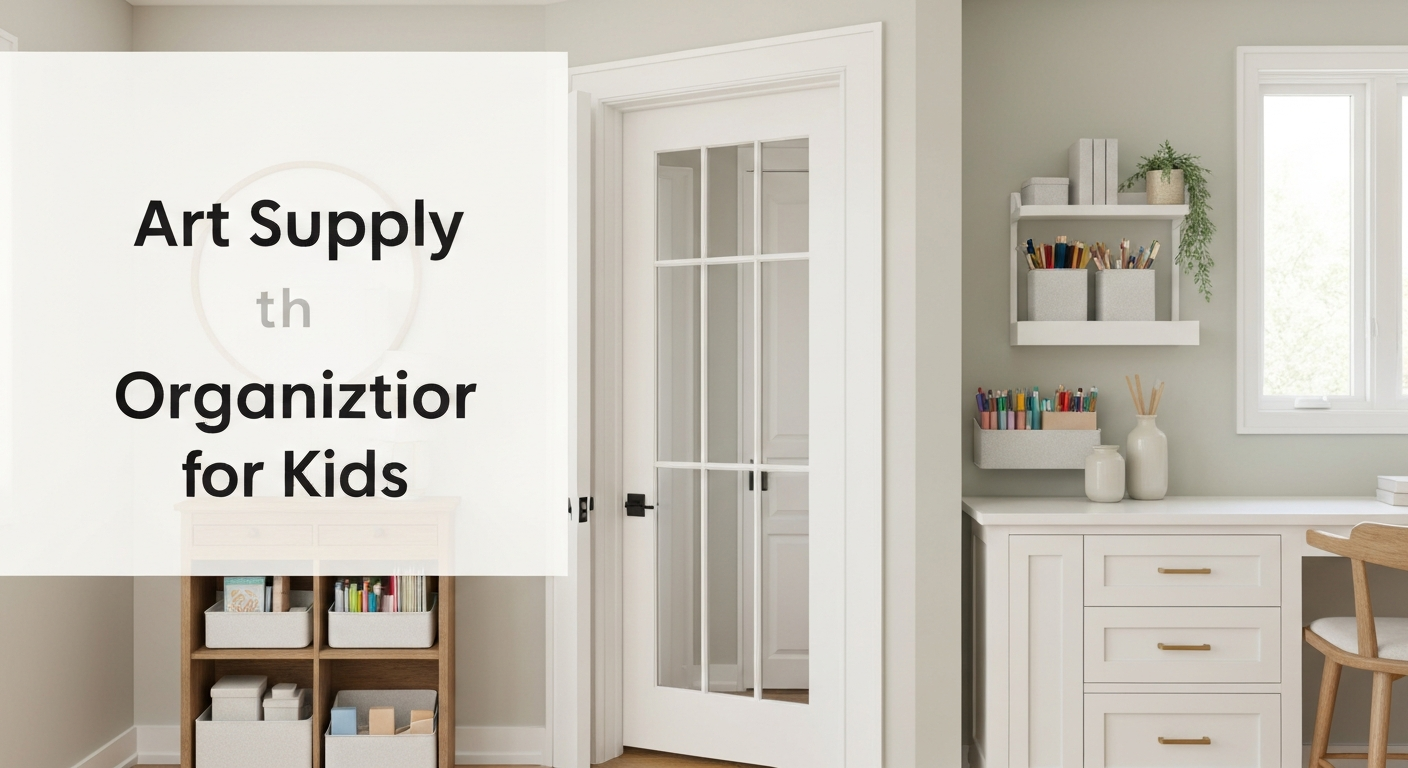
Tier 2: The Project Station. This is a dedicated shelf, cart, or cabinet near the primary art area that holds the full range of art supplies: paint sets, brushes, construction paper, stamp sets, beads, pipe cleaners, pom-poms, googly eyes, stencils, and specialty markers. The IKEA RASKOG rolling cart ($30) is the single most popular art supply organizer among the parent organizing community, and for good reason. Its three tiers hold an enormous amount of supplies, it rolls to wherever art is happening, and it can be tucked beside a desk or into a closet when not in use.
Tier 3: Bulk Storage. This is where you keep backup supplies, seasonal craft materials, and large-format items like poster board and rolls of butcher paper. A high closet shelf, a labeled bin in the garage, or a dedicated drawer in a utility room all work well. I use a clear Sterilite 66-quart bin ($10 at Target) labeled “Art Supply Refills” that holds extra glue sticks, fresh marker sets, bulk construction paper, and holiday craft kits waiting for their season. I check this bin monthly and restock the project station as needed.
Organizing by Material: Specific Solutions for Common Supplies
Different art materials have different storage needs. Here is a breakdown of the best storage approach for each category of supply, with specific product recommendations.
Markers and pens: Store horizontally or tip-down to keep ink flowing to the tip. A desktop pencil cup works, but markers are better stored in a shallow bin or divided tray where you can see all colors at once. The IRIS 10-Drawer Rolling Cart ($30 at Target) dedicates one shallow drawer to markers, one to crayons, and one to colored pencils, making color selection easy. For a simpler option, rectangular food containers with snap lids from Dollar Tree ($1.25 each) hold a full marker set flat and stack neatly.
Paint supplies: Keep all paint-related items together in one waterproof container. A plastic shoe box from the Container Store ($2) holds a watercolor palette, six to eight paint bottles, three brushes, a plastic palette, and a rag. When it is paint time, pull out the entire box. When painting is done, everything goes back in the box, including the rag for easy cleanup. Line the bottom with a folded paper towel to catch drips.
Paper and card stock: Store flat in a paper tray or horizontal file organizer. The Brightroom Stackable Letter Tray from Target ($5) holds standard 8.5×11 paper and stacks to create separate compartments for white paper, colored construction paper, card stock, and specialty papers. Place the stack on a low shelf where kids can see the paper colors and pull sheets without disturbing the rest.
Collage and mixed-media supplies: Beads, buttons, sequins, pom-poms, googly eyes, foam shapes, feathers, and pipe cleaners are the hardest art supplies to corral because they are small, varied, and irresistibly fun to dump out. A multi-compartment tackle box or bead organizer is the answer. The Plano 3700 Series Stowaway ($8 at Walmart) has adjustable dividers that create up to 24 compartments for tiny supplies. Each compartment is visible through the clear lid, and the latching closure keeps everything contained even if the box is dropped or tipped.
Stickers and flat embellishments: A 3-ring binder with sheet protectors creates a browsable sticker book. Slide sticker sheets into individual sheet protectors, and kids can flip through and select stickers like they are browsing a catalog. This is infinitely better than the sticker-sheet-pile-on-the-shelf approach, which always results in curled, stuck-together, unusable sticker sheets. A basic binder ($3 at Walmart) and a pack of 50 sheet protectors ($5) is all you need.
Display and Rotation: Managing the Art Output
Art supply organization is only half the equation. The other half is managing the output, the daily flood of drawings, paintings, collages, and sculptures that your children produce. Without a system, finished artwork piles up on counters, migrates to the fridge, and eventually triggers a guilt-laden midnight recycling session.
Create a designated display area. A simple wire system using IKEA’s DIGNITET curtain wire ($10 for a 16-foot cable) strung across a wall with small clips lets you display 10 to 15 pieces of art at once. When new art comes home, a new piece goes up and the oldest piece rotates off. This gives every piece its moment of glory without permanent accumulation. Alternatively, a set of three to five clipboards mounted on a wall ($2 each at Dollar Tree) creates an instant rotating gallery.
The art portfolio system is essential for long-term keepsakes. Buy one large portfolio or art case per child per school year. The Itoya ProFolio ($15 for a 9×12 size on Amazon) has clear sleeves that hold artwork flat without bending or smudging. At the end of each month, let your child choose their three to five favorite pieces to add to the portfolio. Everything else can be photographed (the Artkive app makes this easy) and then recycled with a clear conscience.
Set a “drying station” for wet artwork. A simple drying rack from Melissa & Doug ($20) holds multiple paintings flat while they dry, preventing the smeared-paint-on-the-counter disaster. For a free alternative, clip wet paintings to a tension-rod clothesline strung across the laundry room or bathtub area with mini clothespins ($3 for a 24-pack at Target).
3D art and sculptures need special handling. Designate one shelf or shadowbox for 3D creations, with a limit of three to five items at a time. When a new sculpture is created, something must rotate off. Photograph outgoing pieces before recycling, and create a digital album called “3D Art” in your phone’s photo library. This preserves the memory without the physical accumulation.
Maintaining the System: Five-Minute Daily Habits
The best organizational system in the world will collapse without maintenance routines. The good news is that art supply maintenance requires surprisingly little time when you build small habits into your daily flow.
The two-minute cleanup rule: After every art session, set a timer for two minutes and have kids put supplies back in their designated spots. Two minutes is psychologically manageable for even young children, and it is genuinely enough time to return a daily art caddy to its shelf, put markers back in their drawer, and throw away scraps. Make it a race or a game for kids under six. My three-year-old loves “beat the timer” cleanup, and it works every single time.
Weekly supply check (five minutes on Sunday): Once a week, do a quick scan of the art caddy and project station. Cap all markers and test any that seem dry. Toss empty glue sticks and dried paint. Sharpen colored pencils. Restock from bulk storage as needed. This five-minute habit prevents the gradual degradation that turns an organized art area into a frustrating mess of broken supplies over time.
Monthly rotation of specialty supplies: Keep things fresh by rotating specialty items in and out of the project station. In January, put out winter-themed stamp sets and white and silver paper. In spring, bring out the nature journaling supplies. In summer, stock sidewalk chalk and outdoor painting materials. This rotation keeps art exciting without requiring constant new purchases. A small labeled bin in your bulk storage for each season makes rotation a two-minute swap.
The restock list: Keep a running list on your phone or on a notepad near the art station of supplies that need replenishing. When you notice glue sticks are running low or construction paper is almost gone, add it to the list immediately. Batch your art supply purchases into one trip to Target or one Amazon order per month rather than making impulse purchases every time you notice something is out. This saves money, reduces packaging waste, and ensures you always have what your kids need without overstocking.
A well-organized art supply system does more than just keep your drawers marker-free. It communicates to your children that creativity is valued, that their materials deserve care, and that making art is an important part of daily life, not a chaotic, stressful event that ends in tears and lost caps. When the supplies are ready, the art flows freely. And that is worth every minute you invest in getting the system right.
Neutral Nina
Neutral Nina is an interior design enthusiast and mom of three who proves that beautiful, organized spaces and family life can coexist. She shares practical strategies for creating calm, functional homes that work for kids and grown-ups alike.