
Small Nursery Ideas: Maximize Space in a Tiny Room
Maximize every square inch of your tiny nursery with smart design. This guide helps you choose essential furniture like mini cribs and dual-purpose dressers, plus clever storage solutions to create a beautiful, functional space.
- Reframe your mindset: Babies need essentials, not a large room.
- Prioritize only must-have items; skip separate changing tables or large gliders.
- Choose space-saving cribs like mini cribs or minimalist standard options.
- Utilize dual-purpose furniture, like a dresser for changing and storage.
- Maximize vertical space and closet organization to store baby's items.
Not everyone has a spacious room to dedicate to their baby. Maybe the nursery is a converted closet, a corner of your bedroom, or a room so small you wonder if anything will fit. The good news? Babies don’t need much space. With smart design, even the tiniest nursery can be beautiful and functional.
These small nursery ideas will help you maximize every square inch while creating a space you actually love spending time in.
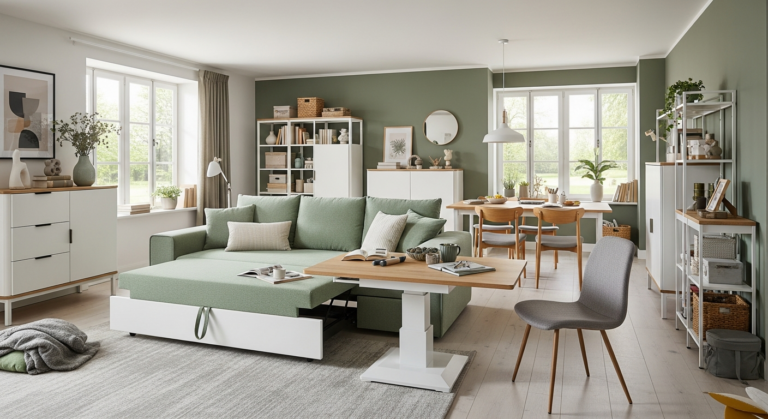
[IMAGE: Beautiful small nursery with smart space-saving solutions]
The Small Nursery Mindset
First, let’s reframe how you think about small nurseries:
Babies don’t need big rooms. They need a safe sleep space, a place to be changed, and storage for their things. That’s it.
Cozy can be beautiful. Small spaces feel intimate and warm. Embrace that.
Less stuff = less chaos. Small spaces force intentionality. You’ll only keep what you actually use.
This season is temporary. Nursery needs change quickly. Design for the next 1-2 years, not forever.
Essential Elements Only
In a small nursery, every item must earn its space. Here’s what you actually need:
Must Haves
Safe sleep space: Mini crib, standard crib, or bassinet depending on space
Changing surface: Can be on top of a dresser, no dedicated table needed
Storage for clothes and diapers: Dresser, closet system, or both
Comfortable seat: For night feeds—but this can be elsewhere in the home
Nice to Haves (If Space Allows)
Small bookshelf or book display
Rug (if floor isn’t comfortable)
Side table near nursing spot
Decorative elements
Skip Entirely
Separate changing table (use dresser top)
Large glider (use existing furniture or compact option)
Excessive decor and “display” items
Duplicate storage solutions
Crib Options for Small Spaces
The crib is the largest furniture piece. Choose wisely.
Mini Cribs
Dimensions: Approximately 38″ x 24″ (vs. standard 52″ x 28″)
Best for: Truly tiny rooms, cribs that need to fit in specific spots, apartment nurseries
Pros:
- Fits in much smaller spaces
- Many are on wheels for repositioning
- Same safety standards as full-size
- Baby can use until 18-24 months
Cons:
- Need to transition to toddler bed sooner
- Fewer mattress options
- May feel cramped for large babies
Recommended: Babyletto Origami, Dream On Me Folding Mini Crib
Standard Cribs (Space-Saving Styles)
Look for:
- Minimal footprint (no curved or ornate details that take extra space)
- Convertible to toddler bed (saves future purchases)
- Low-profile design (won’t overwhelm visually)
Recommended: IKEA Sniglar (simple, small footprint), Babyletto Hudson
Bassinets First
Strategy: Start with bassinet in bedroom, delay nursery crib purchase
Benefits: Baby sleeps in your room per AAP recommendations for first 6 months; nursery can wait
Budget bonus: Gives time to save for nursery purchases
[SHOP THE LOOK]
- IKEA Sniglar crib: $80
- Babyletto Origami mini crib: $200
- Dream On Me mini crib: $130
- HALO Bassinest: $200
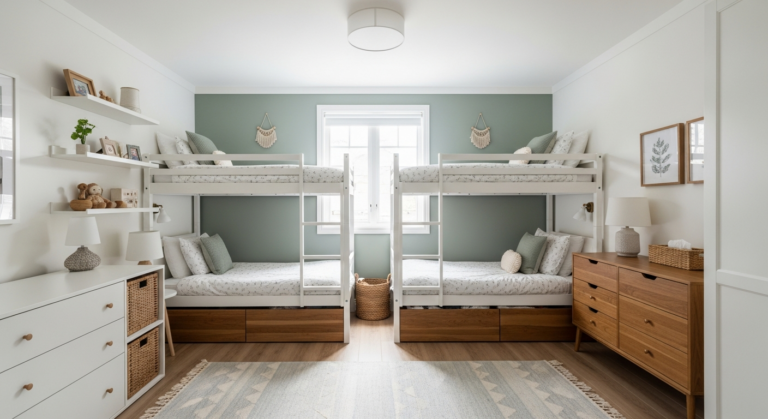
[IMAGE: Mini crib in small nursery with efficient layout]
Dresser and Storage Strategies
Dual-Purpose Dresser
A dresser does triple duty:
- Clothes storage (primary function)
- Changing station (with changing pad on top)
- Display surface (lamp, small decor)
Best dimensions for small nurseries:
- Width: 30-36 inches
- Depth: 16-18 inches (important for small rooms!)
- Height: 30-36 inches (comfortable for changing)
Recommended: IKEA MALM 3-drawer, IKEA HEMNES 3-drawer
Maximize Closet Space
Even a small closet can hold everything if organized well:
Closet strategies:
- Double rod (upper + lower) for baby clothes
- Shelf dividers for folded items
- Door-mounted storage for diapers, small items
- Bins on floor for less-used items
- Remove closet doors for open storage feel
If you have a closet, you might not need a dresser at all.
Vertical Storage
Go up, not out:
- Floating shelves for books, small items
- Wall-mounted baskets or pockets
- Over-door organizers
- Tall, narrow bookshelves (anchor to wall!)
Budget Nursery Makeover: Designer Look for Less
Layout Strategies
Corner Crib Placement
Placing the crib in a corner maximizes floor space. Leave enough room on one side for changing sheets, but the other side can be against the wall.
Floating Furniture
Furniture that doesn’t touch the floor feels lighter:
- Wall-mounted changing surface (folds down when not in use)
- Floating shelves instead of bookcases
- Wall-mounted diaper organizer
Multi-Functional Pieces
Every item should serve multiple purposes:
- Dresser + changing table
- Ottoman that holds storage inside
- Crib that converts to toddler bed
- Bookshelf that serves as room divider (if nursery is part of larger room)
When the Nursery is Part of Another Room
Nursery Corner in Parents’ Bedroom
What you need:
- Crib or mini crib
- Small dresser or closet space for baby items
- Visual separation (not required but nice)
Creating separation:
- Curtain divider
- Bookshelf as room divider
- Rug defining nursery “zone”
- Different wall color or treatment
Benefits: Easier for night feeds, follows AAP room-sharing recommendations, no dedicated room needed
Nursery in Living Space
What you need:
- Bassinet or crib that fits (mini crib ideal)
- Contained storage (not scattered everywhere)
- Ability to make space darker for naps
Making it work:
- Choose nursery furniture that matches living area style
- Use blackout curtains for nap times
- Portable white noise machine
- Keep diapering supplies in attractive containers
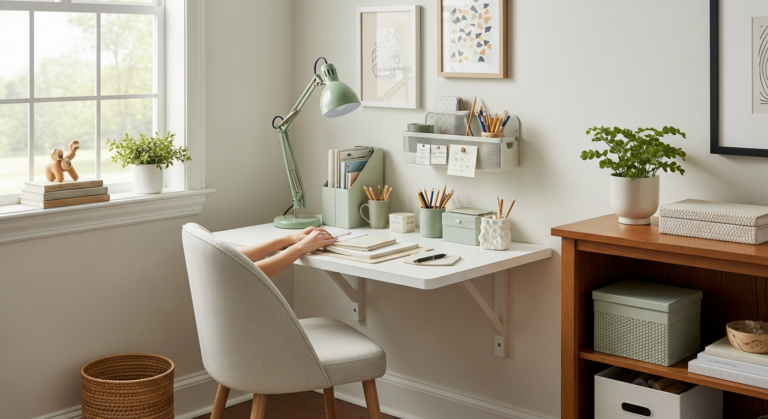
[IMAGE: Nursery corner in parents’ bedroom with visual separation]
Small Nursery Design Tips
Light Colors Expand Space
Best choices:
- Soft white
- Light gray
- Pale blush or blue
- Soft sage
Use darker colors sparingly: As accents, not whole walls
Mirrors Create Illusion of Space
Safe ways to use mirrors:
- High on wall (out of reach)
- Behind dresser
- As decorative element (securely mounted)
Minimal but Meaningful Decor
Choose:
- One statement piece (mobile, art print, name sign)
- Few high-impact items over many small items
- Decor that serves function (lamp, clock, hooks)
Avoid:
- Cluttered gallery walls
- Too many competing elements
- Items that collect dust without purpose
Transparent and Light Furniture
Acrylic or lucite: Visually disappears
Light wood: Feels airy
White or light paint: Brightens and opens
Nursery Nook Solutions
Closet Conversion
Transform a closet into entire nursery:
Remove doors: Instant room extension
What fits:
- Mini crib against back wall
- Shelving on sides for storage
- Hooks for diaper bag, clothing
- Small rug
Add:
- Good lighting (closets often have none)
- Wallpaper or paint for personality
- Curtain to close off for naps
Alcove Nursery
If you have an alcove or bump-out:
- Perfect for contained nursery space
- Natural visual definition
- Curtain across opening creates nap-friendly darkness
Room Within a Room
Build a nursery zone:
- Use furniture placement to create boundaries
- Add curtain track on ceiling for separation
- Different flooring (rug) defines space
- Coordinated but distinct style
Budget Breakdown: Small Nursery
Small nurseries often cost less (less room to fill!):
Minimal setup: $300-500
- Mini crib or used crib: $80-150
- 3-drawer dresser: $100-150
- Changing pad: $25
- Basic bedding: $50
- Closet organization: $30-50
Complete small nursery: $600-1000
- Quality mini crib: $200
- Good dresser: $150-200
- Glider or chair: $150-250
- Blackout curtains: $50
- Small rug: $50
- Decor and bedding: $100-150
FAQ
Will my baby outgrow a mini crib too fast?
Most babies fit in mini cribs until 18-24 months—the same age many transition to toddler beds anyway. It’s not as limiting as it seems.
Can I fit a nursing chair in a small nursery?
Maybe, but consider whether you need one IN the nursery. You might prefer nursing in bed, on the living room couch, or in a chair elsewhere. The nursery chair is not mandatory.
How do I fit twins in a small nursery?
One crib for both (they can share for several months), then two mini cribs, or one crib plus bassinet. Twins in small spaces is possible!
What if there’s no closet?
Use a dresser plus an open clothing rack. Freestanding wardrobes work too. Wall-mounted hooks and shelves maximize vertical space.
Conclusion
Small nurseries are not only possible—they can be cozy, functional, and beautiful. The constraints force you to be intentional about what earns space, and the result is often more peaceful than an overstuffed large room.
Start with the essentials (crib, changing surface, storage), choose pieces that work double-duty, and embrace vertical space. Your baby will be perfectly happy, and you might find you prefer the simplicity.
Budget Nursery Makeover: Designer Look for Less
—