
Under Bed Storage Ideas for Kids Rooms
Learn how to transform the under-bed space in your child's room into organized storage. Discover various container options, measuring tips, and smart organization strategies to keep clutter at bay.
- Measure your under-bed space accurately before buying any storage solutions.
- Choose the right container type (wheeled, flat, soft, vacuum) based on item and access needs.
- Consider bed risers or built-in storage beds to maximize your under-bed capacity.
- Organize items by category or frequency of use, placing frequently used items at the front.
- Label all your under-bed storage bins to easily find and return items.
The space under a kid’s bed is usually the biggest unused storage spot in a small bedroom. I like it because it hides bedding, off-season clothes and toy overflow without adding a single piece of furniture.
This guide covers how to measure, which containers suit which beds and what they cost. It also covers what is safe by age, common mistakes and a few DIY options.
In this article (10 sections)
- What to Store Under a Kid’s Bed
- How to Measure Under Your Bed Before Buying Storage
- Best Under-Bed Storage Containers for Kids’ Rooms
- What’s Safe Under the Bed by Age
- How to Organize Under a Kid’s Bed
- Common Under-Bed Storage Mistakes
- DIY Under-Bed Storage Ideas
- Maintaining Under-Bed Organization
- Frequently Asked Questions
- Conclusion
What to Store Under a Kid’s Bed
The space under the bed works best for things you need now and then rather than daily. Good candidates:
- Extra bedding and pillows
- Out-of-season clothing
- Toy overflow (larger, age-appropriate pieces)
- Sports equipment
- Books
- Keepsakes
- Craft supplies, for older kids only
What to Keep Out From Under the Bed
- Food and snacks
- Damp items, which can mildew
- Batteries, especially button batteries
- Aerosols, cleaning products and craft chemicals
- Loose cords
- Small parts, if anyone under 4 can reach the bins
- Magnets and magnetic toy sets, if anyone under 6 can reach the bins
- Strong, high-powered magnets, at any age
Safety firstIf a child under 4 sleeps in, shares or visits the room, store small-piece sets and craft supplies somewhere else. Keep magnets, button-battery items and loose batteries out of any bin a child under 6 can reach.
Swallowed magnets and button batteries can cause serious internal injuries. Strong magnets are a risk for older kids too, so never store them where any young child can reach them. Up high and out of reach is safest.
How to Measure Under Your Bed Before Buying Storage
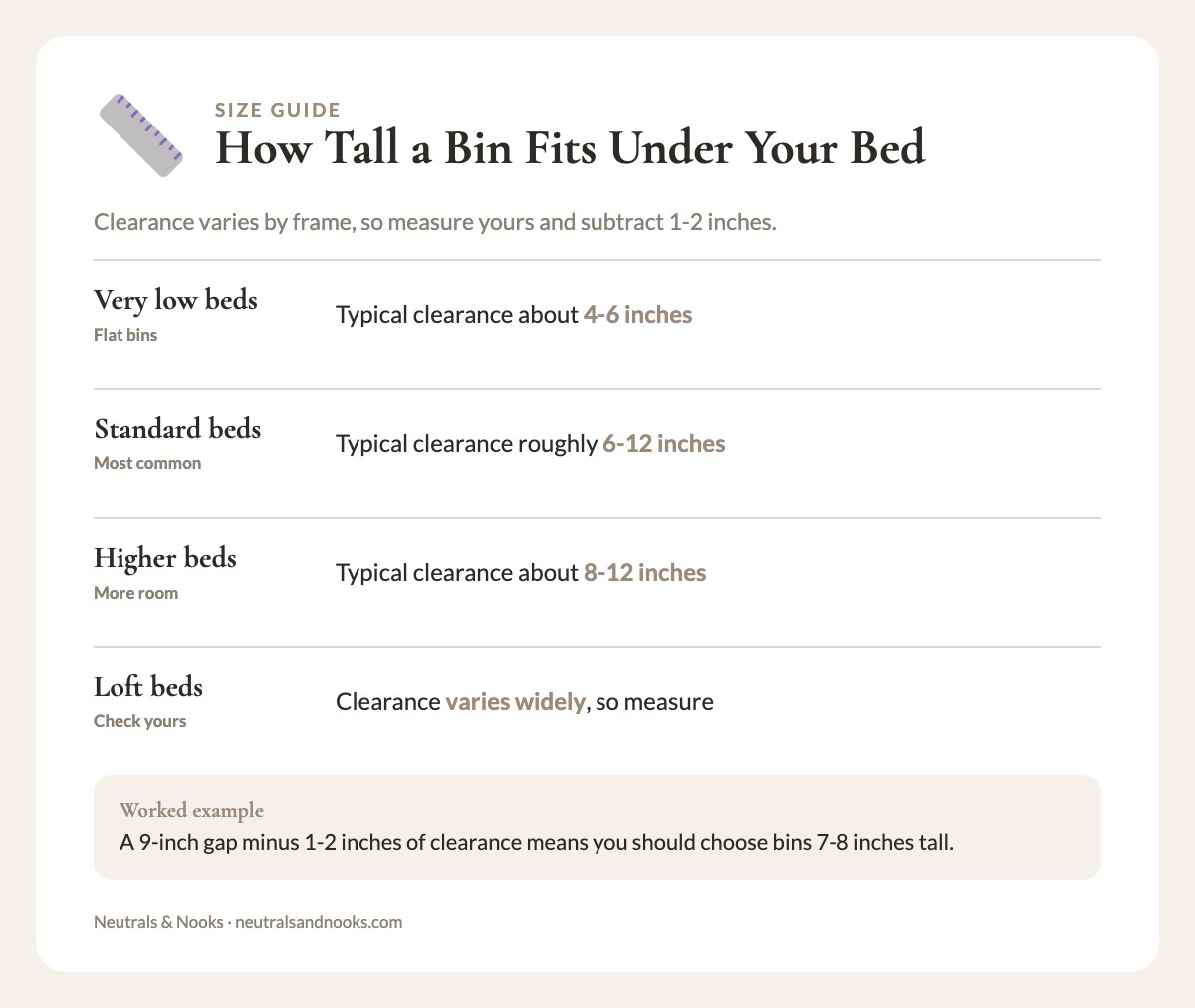
A bin that is half an inch too tall will never slide out, so measure before you buy. The Under-Bed Storage Kit at the end of this post has a measuring sheet for these numbers.
- Measure height. Run a tape from the floor to the lowest part of the frame.
- Measure the footprint. Write down the width of the bed and the depth from the side to the center.
- Mark obstructions. Note center supports and legs.
- Subtract for clearance. Take 1-2 inches off the height to get your maximum bin height.
Clearance varies by frame, so treat these as rough ranges rather than rules:
| Bed type | Typical clearance |
|---|---|
| Very low beds | About 4-6 inches |
| Standard beds | Roughly 6-12 inches |
| Higher beds | About 8-12 inches |
| Loft beds | Varies widely |
Good to knowA worked example: if the gap measures 9 inches, take off 1-2 inches for clearance. Choose bins 7-8 inches tall.
Safety firstOn bunk and loft beds, check these six things before you add any storage:
- The top bunk is for ages 6 and up. Per the CPSC, children under 6 should not sleep on the top bunk.
- Guardrails run along both sides of the upper bunk. The wall-side rail is continuous, and the only gap on the open side is the opening for the ladder.
- The mattress top sits at least 5 inches below the top of the guardrails.
- The mattress is the correct size for the frame.
- Ladders and guardrails are clear, with no bins or stacks near the rail that a child could use as a step.
- Everything stays within the bed’s weight limits.
Best Under-Bed Storage Containers for Kids’ Rooms
Here is how the six main options compare. My short recommendation: low, flat, lidded bins suit most standard beds, and rolling drawers are best kept for an older child’s daily items.
| Container type | Best for | Main pro | Main con | Typical cost |
|---|---|---|---|---|
| Wheeled bins and drawers | Frequent access, heavier items | Easy to pull out | May roll out; wheels can break | $15-75 per unit |
| Flat lidded bins | Lower beds, lighter items | Fit very low beds | Hard to slide on carpet | $10-30 per bin |
| Baskets and soft bins | Soft items, a tidy look | Soft sides collapse for storage | Less dust protection | $10-40 per basket |
| Vacuum bags | Bedding, off-season clothes | Big space savings | Need re-compressing after each use | $15-40 per multipack |
| Storage bed frames | A new bed purchase | Clean, built-in look | Costs more; replaces the whole bed | $150-600+ for the bed |
| Bed risers | Adding height to a standard bed, ages 4+ | Works with your existing bed | Stability and fall-height concerns; not for bunk, loft or toddler beds | $15-40 per set |
Wheeled Bins and Drawers
These suit frequent access and heavier items. They come as rolling drawers, wheeled plastic bins or wooden drawers.
The downside is that they can roll out unexpectedly and the wheels can break. Choose locking wheels where you can, and skip wheeled drawers for toddlers, who can climb in or get pinched.
I find wheeled bins tend to drift out of line on carpet, so I lean toward flat bins there.
Flat Storage Bins
Flat bins with lids fit very low beds and are the most affordable choice. They are harder to slide on carpet and not great for heavy items, so keep them for lighter things you reach for less often. Lids reduce dust but do not eliminate it.
Baskets and Soft Containers
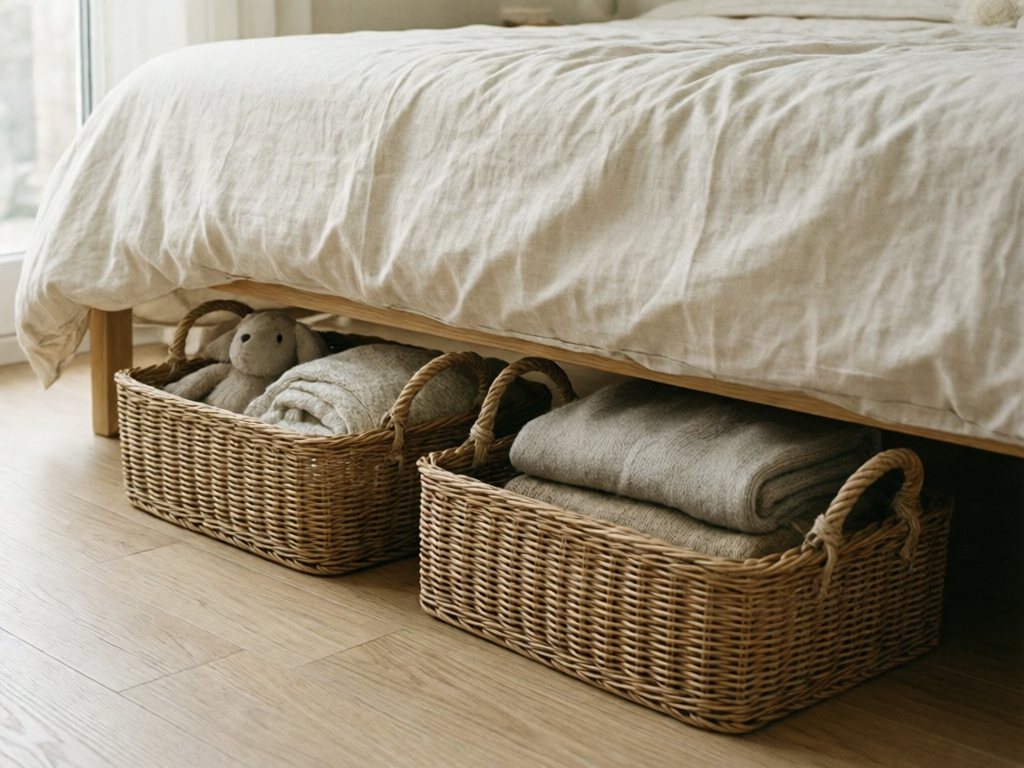
Woven baskets, fabric bins and canvas containers suit soft items and look good if part of the bin shows. The soft sides are kind to little hands and fold flat when not in use. They protect less from dust and can snag on carpet, so use them for pajamas and stuffed animals rather than heavy things. Expect $10-40 per basket.
I pick bins in one or two colors from the room’s palette. A matching row reads as one quiet line, so the space under the bed stays calm even when it is full.
Vacuum Storage Bags
Vacuum bags shrink bedding and off-season clothes dramatically, which makes them the best choice for the back of a shallow gap. Check the care label first, because down and memory foam can be damaged by full compression. Skip compression for stuffed animals too.
They need re-compressing each time you open them, so keep them for seasonal items. Expect $15-40 per multipack.
Safety firstEmpty vacuum and plastic bags are a suffocation risk. Never leave them where a child under 4 can reach them. If a child under 4 can reach the space under the bed, put filled vacuum bags inside a lidded bin.
Bed Frames with Built-In Storage
Storage bed frames, including platform beds with drawers and captain’s beds, give the cleanest built-in look and need no separate containers. They only make sense when you are buying a new bed anyway, since they replace the whole frame and the drawers may not suit a different layout later. Expect $150-600+ for the bed.
Bed Risers
Risers lift the bed legs to add clearance and work with the bed you already own. They also raise the sleeping surface, which means a longer fall and a possible need for a step stool. Not every bed suits them. Expect $15-40 per set.
Safety firstUse risers only if the bed manufacturer allows them and they are rated for the bed’s total load, including the sleepers. Follow the manufacturer’s height limit, and raise the bed a few inches at most. Check that each leg sits fully in its riser cup and that the bed does not wobble. Recheck monthly. Never use risers on bunk, loft or toddler beds, or on any bed for a child under 4.
What’s Safe Under the Bed by Age
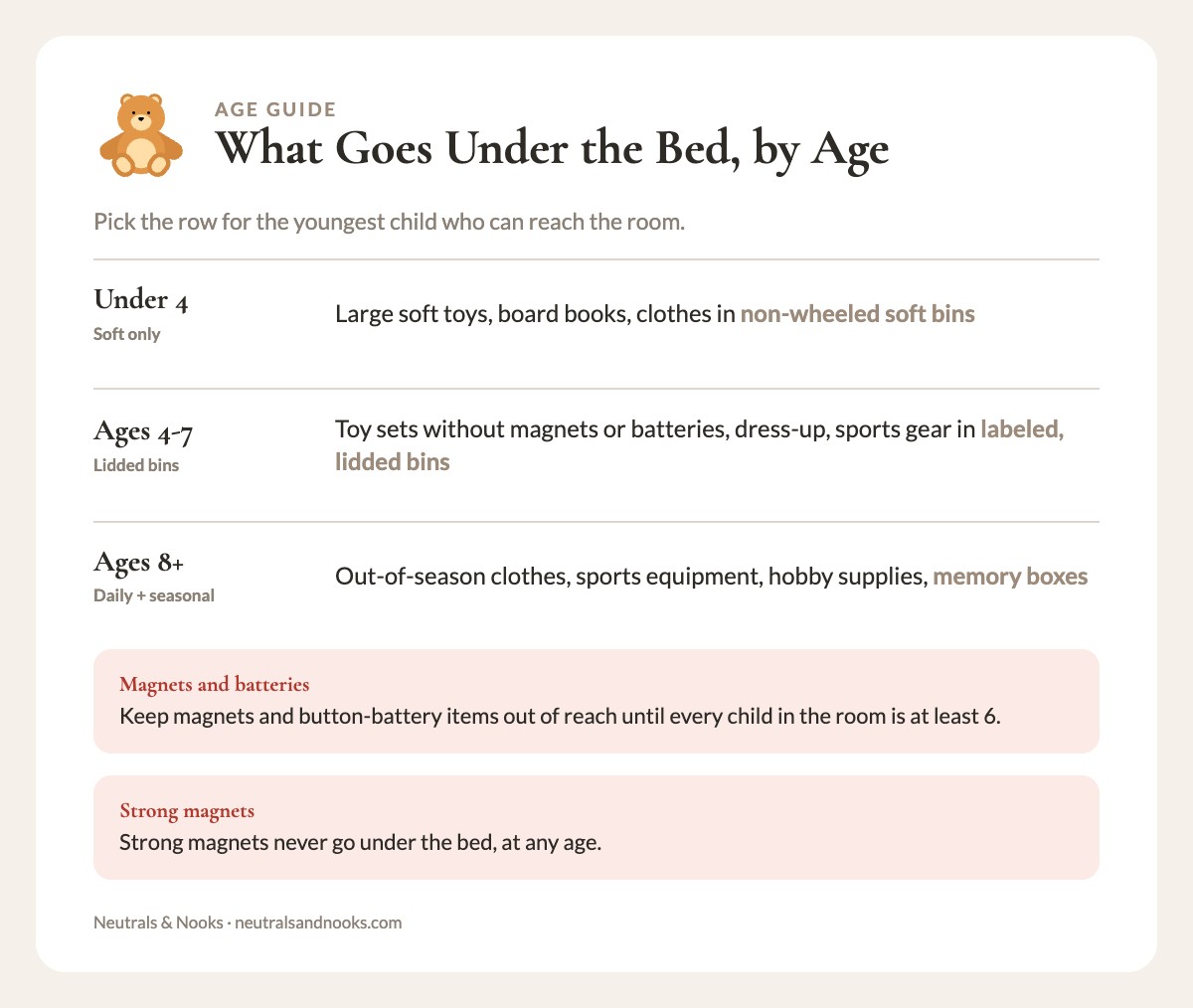
What belongs under the bed changes as your child grows. Use the row for the youngest child who can get into the room. If that child is under 4, every bin they can reach should hold only large, soft, toddler-safe items.
Magnets and button-battery items stay out of reach until every child in the room is at least 6. Strong magnets never go under the bed.
| Age | Best uses | Container | Keep out |
|---|---|---|---|
| Toddlers and young preschoolers (under 4) | Large soft toys, board books, clothes, backup pajamas, extra bedding | Non-wheeled soft bins holding only toddler-safe items; a valance or bed skirt can hide them | Small parts, craft supplies, batteries, magnets, cords, chemicals, loose plastic bags and any vacuum bags not shut inside a lidded bin |
| Older preschool and early elementary (4-7) | Toy sets without magnets or button batteries, dress-up clothes, sports equipment, book overflow | Labeled, lidded bins they can manage themselves | Batteries, button-battery items, chemicals, magnets and magnetic sets while any child in the room is under 6, strong magnets at any age, and any small parts a younger sibling could reach |
| Older kids (8+) | Out-of-season clothes, sports equipment, hobby supplies, memory boxes | A mix of daily-use bins and seasonal bins stored behind | Food, damp items, aerosols, batteries, strong magnets, and any magnets or button-battery items a sibling under 6 could reach |
Good to knowA bed skirt or valance hides bins but does not lock them. Anything a toddler can pull out has to be safe for a toddler to handle.
For toddlers and preschoolers, the bins pair well with our toy rotation system, which shows how to keep fewer toys out at once. Clear or labeled bins help kids find things and put them back correctly.
With older kids, let them choose the organization system, because ownership makes them more likely to keep it up. If two children share the room, our shared bedroom storage solutions can help you split the space fairly.
For clothes that will not fit under the bed, see our kids’ closet organization guide.
How to Organize Under a Kid’s Bed
Set aside about an hour and work through these steps in order:
- Empty and measure. Pull everything out, vacuum, and note the clearance and obstructions.
- Sort. Make keep, donate and store piles, and leave behind anything on the keep-out list.
- Pick bins by clearance. Use the maximum bin height from your measurements.
- Label. Use photo labels for non-readers.
- Load. Put heavy and seasonal items at the back and weekly items at the front.
Here is one way to lay out a standard twin bed with three bins:
| Position | Contents | Access | Bin type |
|---|---|---|---|
| Front | Current-season pajamas, books | Weekly | Flat lidded bin or soft basket |
| Middle | Toy overflow, sports gear | Monthly | Flat lidded bin |
| Back | Off-season clothes, spare bedding, keepsakes | Seasonally | Vacuum bags or lidded bin |
Sorting by Category and Frequency
Give each bin one job, such as bedding, toys, clothes or sports gear. Then place bins by how often you reach for them, as in the layout table above.
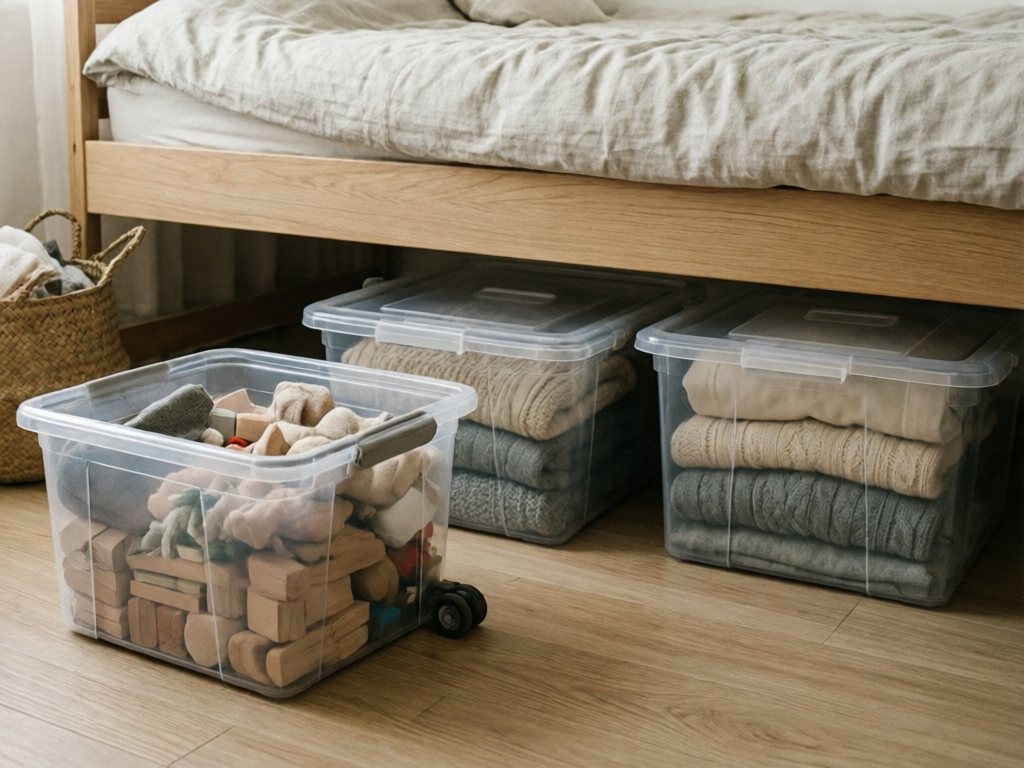
Weekly items and current-season clothes go in front. Seasonal items, backup bedding and keepsakes go at the back.
Labeling
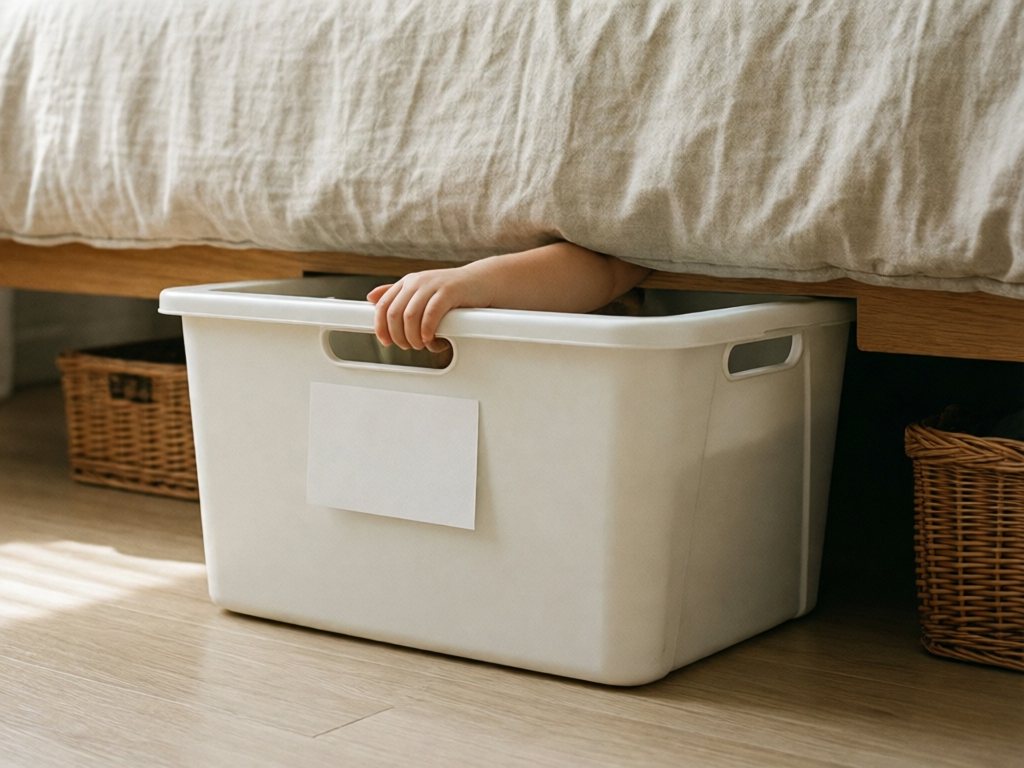
Labels mean kids can find things and put them back, and there are no mystery bins under the bed. Use photo labels for non-readers and simple tape or chalkboard labels for readers.
Common Under-Bed Storage Mistakes
Most under-bed storage fails in one of five ways. Each has a simple fix.
| Mistake | What happens | Fix |
|---|---|---|
| Monster zone syndrome | Everything gets shoved under and nothing is organized | Use containers for everything, purge regularly and store nothing loose |
| Wrong height containers | Bins don’t fit, lids won’t close, the bed sits crooked | Measure before buying and leave clearance |
| Forgetting what’s there | Items are stored, forgotten and never used | Label bins, keep an inventory list and review the contents |
| Too hard to access | The storage goes unused because it’s a hassle | Choose manageable weights and rolling bins for older kids’ daily items |
| Storing the wrong things | Frequently needed items are buried | Place items by how often you use them |
Planning for a baby’s room instead? See Small Nursery Ideas: Maximize Space in a Tiny Room for more small-space layouts.
DIY Under-Bed Storage Ideas
Three budget options, compared:
| Option | Materials | Cost | Minimum child age |
|---|---|---|---|
| Bins on furniture sliders | Plastic bin, 4 hard plastic glides per bin | About $10-15 per bin | Child-accessed from 4+ |
| DIY rolling drawers | Plywood base cut to fit, 4 locking casters | $25-50 | 4+ |
| Repurposed dresser drawers | Old drawer, 4 casters | Free, plus $10-15 for casters | 4+ |
For the sliders, press one hard plastic glide into each corner of the bin base. Hard glides slide better on carpet than felt pads, which are meant for hard floors. For the rolling trays, cut plywood slightly smaller than the gap, then screw a locking caster into each corner.
Safety firstSand raw plywood edges, use locking casters and fasten hardware securely. Keep tools and loose hardware away from young children. Do not use rolling DIY drawers for children under 4. Check drawers for splinters and pinch points, and remove or cover sharp hardware.
Safety firstPaint made before 1978 may contain lead, and sanding it creates hazardous dust. If a drawer is pre-1978 and the paint is chipping or you aren’t sure, skip sanding. Buy new drawers or use a bin instead.
Maintaining Under-Bed Organization
| When | What to do |
|---|---|
| Monthly | Check items are in the right bins, remove anything that does not belong, wipe dust from containers |
| Seasonally | Swap seasonal items, purge outgrown things, reassess categories |
| Annually | Deep clean under the bed, check the system still works, replace worn containers |
Kids from about 4 can pull out and return their own bins and help with seasonal swaps. Our guide to seasonal clothing storage for kids walks through the swap itself.
Neutral Nina
Neutral Nina is an interior design enthusiast and mom of three who proves that beautiful, organized spaces and family life can coexist. She shares practical strategies for creating calm, functional homes that work for kids and grown-ups alike.
Frequently Asked Questions
How do I add under-bed storage if my bed is too low?
Bed risers can work on a standard bed for a child aged 4 or older. They must be rated for the bed’s total load, including the sleepers, and the bed manufacturer must allow them. Never use them on bunk, loft or toddler beds, or on any bed for a child under 4. Follow the manufacturer’s height limit, raise the bed a few inches at most and recheck the risers monthly. If risers are not an option, flat bins or vacuum bags for out-of-season clothes fit a low gap.
Does under-bed storage make dust worse?
Lidded containers reduce dust, and vacuuming under the bed monthly keeps it down. If your child has asthma or a dust allergy, ask their doctor about allergen control.
How do I stop a toddler pulling everything out from under the bed?
A bed skirt or valance keeps bins out of sight, which is often enough to end the game. It will not keep a determined toddler out. Fill any bin they can reach with only large soft toys, board books and clothes until the phase passes.
Why do my wheeled bins keep rolling out, and how do I stop it?
Choose bins with locking casters, or put a rubber stopper or non-slip mat at the bed edge. On carpet, switch to flat bins.
Can I use under-bed storage with a bunk bed?
Yes, if the bunk has clearance. Keep the ladder and guardrails clear, and use low flat bins rather than stacks a child could climb. Stay within the manufacturer’s weight limit. See the bunk bed safety checklist above for the CPSC age guidance.
Conclusion
Measure your space tonight, buy one bin that fits and test it for a week. The Under-Bed Storage Kit for Kids’ Rooms below has the measuring sheet, bin-zone map and labels.
Sharing a room? Shared Kids Room Ideas: Making It Work for Siblings has layouts that work for more than one child.