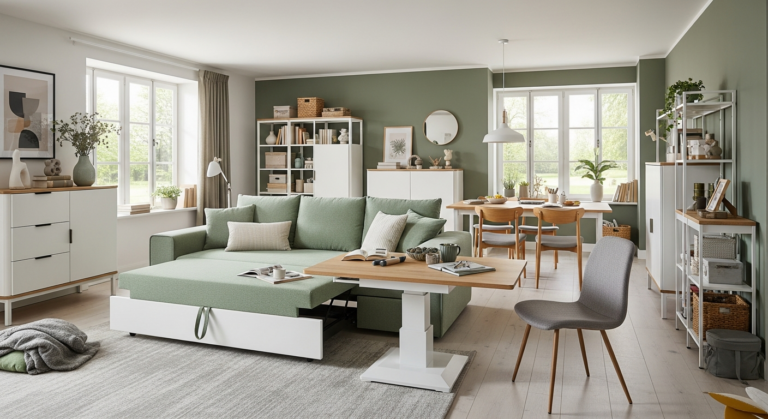

Homework Station Ideas for Small Spaces
Discover how to create functional homework stations in small spaces using creative solutions and smart furniture choices, ensuring your kids have a dedicated spot for learning and focus.
- Convert small spaces like closets, corners, or under-stairs into dedicated study zones.
- Opt for compact or multi-functional furniture like fold-down desks and tuck-under stools.
- Ensure your station has a flat surface, good lighting, and accessible supply storage.
- You only need about 2'x2' of space to create an effective basic homework station.
Not everyone has a dedicated home office or a spare bedroom to convert into a study space. But kids still need a designated spot to do homework—a place where supplies are accessible, distractions are minimized, and the routine of “this is where we work” can take root.
The good news? An effective homework station doesn’t require much space. With creative thinking and smart furniture choices, you can carve out a functional study area in even the smallest home.
[IMAGE: Compact homework station in living room corner with organized supplies]
What Makes an Effective Homework Station
Essential elements:
- Flat surface for writing
- Good lighting
- Supply storage
- Seating at proper height
- Minimal distractions
Nice to have:
- Bulletin board or whiteboard
- Device charging
- Room to spread out
- Privacy or separation from activity
Size needed: As little as 2′ x 2′ can work for a basic homework station.
Small Space Homework Solutions
The Closet Desk
How it works: Convert a small closet into a built-in desk area.
Pros:
- Closes up when not in use
- Built-in boundaries
- Wall space for organization
How to create:
- Remove closet door or keep for privacy
- Install shelf as desk at appropriate height
- Add lighting underneath shelf above
- Use wall space for pegboard or organization
- Add small stool or chair
Best for: Kids who need separation from household activity
—
The Wall-Mounted Fold-Down Desk
How it works: Desk folds flat against wall when not in use.
Pros:
- Zero floor space when closed
- Opens to full workspace
- Clean look
Products: IKEA NORBERG, Prepac floating desk, DIY options
How to create:
- Mount fold-down desk to wall (into studs!)
- Add wall organizers above
- Store stool nearby
- Open only during homework time
Best for: Multi-purpose rooms, very small spaces
—
The Corner Desk
How it works: Utilize corner space that’s often wasted.
Pros:
- Makes use of awkward space
- Creates sense of “personal zone”
- Can be quite compact
Options:
- Small corner desk (many affordable options)
- Triangular shelf as desk
- Custom corner surface
Best for: Rooms where wall space is taken but corners are free
—
The Kitchen Table Setup
How it works: Create a portable homework “kit” that transforms any table.
Pros:
- No dedicated furniture needed
- Parent supervision during homework
- Easily stored when not in use
How to create:
- Assemble homework caddy with all supplies
- Designate homework time slot
- Set up caddy at table during homework
- Store caddy when done
Best for: Very small homes, younger kids needing supervision
Playroom Organization Ideas: How to Tame the Toy Chaos
—
The Floating Shelf Desk
How it works: Deep floating shelf serves as desk surface.
Pros:
- Minimal footprint
- Clean, modern look
- Can install at any height
How to create:
- Install deep shelf (12-18″) at desk height
- Mount into studs for support
- Add lighting and wall organization above
- Pair with backless stool that tucks under
Best for: Hallways, bedrooms, any wall with 2-3 feet of space
—
The Under-Stair Nook
How it works: Convert under-stair space into homework area.
Pros:
- Uses otherwise dead space
- Built-in enclosure
- Can be cozy and inviting
How to create:
- Clear out under-stair area
- Add desk surface at appropriate level
- Install good lighting (crucial—often dark)
- Add storage on walls
- Make it comfortable and appealing
Best for: Homes with accessible under-stair space
Furniture Solutions
Compact Desks
Best small-space desks:
- Ladder desks (small footprint, built-in shelving)
- Secretary desks (close up to hide mess)
- Console tables (narrow, can double as entry table)
- Floating desks (no floor footprint)
Recommended sizes:
- Minimum: 24″ wide x 18″ deep
- Comfortable: 36″ wide x 24″ deep
—
Seating Options
Space-saving chairs:
- Backless stools (tuck under)
- Folding chairs (store flat)
- Saddle stools (compact)
- Floor cushions (no furniture needed)
Considerations:
- Proper height for desk
- Comfortable for homework duration
- Easy to store when not in use
—
Multi-Function Furniture
Dual-purpose options:
- Desk that serves as console table
- Storage ottoman with flat top for lap desk
- Bookshelf with pull-out desk surface
- Coffee table at kid height
[IMAGE: Fold-down wall desk in small bedroom]
Supply Organization
The Homework Caddy
For stations without built-in storage:
Contains:
- Pencils/pens
- Erasers
- Scissors
- Glue stick
- Colored pencils/crayons
- Ruler
- Pencil sharpener
- Paper
- Calculator (age appropriate)
Options:
- Shower caddy (portable, handle)
- Art supply caddy
- Lazy Susan (for table use)
- Small bin with compartments
—
Wall Organization
For stations with wall access:
- Pegboard with containers
- File organizer (mounted)
- Small floating shelves
- Magnetic strips
- Cork strips for pinning
- Pocket organizer
—
Minimizing Supplies
Keep only what’s needed:
- School-age specific supplies
- One of each item (not hoarding)
- Refill don’t overfill
- Purge dried/broken items regularly
Lighting Solutions
Good lighting is non-negotiable for homework—bad lighting causes eye strain and fatigue.
Options for small spaces:
- Clip-on desk lamp
- Wall-mounted swing-arm lamp
- Under-shelf lighting
- Rechargeable LED lamp
Key: Position light to avoid shadows on writing surface.
Making Small Stations Work
Establish Routines
Without dedicated space, routines matter more:
- Same time each day
- Same setup process
- Same cleanup process
- Consistent expectations
Limit Distractions
In small spaces, this is harder but crucial:
- Face away from TV
- Siblings occupied elsewhere
- Devices away (unless needed)
- Background noise managed
Create Boundaries
Without physical walls:
- Time boundaries (homework time is homework time)
- Visual boundaries (area rug, different lighting)
- Supply boundaries (homework supplies stay together)
Toy Rotation System: Less Toys, More Play
Homework Stations by Age
Elementary (K-2)
Needs:
- Close to parent
- Simple supplies
- Supervision access
- Short duration station
Best setup: Kitchen table with caddy, or small desk in family space
—
Elementary (3-5)
Needs:
- Some independence
- More supply variety
- Space to spread out
- Moderate supervision
Best setup: Dedicated small desk, or consistent corner spot
—
Middle School
Needs:
- More privacy
- Device access
- Larger workspace
- Extended study time
Best setup: Bedroom desk (if space allows), or dedicated corner with more separation
—
High School
Needs:
- Significant privacy
- Extended workspace
- Technology integration
- Minimal interruption
Best setup: Private desk area, fold-down desk in room, or designated quiet hours at shared space
Budget Ideas
Under $50
- Kitchen table + caddy setup
- Folding table designated for homework
- Wall-mounted shelf as desk
- Repurposed furniture
$50-150
- Basic student desk
- Fold-down wall desk
- Ladder desk
- Floating desk
$150-300
- Quality corner desk
- Secretary desk
- Built-in closet conversion
- Desk with hutch for storage
Neutral Nina
Neutral Nina is an interior design enthusiast and mom of three who proves that beautiful, organized spaces and family life can coexist. She shares practical strategies for creating calm, functional homes that work for kids and grown-ups alike.
Frequently Asked Questions
What if siblings need to do homework at the same time?
Consider side-by-side stations, staggered homework times, or rotating who gets the prime spot. Individual caddies help even at shared table.
My kid does homework everywhere. Do they need a station?
A designated spot helps establish routine and reduces “I can’t find my pencil” issues. Start with a simple caddy and consistent spot.
What about screens and homework?
If homework requires devices, integrate charging into station. If homework shouldn’t include devices, establish device storage spot away from homework area.
The only space we have is noisy and busy. Now what?
Noise-canceling headphones for older kids. Homework during quieter times if possible. Accept some multitasking for family life reality.
How do I keep the station organized?
Minimal supplies. Everything has a home. Daily reset. Weekly supply check. Involve kids in maintaining their own space.
Conclusion
You don’t need a home office or spare room to create an effective homework station. With creative use of corners, walls, closets, and multi-purpose furniture, any small space can host a functional study area.
Focus on the essentials: flat surface, good lighting, accessible supplies, and consistent routine. The space doesn’t need to be big—it needs to work for your family.
Start simple. A caddy and a consistent spot is a homework station. Build from there.
Small Nursery Ideas: Maximize Space in a Tiny Room
—