Kids Closet Organization Ideas: Systems That Grow With Them
Discover how to create a kid's closet organization system that adapts as your child grows, promoting independence and making mornings easier. You'll learn age-specific strategies and essential elements for hanging, shelving, and floor space.
- Design your child's closet to be accessible, simple, visible, flexible, and promote independence.
- Adapt organization systems to your child's age, from baby to school-age needs.
- Utilize double rods, bins, shelf dividers, and door organizers for efficient storage.
- Implement a capsule wardrobe to simplify choices and reduce clutter.
- Involve older kids in designing their closet system for better ownership.
Children’s closets present a unique challenge: they must accommodate tiny clothes, frequent size changes, and eventually, independent dressing. The right organization system makes mornings easier, teaches responsibility, and adapts as your child grows. Here’s how to create a kid’s closet that actually works.
The Principles of Kid-Friendly Closets
Accessibility: Children can only use systems they can reach.
Simplicity: Complex organization fails with kids. Simple systems stick.
Visibility: If they can see it, they can find it.
Flexibility: Systems must adapt as children grow and needs change.
Independence: The goal is self-dressing, not parent-managed wardrobes.
Closet Organization by Age
Baby Closets (0-1 year)
Babies don’t dress themselves, but organized closets make parent life easier.
Priorities:
- Group by size (current, next size up)
- Separate by type (onesies, sleepers, outfits)
- Easy access for bleary-eyed night changes
- Diaper station supplies if space allows
Storage solutions:
- Hanging dividers that mark sizes
- Open bins for folded items
- Shelf dividers for stacked clothes
- Basket for current-size items on lowest shelf
Toddler Closets (1-3 years)
Toddlers begin showing clothing preferences and can participate in dressing.
Priorities:
- Lower rod for child-reachable hanging items
- Visual organization (they can’t read labels)
- Limited choices to prevent overwhelm
- Easy-to-open bins and drawers
Storage solutions:
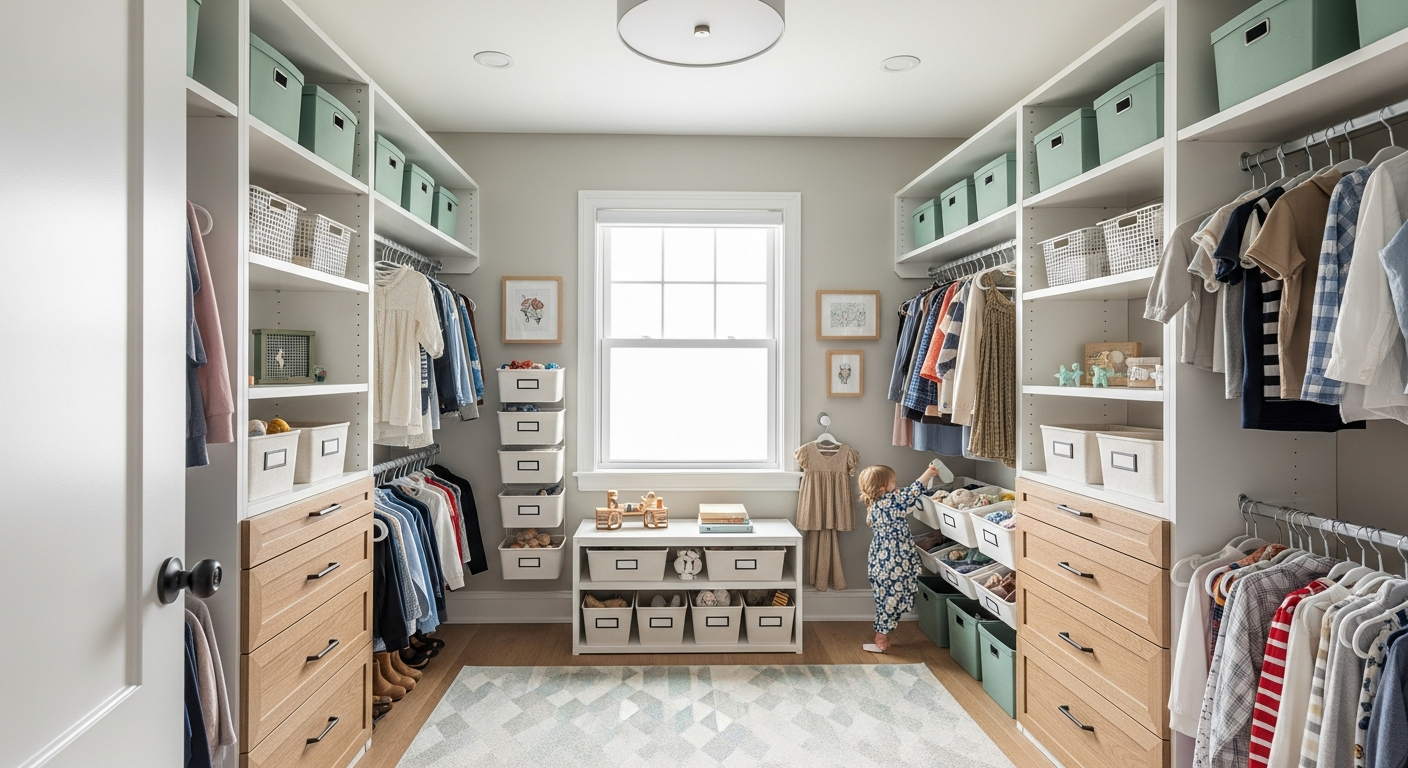
- Double hanging rods (adult height for parent, low rod for child)
- Picture labels on bins
- Open shelving at child level
- Hooks for jackets and bags
Preschool Closets (3-5 years)
Preschoolers can dress independently with the right setup.
Priorities:
- Everything accessible without adult help
- Outfit planning systems
- Categorization they understand
- Room to practice dressing skills
Storage solutions:
- All daily clothes at child level
- Outfit planners or day-of-week hangers
- Color-coded bins or sections
- Full-length mirror (helps with independence)
For more age-appropriate organization, see our playroom organization guide.
School-Age Closets (6-12 years)
School-age kids manage their own wardrobes with minimal guidance.
Priorities:
- Systems they helped design
- Space for growing clothing sizes
- Homework/backpack station if space allows
- Privacy for older kids
Storage solutions:
- Adult-height systems (they can reach now)
- Clothing hamper in closet
- Hooks for frequently worn items
- Drawer organizers for small items
Essential Closet Organization Elements
Hanging Storage
Double rod systems: Install a second rod below standard height. Young children use the lower rod; older children graduate to both.
Adjustable systems: Rods that can be moved as children grow.
S-hooks and cascading hangers: Maximize vertical hanging space.
Outfit hangers: Multiple items on one hanger for pre-planned outfits.
Small hangers: Child-sized hangers fit children’s clothes better and teach proper hanging.
Shelf Organization
Shelf dividers: Prevent stacks from toppling.
Bins and baskets: Corral categories (socks, underwear, pajamas).
Cube storage: Versatile, accessible, grows with child.
Pull-out drawers: Easier access than reaching into deep shelves.
Floor Space
Shoe storage: Rack, over-door organizer, or floor bins.
Hamper: In-closet hamper teaches putting dirty clothes away.
Step stool: For reaching higher items during transition years.
Dress-up storage: If closet is large enough, dedicated dress-up section.
Door Space
Over-door organizers: Shoes, accessories, small items.
Hooks: Robes, jackets, bags.
Mirror: Essential for independent dressing.
Pocket organizers: Small items, hair accessories, belts.
Organization Systems That Work
The Capsule Wardrobe Approach
Limit clothing to pieces that mix and match. Fewer items mean:
- Easier decisions
- Less clutter
- Everything gets worn
- Simpler laundry
Suggested quantities:
- 7-10 tops
- 5-7 bottoms
- 2-3 dresses/jumpsuits
- 5-7 pairs of underwear and socks
- 2 jackets (light and heavy)
- 3-4 pairs of shoes
Store out-of-season and backup items elsewhere.
The Weekly Outfit Planner
Plan and hang complete outfits for the week on Sunday. Each day’s outfit includes everything needed.
Benefits:
- No morning decisions
- No missing pieces discovered at 7am
- Child can dress completely independently
Setup:
- Day-of-week labels on hangers or shelf sections
- Complete outfit on each hanger (shirt, pants, even socks pinned)
- Special sections for school days vs. weekends
The Category System
Organize by clothing type with clear visual divisions.
Hanging section: Dresses, jackets, special occasion
Shelf section: Folded t-shirts, pants, sweaters
Drawer/bin section: Underwear, socks, pajamas
Visual cues:
- Different colored bins per category
- Picture labels for non-readers
- Dividers between sections
Decluttering Kids’ Closets
When to Purge
Every season change: Remove too-small items, rotate seasonal clothes.
Before birthdays and holidays: Make room for incoming items.
When drawers won’t close: Obvious sign of overflow.
When nothing “fits”: If daily dressing involves rejected options, wardrobe is too large or doesn’t match preferences.
What to Remove
- Items that no longer fit
- Clothes never worn (wrong style, uncomfortable)
- Stained or damaged items
- Duplicates (does anyone need 15 t-shirts?)
- Items they’ve outgrown stylistically
Where It Goes
Donate: Gently used items in good condition
Consign/sell: Higher-end brands, like-new items
Pass down: Save for younger siblings
Trash: Stained, torn, or worn out items
For more decluttering inspiration, see our toy rotation system.
Storage Solutions for Small Closets
Maximize Vertical Space
- Double hanging rods
- High shelves for out-of-season items
- Over-door organizers
- Stacking bins
Utilize Door
- Shoe organizer
- Hook strips
- Pocket organizers
Think Outside the Closet
- Dresser for folded items
- Under-bed storage for off-season
- Wall hooks for jackets and bags
- Rolling cart that can move
Limit What’s Stored
Small closets require ruthless editing. If it doesn’t fit, it shouldn’t live there.
Teaching Kids Closet Responsibility
Start Early
Even toddlers can:
- Put dirty clothes in hamper
- Choose between two options
- Put away folded items in open bins
Make It Possible
Children can’t maintain systems they can’t reach or operate. Every expectation must be physically achievable.
Be Patient
Independence develops gradually. Expect imperfection while skills build.
Celebrate Success
Acknowledge when they dress themselves, put clothes away, or keep things organized.
Model the Behavior
If your closet is chaotic, they’re learning that’s normal.
Common Closet Mistakes
Too many clothes: Abundance creates chaos. Edit ruthlessly.
Systems they can’t reach: If they can’t put it away, they won’t.
Complex organization: Simple beats elaborate every time.
No defined homes: Every item needs a specific place.
Ignoring their input: Kids maintain systems they helped create.
Static systems: Closets must evolve as children grow.
Seasonal Closet Maintenance
Spring/Summer Transition
- Remove winter coats, sweaters, heavy pants
- Bring out shorts, t-shirts, sandals
- Check sizes—kids grow over winter
- Donate outgrown winter items
Fall/Winter Transition
- Remove summer items
- Check winter sizes from storage
- Assess what’s needed for season
- Organize school clothes specifically
Back-to-School Reset
- Evaluate uniform or dress code needs
- Check shoe sizes
- Organize backpack/school supply storage
- Create morning routine-friendly setup
Quick Closet Refresh
When full reorganization isn’t possible:
15-minute fixes:
- Remove obvious outgrown items
- Group like with like
- Add labels to bins
- Lower one rod to child height
Weekend project:
- Full cleanout
- Install one new organizational element
- Create outfit planning system
- Add hooks and mirrors
The perfect kids’ closet doesn’t exist—but a functional one does. Start with accessibility, maintain simplicity, and adjust as your children grow. The goal isn’t Pinterest perfection; it’s a system that makes daily life easier for everyone.
Neutral Nina
Neutral Nina is an interior design enthusiast and mom of three who proves that beautiful, organized spaces and family life can coexist. She shares practical strategies for creating calm, functional homes that work for kids and grown-ups alike.