Color Schemes for Kids’ Rooms That Grow with Them
Learn how to choose kids' room wall colors that grow with them, saving you time and money on constant repainting by focusing on timeless foundations and easy-to-change accents.
- Prioritize enduring wall colors and use accessories for trends.
- Choose warm whites, greige, or sage green for versatile walls.
- Use soft navy for an accent wall that grows with your child.
- Avoid bright primaries or character themes on walls for longevity.
In this article (7 sections)
Why Repainting Every Few Years Adds Up
Bubblegum pink at age two. Bright purple at four. Teal at five. Coral at seven. And most recently, a lavender-gray at nine. Every year or two, I was back at the paint store buying two gallons of whatever color she was obsessed with, and swearing this would be the last time.
Paint alone was about $140 per repaint, so $700 across five repaints, before primer, tape, and rollers. Each repaint also took a weekend. By my own rough estimate, that is about 40 hours spent painting one child’s bedroom.
Free printable · 6 pages
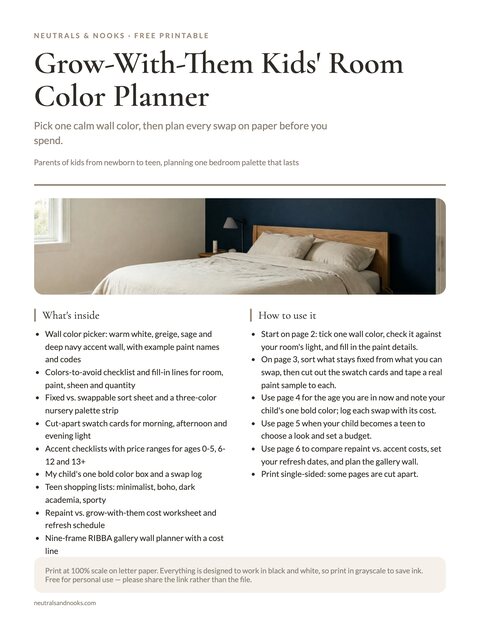
Grow-With-Them Kids' Room Color Planner
A wall-color picker with the four paint families and example codes, a fixed-vs-swappable sort sheet with a three-color nursery palette and cut-out swatch cards, accent checklists with price ranges for ages 0-5, 6-12 and 13+, four teen shopping lists, a repaint-vs-accent cost worksheet with a refresh schedule, and a nine-frame RIBBA gallery wall planner.
Free. Your download link appears right here. You'll also join the Monthly Home Reset. Unsubscribe anytime. Privacy
For my younger son’s room, I tried something different. I chose a foundation palette meant to work from infancy through the teen years, with only small updates to bedding and accessories.
He is six and the walls are untouched so far. I expect them to last, though I can’t promise it yet. This page covers the wall colors I would pick again, what to change at each age, and what it all costs.
The short answer: put one of four calm colors on the walls, and let your child’s current obsession live on things you can swap in an afternoon.
Best Wall Colors for Kids’ Rooms That Last
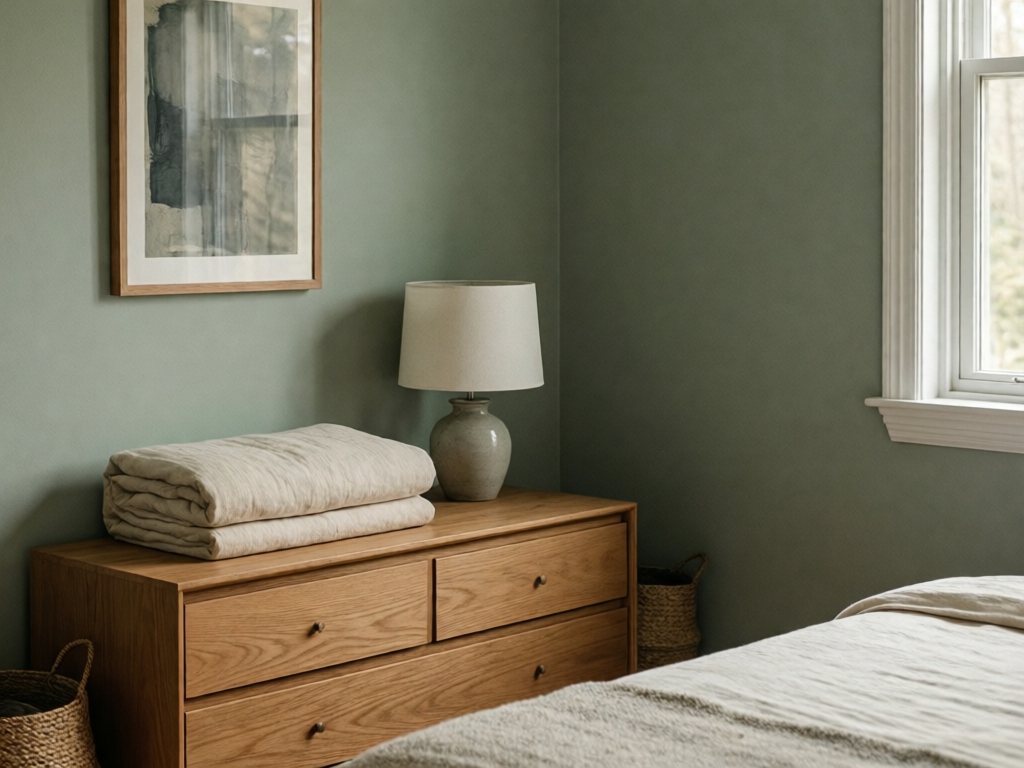
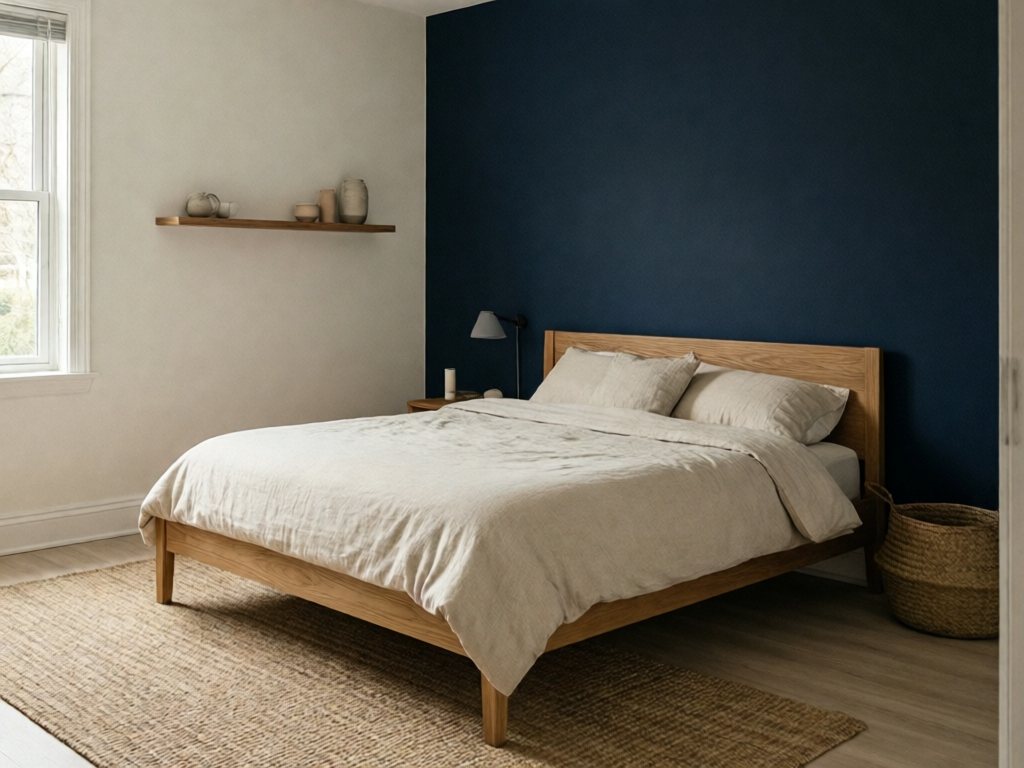
The core principle: put enduring colors on the walls and trend-driven colors on accessories. Walls are slow and costly to change. Pillows, bedding, and art are cheap to swap.
Safety first
- Homes built before 1978: test for lead paint with an EPA-recognized kit before disturbing any paint, and hire an EPA RRP-certified pro for sanding or scraping.
- Paint choice: pick low- or zero-VOC paint, follow the can’s cure and re-entry guidance, and ventilate with open windows and fans.
- Re-entry: keep infants, children, and anyone pregnant out while you paint and for the re-entry time on the can. Ventilate for as long as the can states, and do not rely on smell alone, because low-odor paint can still be curing. Finish nursery painting well ahead of time. I personally wait several days before a baby sleeps in the room.
| Color family | Example paints | Works best with | Mood by age |
|---|---|---|---|
| Warm white | Benjamin Moore Simply White (OC-117); Farrow & Ball All White (2005) | Any accent color | Soft in a nursery, clean for a teen |
| Greige | Sherwin-Williams Agreeable Gray (SW 7029); Benjamin Moore Revere Pewter (HC-172) | Wood, terracotta, mustard, blue | Quiet for a toddler, grown-up for a teen |
| Sage green | Sherwin-Williams Evergreen Fog (SW 9130); Benjamin Moore October Mist (1495) | Natural wood, cream, dusty pink | Calm for a toddler, cool for a tween, mature for a teen |
| Deep navy (one accent wall) | Benjamin Moore Hale Navy (HC-154) | Warm white on the other walls | Cozy for a young child, moody for a teen |
| Colors to avoid | Bright primaries, hot pink, bright purple, neon, character colors | — | Feel age-specific within two to three years |
Colors and codes were correct when written. Confirm them at the paint counter, as lines get renamed or discontinued. Always test a real sample, because screens and light change how colors look.
Warm whites and creams
Warm whites are the most flexible choice for a room that will change. Simply White (OC-117) has a soft, creamy undertone, and Farrow & Ball’s All White (2005) is similar with slightly more warmth. Both glow in natural light without feeling sterile.
Greige (gray-beige)
Greige shifts with the light and with your accents. It looks slightly cooler beside blue and warmer beside terracotta or mustard. Agreeable Gray (SW 7029) is a popular pick, and Revere Pewter (HC-172) runs a little warmer.
Sage green
Sage stays muted, so it reads as calm rather than loud. The two examples are not interchangeable. Sherwin-Williams’ Evergreen Fog (SW 9130), their 2022 Color of the Year, is a deeper gray-green. October Mist (1495) is a lighter, softer sage.
Sample both before you choose, since the deeper one can look heavy in a dim room. Sage looks freshest in bright light.
Deep navy
Deep navy is the one bold wall color I would still pick for longevity. Hale Navy (HC-154) on a single accent wall, with warm white on the other three, keeps the room cozy rather than dark.
Colors to avoid on walls if longevity is the goal: bright primary colors (red, yellow, royal blue), hot pink, bright purple, neon anything, and character-specific colors tied to a franchise. These colors feel age-specific and will need repainting within two to three years.
How to choose among the four
| Your room | Best pick | Why |
|---|---|---|
| Dim or north-facing | Warm white or greige | Both bounce light and keep the room from feeling heavy. |
| Sunny | Sage | Strong light keeps sage fresh instead of dull. |
| Wants a cozy focal wall | Navy accent plus warm white | One dark wall behind the bed adds depth without shrinking the room. |
| Renting | Warm white, swatch-tested | Easiest to cover later. Use peel-and-stick for any bold color. |
Swatch-test before you buy gallons
- Paint a sample. Cover a 2-foot square on the wall, or on a board you can move around.
- Watch it all day. Look at it in morning, afternoon, and evening light.
- Hold the soft goods next to it. Check the bedding or rug against the sample.
- Buy and prime if needed. Choose a washable eggshell or satin sheen. If the walls are dark or bright now, use one coat of primer and then two coats of your new color.
Nursery and Toddler Room Accents (Ages 0-5)
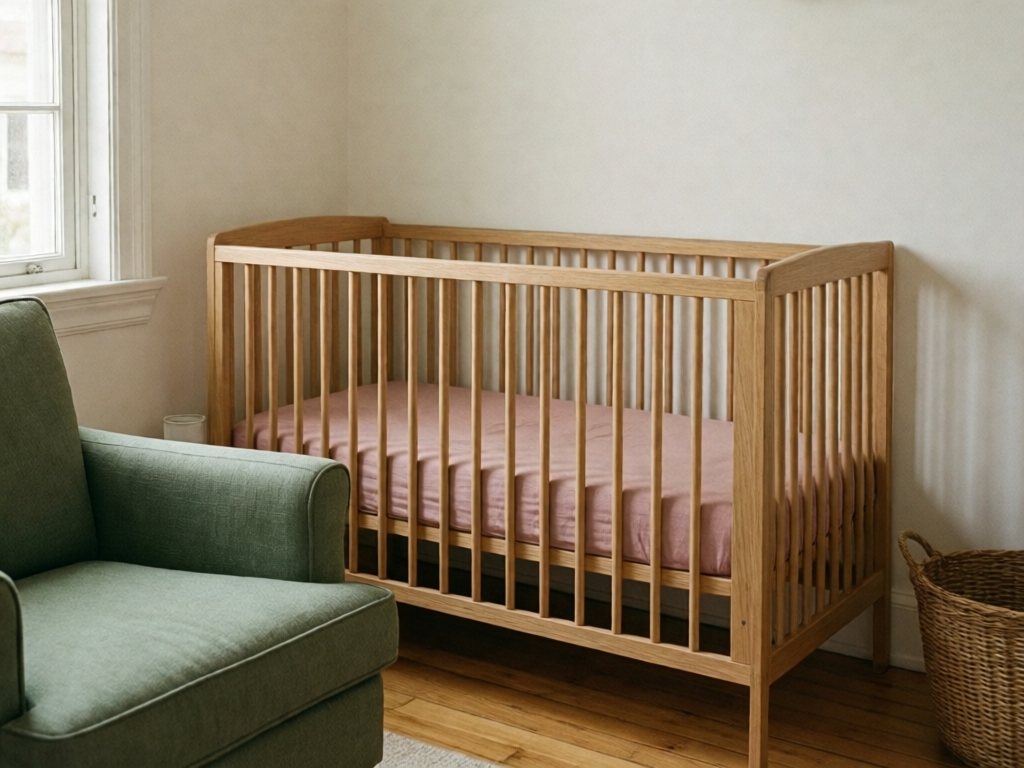
For ages 0-5, keep the accent layer soft, playful, and easy to update.
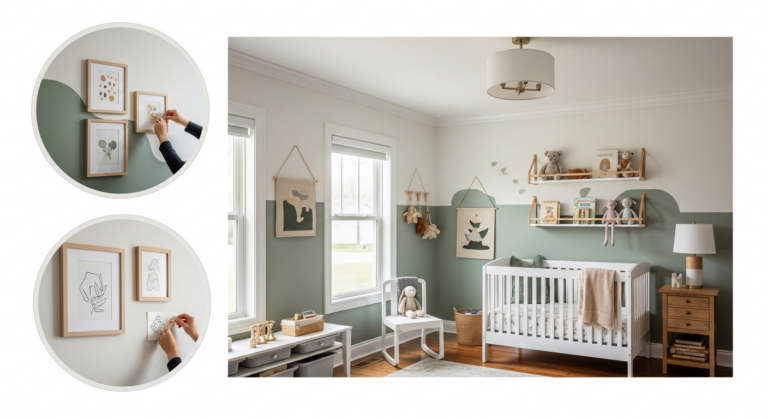
Nursery accents (0-2): Keep the palette to three colors at most. A warm white wall with dusty rose, sage, and natural wood accents feels sweet without shouting “baby.”
Style it with a dusty rose fitted crib sheet ($18 from Target’s Cloud Island line) and natural wood frames for wall art. When the crib becomes a toddler bed, dusty rose and sage carry straight into the new bedding. For more setup ideas, see our nursery setup on a budget.
Safety first
- Follow AAP safe-sleep guidance: baby on their back, on a firm, flat sleep surface with a fitted sheet only. No loose blankets, pillows, comforters, bumpers, or soft toys until at least 12 months.
- Stop swaddling at the first signs of rolling, often around 2 months. Avoid weighted swaddles and weighted sleep sacks.
- Hang art securely, out of reach and not over the crib, in shatter-resistant (acrylic) frames.
- Use cordless blinds or secure all cords out of reach, and keep cribs and beds away from windows.
Toddler and preschool accents (2-5): This is when your child starts expressing color preferences. Rather than repainting walls, satisfy their color cravings through bedding, throw pillows, a small rug, and wall art. If your three-year-old is obsessed with dinosaurs, a dinosaur duvet cover from Target ($25) and two dinosaur prints from Minted ($25 each) transform the room instantly. When the phase passes, swap the duvet and prints for the next interest at under $80.
Key accent pieces for toddlers and preschoolers (crib-free beds):
- Duvet cover or comforter (toddler bed only): the single biggest visual impact item ($25-$60).
- Two to three throw pillows (toddler bed only): easy personality ($10-$20 each).
- Wall art: three to five prints or canvases ($15-$30 each, or free printables).
- Area rug: defines the room’s energy and anchors the bed ($50-$150).
- Curtains (two panels): the second-biggest visual surface after bedding ($15-$40 per panel). Choose cordless window coverings, or keep all cords out of reach.
A full accent refresh runs roughly $170-$500, depending on how many pieces you swap. Prices are rough and from 2026, so check current listings.
Big-Kid Room Ideas (Ages 6-12)
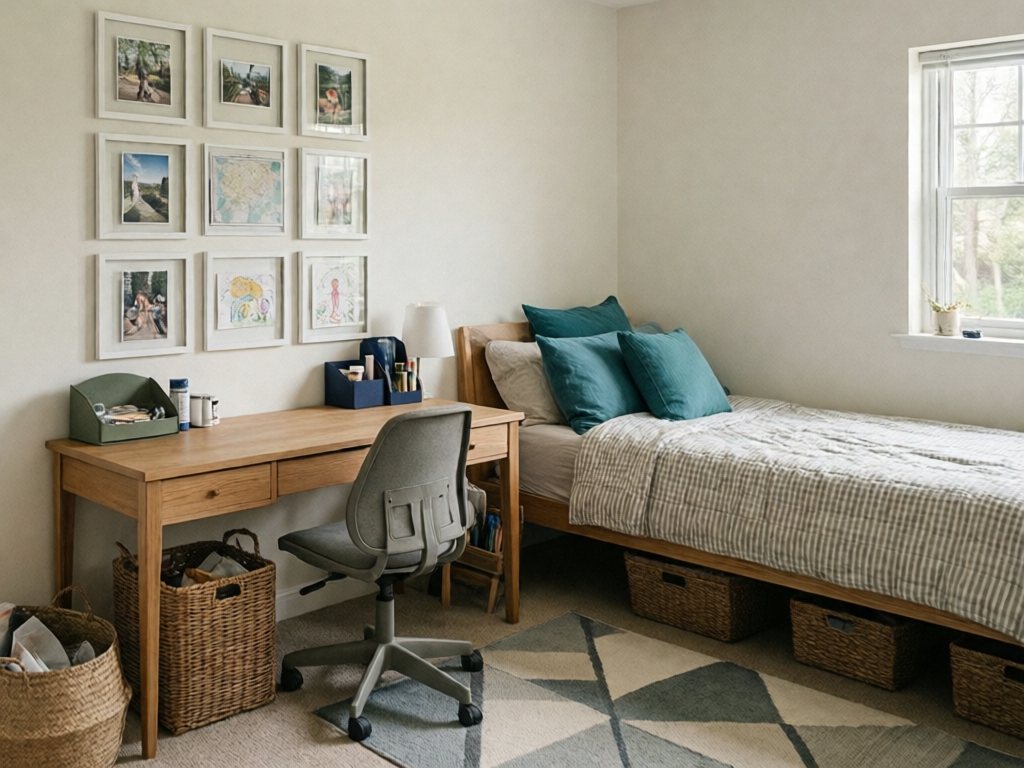
Stronger opinions and fast-changing interests arrive at this age, and the foundation palette pays off.
Let your child pick one accent color
Ask your child to pick one accent color that represents them right now. Maybe it is teal, maybe it is burnt orange, maybe it is black (deep breath). Then incorporate that color through swappable elements only: bedding, lamp shade, desk accessories, and one or two wall art pieces. Against your neutral walls, even black accents look intentional and sophisticated rather than overwhelming.
Add pattern and texture
Kids in this age range are ready for more complex visual environments. A geometric rug from Rugs USA ($60 to $120 for a 5×7) adds interest. So does a striped duvet cover from Pottery Barn Teen ($80 to $130) or a textured throw pillow. None of them commits you to a theme that will feel juvenile by next year. Patterns in neutral tones with pops of the child’s chosen accent color create a cohesive, grown-up look.
Refresh the gallery wall
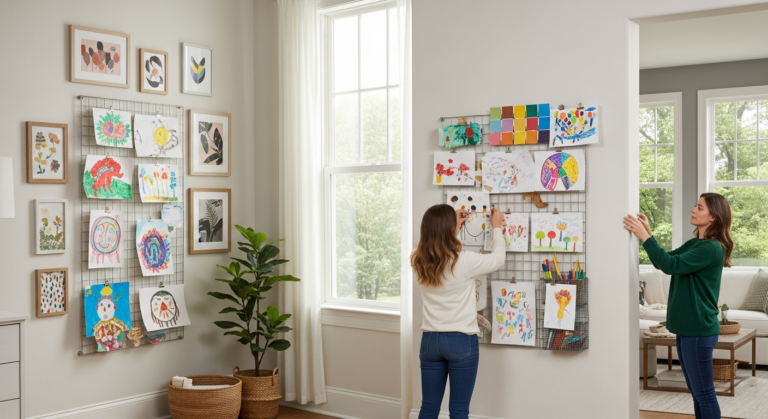
Replace baby animal prints with photography, maps, concert posters (framed for a polished look), or your child’s own artwork. IKEA’s RIBBA frames ($5 to $15 depending on size) in white or black make a uniform gallery that can hold anything. When interests change, the frames stay and the contents swap.
A nine-frame grid of 8×10 RIBBA frames costs about $45 and gives the child something to curate. Hang it over a desk or dresser rather than directly over the pillow, mount into studs or with proper anchors, and use acrylic or shatter-resistant fronts. See more in our guide to wall decor that is safe for kids’ rooms.
Style the desk and shelves
Tie desk and shelf zones into the palette with accessories from Target or IKEA in sage, navy, dusty pink, or charcoal. A set in the child’s chosen accent color makes the workspace feel polished and personal. Our homework station ideas help if space is tight.
Safety firstAnchor bookcases, shelves, and dressers to the wall studs so they can’t tip. Use acrylic rather than glass fronts on frames, and hang art over a desk or dresser, not over the pillow. Keep beds away from windows, and use cordless blinds or secure all cords out of reach.
Teen Bedroom Ideas That Work with Neutral Walls (13+)
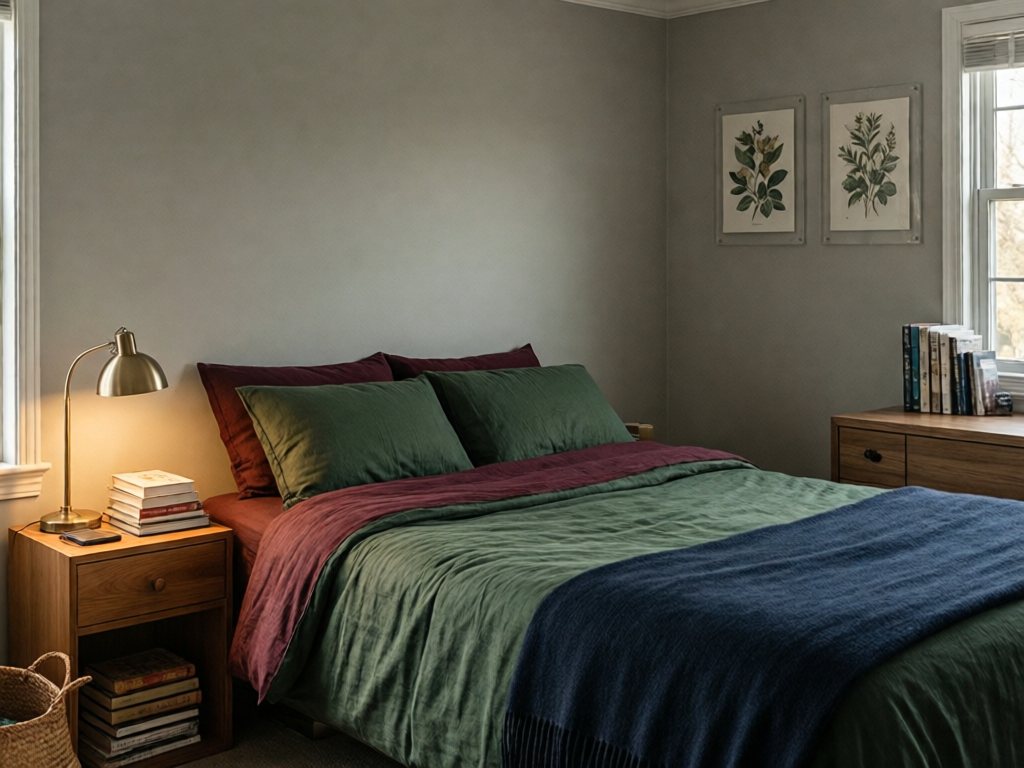
Teens want a room that feels like theirs, and neutral walls give them a quiet backdrop for whatever aesthetic they are into this year.
Popular teen aesthetics and how to get them with accessories:
| Aesthetic | Key pieces | Best wall color | Budget |
|---|---|---|---|
| Minimalist modern | White bedding, black and white prints, black desk lamp, one plant | Warm white | Under $150 |
| Boho or cottagecore | Layered linen, dried flowers, macrame, fairy lights | Warm white or sage | $200-$350 |
| Dark academia | Jewel-toned bedding, maps, brass lamps, stacked books | Greige or sage | $100-$250 |
| Sporty and minimal | Team-color bedding, framed photos, cork board | Warm white or greige | $100-$200 |
Minimalist modern
Works against warm white walls, and H&M Home, IKEA, and Target cover most of it.
Boho or cottagecore
Etsy, Urban Outfitters Home, and Target’s Opalhouse line cover most of this look.
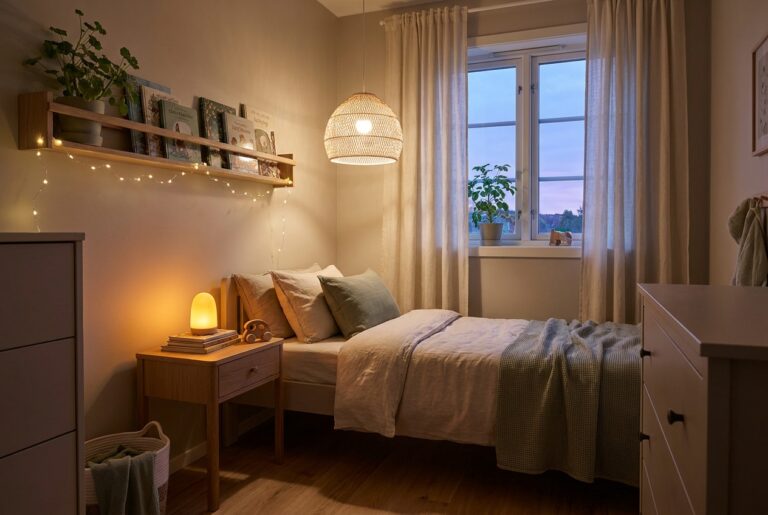
Good to knowChoose UL-listed LED string lights, don’t drape them over fabric, and unplug them overnight.
Dark academia
Greige or sage walls suit the jewel tones, and thrift stores are a good source for maps, books, and brass lamps.
Sporty and minimal
Keep it intentional: one framed photo wall and a cork board for tickets rather than logos on every surface.
Each of these looks comes entirely from bedding, wall art, lighting, and small accessories, the accent layer. The walls remain untouched. When your teenager leaves for college and you convert the room to a guest room, a simple bedding swap and art change transforms the space in an afternoon.
Repainting vs. Grow-With-Them: Cost Comparison
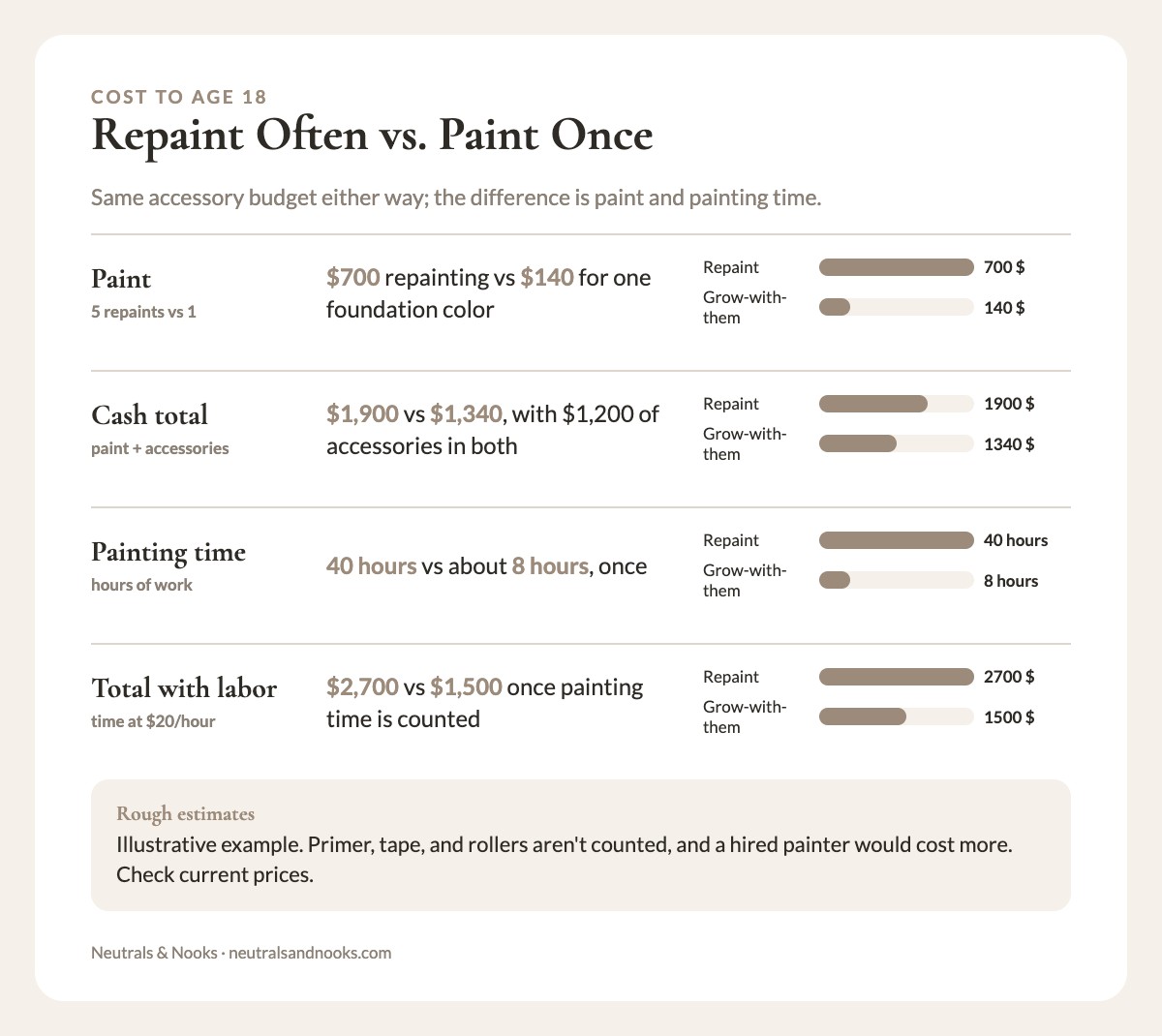
This table is an illustrative example to age 18, and all figures are rough estimates. I assumed five repaints at about $140 each for paint alone and roughly 40 hours of painting, with no repaints after that. Primer, tape, and rollers aren’t counted in either column.
I also assumed about $200 per accessory refresh for both approaches, near the low end of the $170 to $500 range above.
Painting time is valued at $20 an hour, and accessory-refresh time isn’t counted for either column. Check current prices before you budget.
| Projected cost to age 18 | Traditional repaint | Grow-with-them |
|---|---|---|
| Paint | 5 repaints x $140 = $700 | One foundation color, $140 |
| Accessories | 6 refreshes x $200 = $1,200 | 6 refreshes x $200 = $1,200 |
| Cash total | $1,900 | $1,340 |
| Painting labor ($20/hour) | 40 hours ($800) | About 8 hours, once ($160) |
| Total with labor | $2,700 | $1,500 |
The cash savings are modest, about $560 over 18 years, or about $1,200 if you value your painting time at $20 an hour. A hired painter would cost more. The bigger win is time and stress, since you skip the weekends of taping, priming, and painting.
What to swap by age
| Age band | What to swap | Typical cost | Walls |
|---|---|---|---|
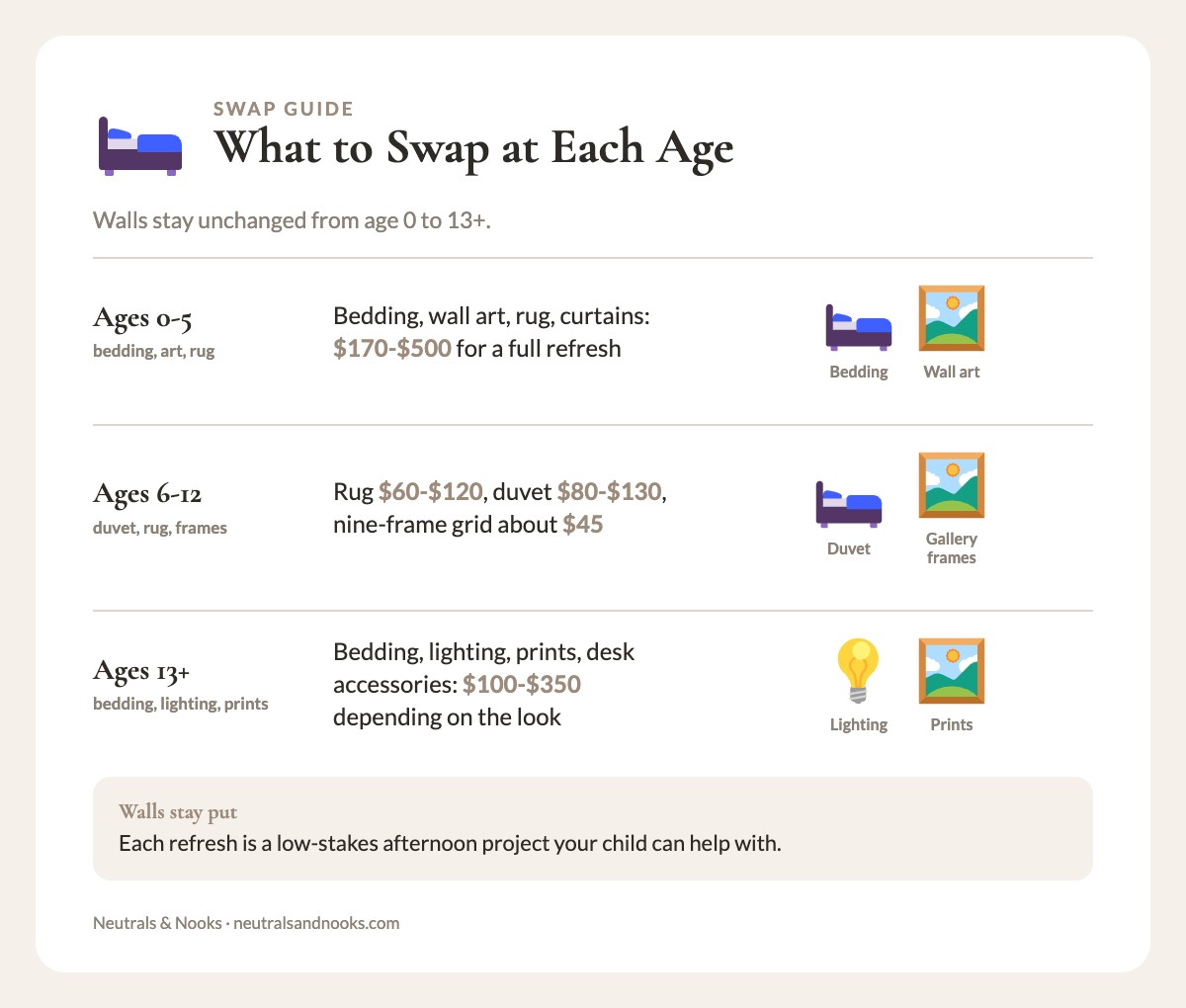
| 0-5 | Bedding, wall art, rug, curtains | $170-$500 for a full refresh | Unchanged |
| 6-12 | Duvet, rug, lamp shade, gallery frame contents | Rug $60-$120, duvet $80-$130, nine-frame grid about $45 | Unchanged |
| 13+ | Bedding, lighting, prints, desk accessories | $100-$350 depending on the look | Unchanged |
The Grow-With-Them Kids’ Room Color Planner on this page helps you map these swaps to your own child’s ages.
There are trade-offs. A child may still ask for a bold wall, and accessory refreshes add up if you do them often. Each refresh is a low-stakes afternoon project your child can help with.
If a bold wall request comes up, try peel-and-stick wallpaper or a large fabric wall hanging on one wall, a painted door, or a bold dresser. You can also put the color on a swappable piece only. Tell your child up front that the walls stay put and the room’s colors change through the things you can swap together.
Neutral walls may also help when you sell. Some agents suggest neutral paint before listing, and a warm white or sage room is easy for buyers to picture as their own.
Your child will change favorite colors many times before they leave home, and calm walls let the room keep up without another trip to the paint store.
Kids’ Room Paint Color FAQ
What is the best paint finish for a kids’ room?
A washable eggshell or satin. Both wipe clean better than flat paint and hide less of the wall’s texture than gloss.
Does navy work in a small room or a nursery?
Use it on one accent wall behind the bed or crib and keep the other walls warm white. That gives you depth without making the room feel smaller.
How soon can a baby sleep in a freshly painted room?
Follow the can’s cure and re-entry instructions and ventilate for the time it states. Do not rely on smell alone. I wait several days before a baby sleeps in the room. See the safety box above.
Do I need primer?
Not usually over a clean, light wall. If the current color is dark or bright, use one coat of primer and then two coats of the new color.
Should my child pick the wall color?
Let them choose the accent color instead, and put it on bedding, lamps, and art. That gives them a say while the walls stay calm and repaint-free.
For more, see our ideas for shared kids’ rooms, under-bed storage, and a gender-neutral kids’ room.
Neutral Nina
Neutral Nina is an interior design enthusiast and mom of three who proves that beautiful, organized spaces and family life can coexist. She shares practical strategies for creating calm, functional homes that work for kids and grown-ups alike.