Color Schemes for Kids’ Rooms That Grow with Them
Learn how to choose kids' room wall colors that grow with them, saving you time and money on constant repainting by focusing on timeless foundations and easy-to-change accents.
- Prioritize enduring wall colors and use accessories for trends.
- Choose warm whites, greige, or sage green for versatile walls.
- Use soft navy for an accent wall that grows with your child.
- Avoid bright primaries or character themes on walls for longevity.
My Daughter’s Room Has Been Repainted Five Times and She Is Only Nine
Bubblegum pink at age two. Bright purple at four. Teal at five. Coral at seven. And most recently, a lavender-gray at nine. Every two years, I found myself at the paint store, buying two gallons of whatever color my daughter was currently obsessed with, spending a weekend repainting, and swearing this would be the last time. The paint alone cost roughly $140 per repaint, plus primer, tape, rollers, and an entire weekend of labor. Over nine years, I spent nearly $700 and roughly 40 hours painting one child’s bedroom.
When it came time to design my younger son’s room, I took a completely different approach. I chose a color scheme designed to grow with him from infancy through the teenage years, a foundation palette that would look appropriate at every age with only minor, inexpensive updates to accessories and textiles. He is six now, the walls have never been repainted, and his room still looks current, age-appropriate, and intentional. The difference was not spending more money. It was understanding how color works in kids’ spaces and making smarter choices from the start.
The Foundation Palette: Walls That Age Gracefully
The single most important principle of a grow-with-them color scheme is this: put the enduring colors on the walls and the trend-driven colors on the accessories. Walls are expensive and labor-intensive to change. Throw pillows, bedding, and artwork are cheap and easy to swap. Design accordingly.
Warm whites and creams are the most versatile wall color for a room that needs to evolve. Benjamin Moore’s “Simply White” (OC-117) is a warm, approachable white that looks sophisticated in a nursery and equally at home in a teenager’s room. Farrow & Ball’s “All White” (2005) is a similar tone with slightly more warmth. These are not stark or sterile; they glow with natural light and provide a perfect canvas for any accent color your child loves today or will love five years from now.
Greige (gray-beige) is the chameleon of wall colors. It shifts subtly with different lighting and accent colors, looking slightly cooler with blue accessories and warmer with terracotta or mustard accents. Sherwin-Williams’ “Agreeable Gray” (SW 7029) is the single most popular greige in residential design and works beautifully from nursery through college dorm. Benjamin Moore’s “Revere Pewter” (HC-172) runs slightly warmer and pairs exceptionally well with natural wood furniture.
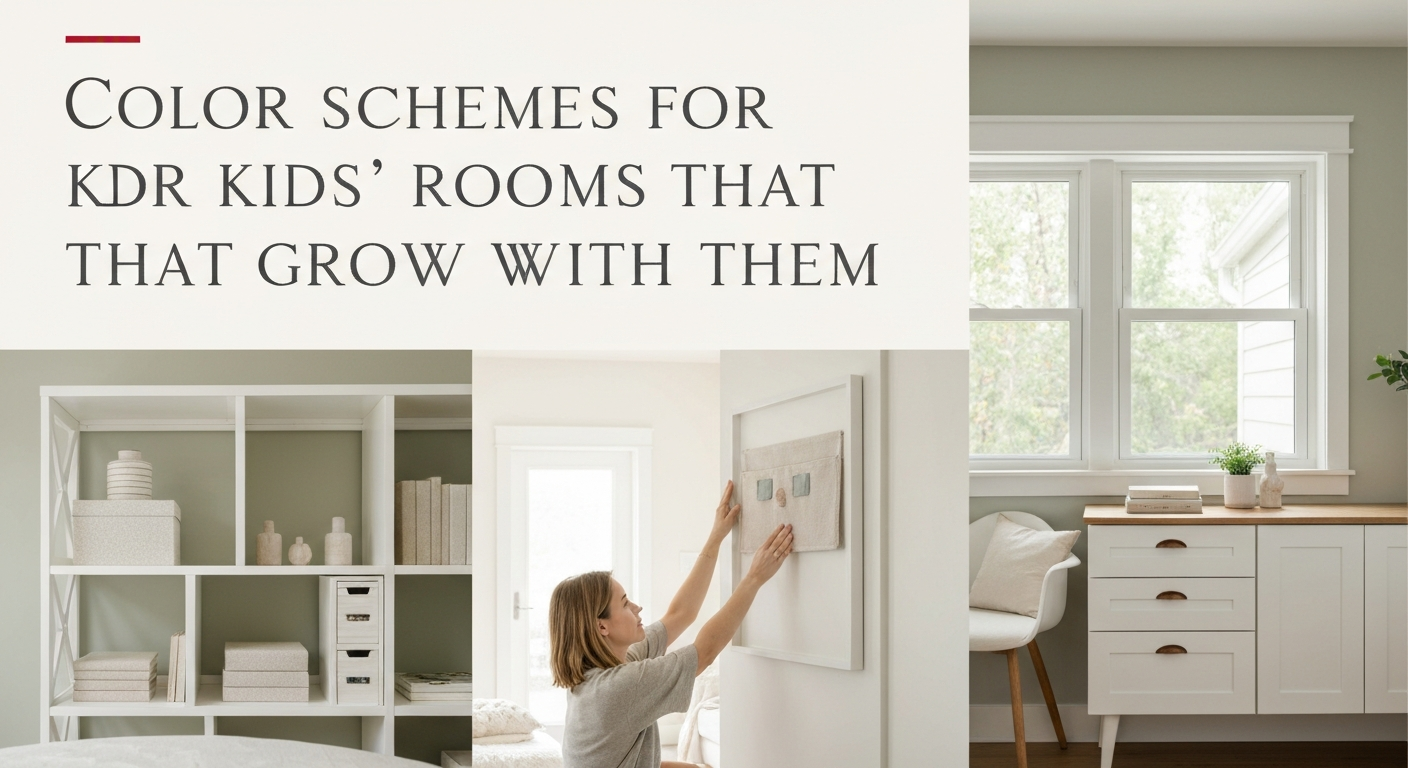
Sage green has remarkable staying power as a wall color. It reads as calm and nature-inspired for a toddler, cool and collected for a tween, and sophisticated for a teenager. Sherwin-Williams’ “Evergreen Fog” (SW 9130) was their 2022 Color of the Year and has become a modern classic in kids’ rooms. Benjamin Moore’s “October Mist” (1495) is a similar muted sage that works across all ages.
Soft navy is the one bold wall color I recommend for longevity. A deep navy accent wall reads as cozy and whimsical in a young child’s room and mature and moody in a teenager’s space. Benjamin Moore’s “Hale Navy” (HC-154) is a timeless choice. Use it on one accent wall with warm white on the remaining three walls, and you have a foundation that works for a decade or more.
Colors to avoid on walls if longevity is the goal: bright primary colors (red, yellow, royal blue), hot pink, bright purple, neon anything, and character-specific colors tied to a franchise. These colors feel age-specific and will need repainting within two to three years.
The Accent Layer: Ages 0 Through 5
With your neutral or muted wall color in place, the accent layer is where your child’s current personality and age shine through. For children birth through five, the accent layer should be soft, playful, and easy to update as development stages fly by.
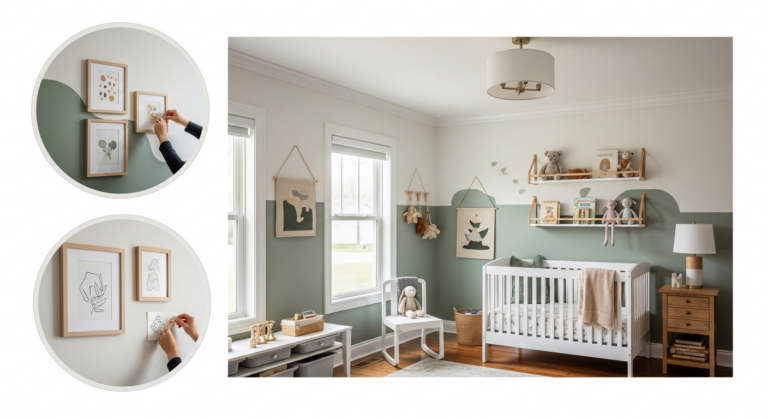
Nursery accents (0-2): Keep the palette to three colors maximum. A warm white wall with dusty rose, sage, and natural wood accents creates a timeless nursery that does not scream “baby” but still feels sweet and appropriate. Swap in: a dusty rose crib sheet ($18 from Target’s Cloud Island line), a sage green swaddle blanket, and natural wood frames for wall art. When the crib transitions to a toddler bed, these accents still work perfectly.
Toddler and preschool accents (2-5): This is when your child starts expressing color preferences. Rather than repainting walls, satisfy their color cravings through bedding, throw pillows, a small rug, and wall art. If your three-year-old is obsessed with dinosaurs, a dinosaur duvet cover from Target ($25) and two dinosaur prints from Minted ($25 each) transform the room instantly. When the dinosaur phase passes in six months, you swap the duvet and prints for the next interest, total cost under $80, zero painting required.
Key accent pieces for this age range:
- Duvet cover or comforter: the single biggest visual impact item ($25-$60)
- Two to three throw pillows: easy personality injection ($10-$20 each)
- Wall art: three to five prints or canvases ($15-$30 each, or free printables)
- Area rug: defines the room’s energy and anchors the bed ($50-$150)
- Curtains: the second-biggest visual surface after bedding ($15-$40 per panel)
Total cost to completely refresh the accent layer: $150 to $400, no painting, completable in an afternoon.
The Accent Layer: Ages 6 Through 12
Elementary and middle school years bring stronger opinions, peer influence, and rapidly shifting interests. Your child’s room needs to reflect their growing independence while remaining a space you both feel good about. The foundation palette earns its keep during this stage.
Let them lead with one bold color. Ask your child to pick one accent color that represents them right now. Maybe it is teal, maybe it is burnt orange, maybe it is black (deep breath). Then incorporate that color through swappable elements only: bedding, lamp shade, desk accessories, and one or two wall art pieces. Against your neutral walls, even black accents look intentional and sophisticated rather than overwhelming.
Introduce pattern and texture. Kids in this age range are ready for more complex visual environments. A geometric rug from Rugs USA ($60 to $120 for a 5×7), a striped or patterned duvet cover from Pottery Barn Teen ($80 to $130), and a textured throw pillow add visual interest without committing to a theme that will feel juvenile by next year. Patterns in neutral tones with pops of the child’s chosen accent color create a cohesive, grown-up look.
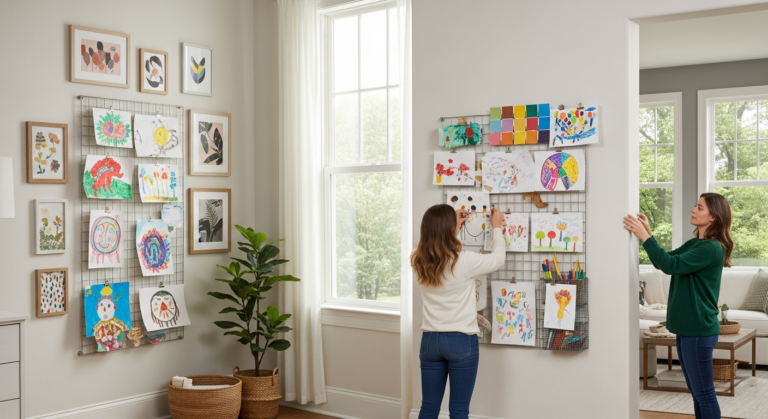
The gallery wall evolves. Replace baby animal prints with photography, maps, concert posters (framed for a polished look), or your child’s own artwork. IKEA’s RIBBA frames ($5 to $15 depending on size) in white or black create a uniform gallery that can hold any content. When interests change, the frames stay and the contents swap. A nine-frame grid above the bed using 8×10 RIBBA frames costs about $45 total and provides a significant visual anchor that the child curates themselves.
Desk and shelving areas become more prominent in this age range. Tie these functional zones into the color scheme with coordinated desk accessories. The Poppin desk accessory line at Target ($5 to $15 per piece) comes in a wide range of colors including sage, navy, dusty pink, and charcoal. A coordinated set of desk accessories in the child’s chosen accent color makes their workspace feel polished and personal.
The Accent Layer: Ages 13 and Up
Teenagers want their room to feel distinctly theirs, and the neutral foundation you laid years ago now becomes the ultimate asset. While their friends are begging parents to repaint bright purple walls back to something mature, your teenager has a sophisticated backdrop that supports any aesthetic they are currently into.
Current teen aesthetics and how to achieve them with accessories:
Minimalist modern: White bedding, black and white photography prints, a simple black desk lamp, and one plant. Against warm white walls, this comes together for under $150 with purchases from H&M Home, IKEA, and Target.
Boho or cottagecore: Layered linen and cotton bedding in earth tones, dried flower arrangements, a macrame wall hanging, warm-toned fairy lights, and vintage-look frames. Etsy, Urban Outfitters Home, and Target’s Opalhouse line provide everything you need for $200 to $350.
Dark academia: Deep jewel-toned bedding (forest green, burgundy, navy), leather-look desk accessories, vintage maps or botanical prints, stacked books as decor, and warm brass lamp fixtures. Against greige or sage walls, this aesthetic sings. Thrift stores and Amazon together can build this look for $100 to $250.
Sporty and minimal: Solid-color bedding in team colors, framed sports photography or memorabilia, a cork board for tickets and pins, and clean-lined furniture. This look is intentional rather than plastering every wall with sports logos. Budget: $100 to $200.
The beauty of each of these teen aesthetics is that they can be achieved entirely through bedding, wall art, lighting, and small accessories, the accent layer. The walls remain untouched. When your teenager leaves for college and you convert the room to a guest room, a simple bedding swap and art change transforms the space in an afternoon.
The Budget Math: Why This Approach Saves Thousands
Let me run the real numbers to show why a grow-with-them color strategy is not just aesthetically smart but financially brilliant.
The traditional repaint approach (birth to age 18):
- Nursery colors, then repaint at age 3: $140 paint + supplies
- Preschool colors, then repaint at age 6: $140
- Elementary colors, then repaint at age 10: $140
- Tween colors, then repaint at age 14: $140
- Teen colors: $140
- Total paint cost over 18 years: approximately $700
- Total labor: 40+ hours (or $800+ if hiring a painter)
- Plus new bedding and accessories each time to match new wall color: approximately $200 per refresh x 5 = $1,000
- Grand total: $1,700 to $2,500
The grow-with-them accent approach (birth to age 18):
- One-time quality wall paint in a foundation color: $140
- Accent layer refresh every 2-3 years (bedding, pillows, art, small accessories): $150 to $300 per refresh x 6 refreshes = $900 to $1,800
- Zero labor hours on repainting
- Grand total: $1,040 to $1,940
At first glance, the savings might seem modest in dollar terms, roughly $500 to $700 over 18 years. But the real savings are in time and stress. You never spend another weekend taping, priming, and painting. You never argue about wall colors. Every refresh is a fun, low-stakes afternoon project that your child can participate in and take ownership of. And you never have that sinking moment when your child announces they hate the color you just spent two days applying.
The grow-with-them approach also holds resale value better. When it is time to sell your home, a child’s room in warm white or sage green with attractive, age-neutral furniture is a selling point. A child’s room in neon purple with character decals is a liability that buyers mentally budget a repainting cost for. Real estate agents consistently report that neutrally painted kids’ rooms photograph better and attract more interest than boldly colored ones.
Ultimately, a grow-with-them color scheme is about designing with the long view. Your child will change their favorite color, their favorite hobby, and their aesthetic identity many times over before they leave home. Give them a room that celebrates and supports every version of who they become, without requiring a trip to the paint store every time.