Kids’ Closet Organization: Systems That Grow With Your Child
You'll learn to create kids' closet organization systems that adapt to your child's age and changing needs, avoiding common pitfalls of adult-centric methods. Discover how to declutter effectively and set up age-appropriate storage from nursery through high school.
- Design closet systems that grow with your child's age and developmental stage.
- Declutter thoroughly before organizing, keeping only what's needed for 1-2 weeks.
- Avoid adult-level complexity; your kids' systems need to be simple and accessible.
- For babies, prioritize caregiver efficiency with easy access and size sorting.
You organized your child’s closet last month. It was perfect—everything had a place, you could see what you had, mornings were smooth. Then… life happened. Now clothes are shoved in randomly, shoes are scattered, and your child is wearing the same three outfits because nothing else is visible.
Here’s the truth about kids’ closets: they’re fighting against two powerful forces. First, children grow constantly, meaning clothes cycle in and out faster than adult closets. Second, kids have developmental limits on organization skills that adult systems don’t account for.
A kids’ closet that works isn’t just a smaller version of an adult closet. It’s a system designed specifically for how children function at their current age—one that grows with them rather than against them.
This guide will help you create closet systems for every stage, from nursery through high school, that stay organized because they work WITH your child’s abilities, not despite them.
The Problem with Most Kids’ Closet Organization
Why Standard Approaches Fail
Too complicated:
Adult organizational systems with multiple categories, folding techniques, and precise arrangements overwhelm children and parents trying to maintain them.
Wrong heights:
Standard closets are designed for adult reach. When kids can’t access their own clothes independently, they either can’t dress themselves or they destroy organization trying.
Static systems:
Children’s needs change rapidly. A closet system that’s perfect at age 3 is useless at age 5. Most setups don’t anticipate this constant evolution.
Too many clothes:
Kids’ clothes multiply mysteriously. Hand-me-downs, gifts, clearance finds—suddenly there’s too much stuff for any system to handle.
Unrealistic expectations:
Expecting children to maintain Pinterest-level organization ignores developmental reality. Systems must match capability.
The Foundation: Declutter Before You Organize
The Pre-Organization Purge
No organizing system can save you from too much stuff. Before touching any container or organizer, reduce what the closet holds.
Pull everything out. Yes, everything. You need to see what you’re working with.
Sort into categories:
Keep:
- Fits currently (or within a month)
- In good condition
- Child actually wears it
- You love it on them
Store (seasonal or future):
- Too big (clearly labeled for when it will fit)
- Opposite season
- Special occasion items worn rarely
Pass along:
- Too small
- Worn out or stained
- Never worn (and won’t be)
- Duplicates beyond reasonable need
The Numbers Game
How many clothes does a child actually need?
This depends on laundry frequency, but a reasonable starting point:
Everyday wear:
- 7-10 shirts
- 5-7 pants/shorts
- 7-10 underwear and socks
- 2-3 pairs everyday shoes
Extras:
- 2-3 dressier outfits
- 2-3 play/messy clothes
- Seasonally appropriate outerwear
- Activity-specific clothes (sports, dance, etc.)
The test: If your child has more than they can wear in 1-2 weeks, you probably have too many clothes. Extra clothes create overflow that defeats any system.
Ongoing Maintenance Mindset
Decluttering isn’t one-time. Build it into routines:
- Quick scan each laundry cycle (anything too small?)
- Seasonal switch-out purge
- Before birthday and holidays (make room for incoming)
- Growth spurt response
Organizing by Age: What Works When
Nursery and Baby (0-18 months)
The reality: The baby isn’t using the closet—you are. Organize for caregiver efficiency.
Key priorities:
- Quick access for frequent changes
- Easy to see what’s available
- Size organization (they outgrow clothes monthly)
System recommendations:
Drawer dividers by type:
- Onesies, sleepers, pants, socks/accessories
- Clear dividers let you see contents
- Low dresser easier than high closet
Visible hanging storage:
- Hang only what you’d hang for yourself (dresses, nicer outfits)
- Rest goes in drawers where it’s easier to access
Size sorting:
- Current size front and accessible
- Next size visible but separate
- Future sizes in labeled bins (not in closet—no room)
The key insight: This is YOUR organization system. Optimize for speed during 3 AM changes and one-handed access while holding a baby.
Toddler (18 months – 3 years)
The reality: Toddlers want to do things themselves but have limited fine motor skills and no organization concept. Systems need to be nearly foolproof.
Key priorities:
- Independence in getting dressed (with appropriate choices)
- Easy to maintain (putting away is harder than getting out)
- Visual and physical accessibility
System recommendations:
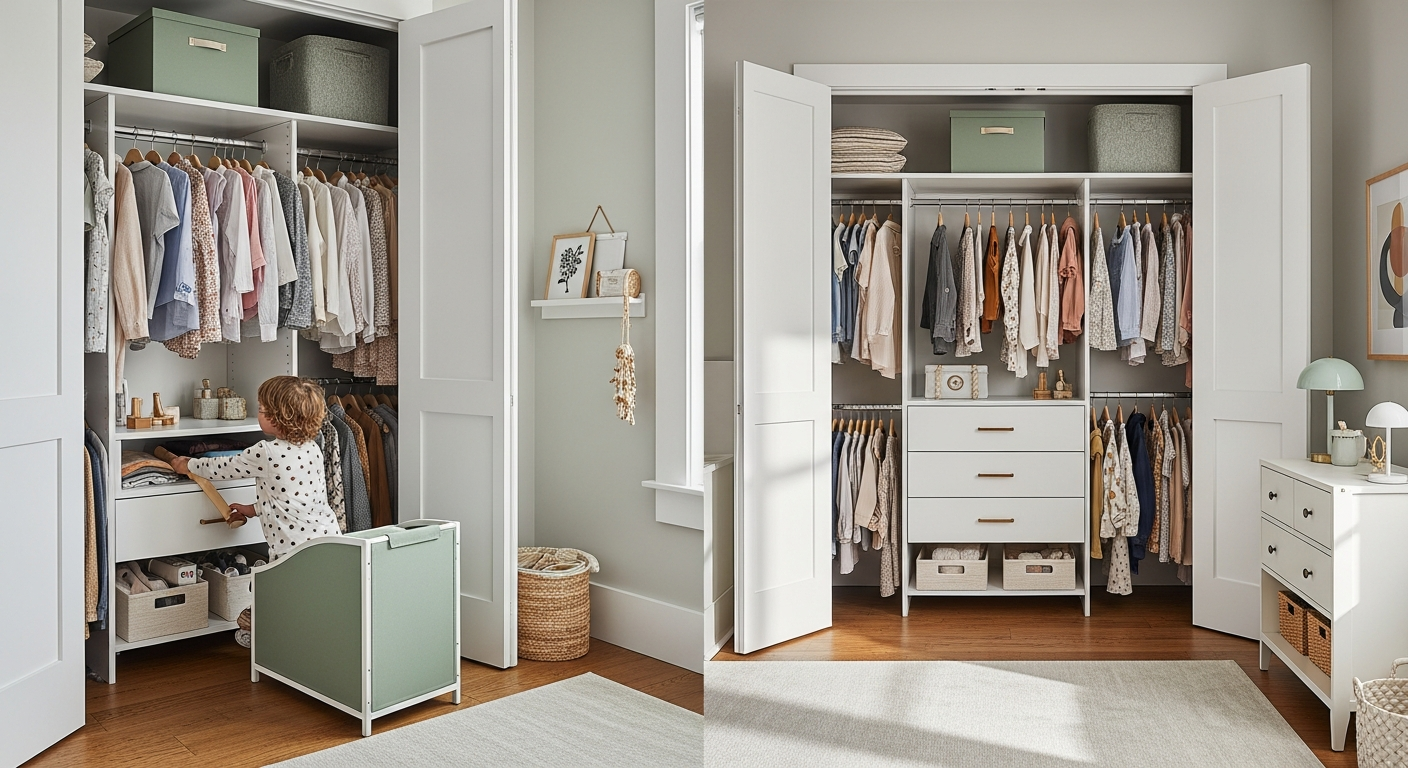
Lower the rod dramatically:
- Main rod at toddler shoulder height (~30-36″)
- They can reach their own clothes
- Add second rod above for off-season or overflow (parent access)
Open bins over drawers:
- Pulling open drawers is hard for toddlers
- Open cubbies with bins they can see into work better
- Label with pictures, not words
Reduce choices:
- Too many visible options overwhelms
- Capsule wardrobe approach: limited items that all match
- Offer choice between two items, not entire closet
Floor-level shoe storage:
- Low basket or floor rack
- 2-3 shoe options maximum
- Seasonal rotation to limit overwhelm
The key insight: If a toddler can’t do it themselves, they’ll either depend on you forever or destroy your system trying.
Preschool (3-5 years)
The reality: Preschoolers can follow simple systems and are motivated by independence, but still need visual cues and limited options.
Key priorities:
- Supporting self-dressing
- Building organizational habits
- Accommodating strong preferences
System recommendations:
Outfit planning:
- Weekly outfit bins (one bin per day)
- Prepare outfits together on Sunday
- Eliminates daily decision battles
Picture labels:
- Photos of what goes in each space
- Pictures of the child wearing each category
- Builds pre-reading organization skills
Divide hanging area:
- Shirts in one section
- Pants in another
- Simple category separation
Special item visibility:
- Favorite items accessible
- Special occasion clothes up high (reduces requests for everyday wear)
- Costume/dress-up section if relevant
The key insight: This is when habits form. Time invested in teaching “where things go” pays off for years.
Elementary School (6-10 years)
The reality: Elementary kids can handle more categories and are developing organizational skills, but need systems that are simple enough to maintain independently.
Key priorities:
- Growing independence in choosing and putting away
- More complex wardrobe (school clothes vs. play clothes)
- Preparing for self-management
System recommendations:
Category separation:
- Clear divisions: school clothes, play clothes, sports, special
- Different rods, bins, or sections for each
- They can understand and maintain categories
Vertical space utilization:
- May be tall enough for standard rod heights
- Use double-hang systems to maximize space
- Shelving for folded items within reach
Self-maintained folding:
- Teach simple folding techniques
- File folding in drawers (clothes stand up)
- Accept imperfection—the goal is participation, not perfection
Activity storage:
- Dedicated space for sports uniforms
- Dance bag, equipment storage
- Co-curricular needs organized
The key insight: This is the training ground. Systems should be simple enough for them to maintain but sophisticated enough to build real skills.
Tweens (10-13 years)
The reality: Tweens have opinions about everything, are capable of maintaining real systems, but may resist organizing entirely. Balance autonomy with guidance.
Key priorities:
- Respecting their preferences
- Building adult organizational skills
- Managing expanding wardrobe
- Privacy considerations
System recommendations:
Involve them in design:
- Let them choose organizers and aesthetics
- Their input increases buy-in
- Guide toward function, allow style choices
Introduce adult concepts:
- Closet categories that make sense to them
- Seasonal rotation responsibility
- Donation decision-making
Accommodate growth spurts:
- Sizes change rapidly
- Build in flexibility for new sizes
- Budget for regular wardrobe refresh
Closet as private space:
- Closed storage options if desired
- Permission before entering/organizing
- Their space to manage (with standards)
The key insight: This is the bridge between childhood systems and adult capabilities. They’re learning to manage their own space.
Teens (13+ years)
The reality: Teens should be managing their own closets, though they may need setup help. Systems should reflect near-adult capabilities.
Key priorities:
- Complete independence
- Space for expanded wardrobe and activities
- Preparation for future independence
System recommendations:
Adult-style systems:
- Standard organization by category
- Hangers they choose and use consistently
- Drawer organization they maintain
Expanded needs:
- Work/job clothing if applicable
- Formal wear for events
- Activity and sports gear
- Bags, accessories storage
Maintenance expectations:
- Weekly closet pickup expectation
- Seasonal rotation responsibility
- Donation management
Preparation focus:
- Skills transfer to college dorm, first apartment
- Teach closet system basics they’ll recreate later
- Budget awareness for clothing
The key insight: Your job shifts from organizing FOR them to advising and supporting their own systems.
Physical Systems That Work for Kids
Hanging Storage Solutions
Double-hang systems:
- Lower rod for child access, upper for parent access or overflow
- Adjustable rods grow with child height
- Works for most closet widths
Shelf-and-rod combinations:
- Cubbies below hanging area for bins/baskets
- Maximizes vertical space
- Accessible at multiple heights
Hanging organizers:
- Canvas hanging shelves for folded clothes
- Daily outfit organizers
- Saves drawer/floor space
Shelf and Cubby Systems
Cube storage:
- Flexible, reconfigurable
- Can add or remove as needs change
- Bins hide contents or show them
Adjustable shelving:
- Move shelves as child grows
- Wire shelving allows visibility
- Solid shelving looks cleaner
Built-in alternatives:
- Freestanding bookshelves
- Ikea KALLAX or similar cubes
- Closet-system components
Drawer Alternatives
Open bins:
- Easier for young children
- See contents without opening
- Fabric or hard-sided
Basket systems:
- Wire or woven baskets
- Pull-out functionality
- Category labeling
Rolling carts:
- Mobile storage
- Flexible placement
- Grows with multiple uses
Floor Solutions
Shoe storage:
- Floor-level for young children
- Can elevate as they grow
- Over-door options for older kids
Bin stations:
- Dirty clothes hamper
- Donation bin
- Seasonal storage rotation
Labels That Work for Kids
Picture Labels (Pre-readers)
Photo approach:
- Photos of actual items in that space
- Photo of child wearing that type of clothing
- Cut from catalogs or printed
Icon approach:
- Simple drawings or clipart
- Sock icon, shirt icon, etc.
- Consistent across all labels
Color coding:
- Colored bins/labels by category
- Blue for shirts, green for pants, etc.
- Consistent visual system
Word Labels (Early readers)
Large, simple words:
- SHIRTS, PANTS, SOCKS
- Large font, clear letters
- Can add picture alongside
Kid-created labels:
- They write labels themselves
- Buy-in through participation
- Accept imperfect handwriting
Combined and Advanced Labels
Combination labels:
- Picture plus word
- Transitions as reading develops
- Consistent placement
Minimal labels (older kids):
- May not need labels
- Visual categories sufficient
- Personal preference
Maintaining Systems Long-Term
Daily Habits
Putting clothes away immediately:
- Clothes go in closet, not floor
- Dirty clothes in hamper
- 2-minute daily habit
Morning routine support:
- Clothes out night before
- Outfit laid out or accessible
- Avoids morning chaos
Weekly Habits
Laundry return:
- Child puts away their own clothes (age-appropriate)
- Same day, same time weekly
- Prevents clean-clothes pile-up
Quick closet scan:
- Anything on floor?
- Anything in wrong spot?
- 5-minute reset
Seasonal Habits
Rotation transition:
- Switch seasonal clothes
- Assess sizes during switch
- Donate outgrown items
- Store off-season properly
Pre-growth-spurt check:
- Before new season shopping
- What fits, what’s needed?
- List before purchasing
Annual Habits
Major closet overhaul:
- Everything out and reassessed
- Deep clean closet
- Update systems for growth
- Typically back-to-school timing
Common Kids’ Closet Problems Solved
“There’s No Room”
Solutions:
- Aggressive decluttering (the real answer)
- Vertical space utilization
- Off-site storage for off-season
- Outside-the-closet overflow (under bed, separate dresser)
“My Child Won’t Put Clothes Away”
Solutions:
- Simplify the system dramatically
- Lower expectations of perfection
- Make it physically easier (open bins, not drawers)
- Natural consequences (can’t find clothes = limited options)
“Mornings Are Battles About Clothes”
Solutions:
- Outfit planning the night before
- Weekly outfit preparation
- Limit choices to acceptable options
- Let them choose from what’s accessible
“They Only Wear the Same Three Things”
Solutions:
- Rotate favorites out temporarily
- Investigate why (comfort issues? Peer pressure?)
- Accept limited wardrobe if that’s their preference
- Reduce closet to what they actually wear
“Hand-Me-Downs Create Chaos”
Solutions:
- Process hand-me-downs immediately
- Store future sizes outside closet (labeled bins in storage)
- Only put current sizes in closet
- Pass along what won’t be worn
“Sports Gear Takes Over”
Solutions:
- Dedicated activity storage (separate from clothes)
- Bag-and-go system for each activity
- Out-of-closet storage if possible
- Regular purge of outgrown equipment
Budget-Friendly Kids’ Closet Organization
Under $50
Approach: Use what you have, add only essentials.
- Tension rod to lower hanging height ($10-15)
- Repurposed boxes/containers for sorting
- DIY picture labels (printed at home)
- Command hooks for accessories ($10)
- Plastic bins from dollar store ($10-15)
$50-150
Approach: Invest in key organizational pieces.
- Cube storage unit ($30-60)
- Fabric or wire bins ($20-40)
- Adjustable closet rod system ($30-50)
- Hanging organizer ($15-25)
- Quality labels or label maker ($15-25)
$150-300
Approach: Semi-customized closet system.
- Modular closet system components (Rubbermaid, ClosetMaid)
- Matched bins and baskets
- Double-hanging systems
- Drawer units
- Professional labels
$300+
Approach: Custom or premium systems.
- Custom closet design
- Built-in shelving and rods
- Premium organizational products
- Professional installation option
The Evolution Philosophy
The best kids’ closet organization embraces change rather than fighting it.
Build for now, plan for next:
- Use adjustable, reconfigurable components
- Don’t invest heavily in age-specific features
- Choose neutrals that transition across stages
Lower your standards appropriately:
- A toddler’s “organized” looks different from a teen’s
- Good enough beats perfect-but-ignored
- The goal is functional, not Instagram-worthy
Involve them at every stage:
- Age-appropriate participation
- Increasing responsibility over time
- They’re learning life skills, not just keeping clothes tidy
Revisit regularly:
- What worked last year might not work now
- Growth (physical and developmental) changes needs
- Stay ahead of system failures
Frequently Asked Questions
How often should I completely reorganize my child’s closet?
Major reorganization should happen at least twice a year (typically seasonal transitions) with a comprehensive overhaul annually, usually at back-to-school time. However, a system that’s working may only need minor tweaks. Reorganize when the current system stops functioning, not on an arbitrary schedule.
At what age should kids be putting away their own clothes?
Toddlers can put clothes in open bins with help. Preschoolers can manage simple systems independently. By elementary school, kids should be putting away their own laundry, with age-appropriate expectations for neatness. The system must match their capability—don’t expect drawer organization from a 4-year-old.
Should I fold or hang children’s clothes?
Hang what you’d hang for yourself: dresses, dress shirts, jackets, items that wrinkle easily. Everything else can be folded or placed in bins. For young children, less hanging and more bins typically works better because bins are easier to manage independently.
How do I handle size inconsistencies across brands?
If clothes fit, they go in the closet regardless of tag size. If they don’t fit yet, store by when they’ll likely fit (“Fall 2025”) rather than by tag size. The number on the label is less important than actual fit.
What’s the best way to store out-of-season clothes?
Clear plastic bins with detailed labels (size + season + contents) stored outside the main closet: under bed, in a storage area, or in garage/attic. Only current-season clothes should be in the accessible closet.
How do I stop my child from only wearing favorites?
First, ask why—comfort issues, peer influence, or just preference? If there’s no functional reason, either accept a smaller rotation, temporarily remove favorites to encourage other options, or create a rule (you can wear it again after it’s washed and three other outfits have been worn).
Should kids’ closets match the room decor?
Function beats aesthetics for kids’ closets. Choose neutral organizational systems that work at multiple ages rather than character-themed options that will need replacing. Bins and baskets can add color while remaining functional.
How do I organize a shared closet for siblings?
Divide space clearly—by side, by height zone, or by shelf. Color-code each child’s bins and sections. Make boundaries obvious so each child knows their space. Shared items get a neutral zone.
The Gift of Organization Skills
Teaching your child to manage their closet isn’t just about tidy spaces—it’s about building life skills that will serve them forever.
When you create systems at their level, involve them in decisions, and adjust as they grow, you’re teaching:
- How to create order from chaos
- How to maintain systems they’ve built
- How to assess and adapt when things aren’t working
- How to manage their own belongings independently
That messy closet isn’t failure—it’s a learning opportunity. And each time you reorganize together, adjusting for growth and changing needs, you’re building skills that will serve them long after they’ve left your home.
The goal isn’t a Pinterest-perfect closet. It’s a child who knows how to organize their own life.
That’s a skill worth every messy transition along the way.
—