Art Display Ideas: How to Showcase Kids Artwork
Discover practical systems and creative ideas to display your child's artwork, from temporary rotations to permanent gallery walls. Learn how to manage the volume of art, decide what to keep, and celebrate their creativity while maintaining your home's aesthetic.
- Establish a system to admire, display briefly, rotate, and decide what art to keep.
- Utilize temporary displays like clotheslines or clipboards for rotating new artwork.
- Create a permanent gallery wall with consistent frames for special masterpieces.
- Consider specialty frames or canvas transfers for a professional, lasting display.
- Prioritize keeping milestone pieces and art your child is especially proud of.
Kids are prolific artists. Every day brings new masterpieces—finger paintings, crayon drawings, school projects, and everything in between. But without a system, that artwork either ends up in overwhelming piles, gets tossed without acknowledgment, or takes over every refrigerator and surface in your home.
The solution? Intentional art display systems that celebrate your child’s creativity while maintaining your home’s aesthetic. Here are ideas for every style, budget, and space.
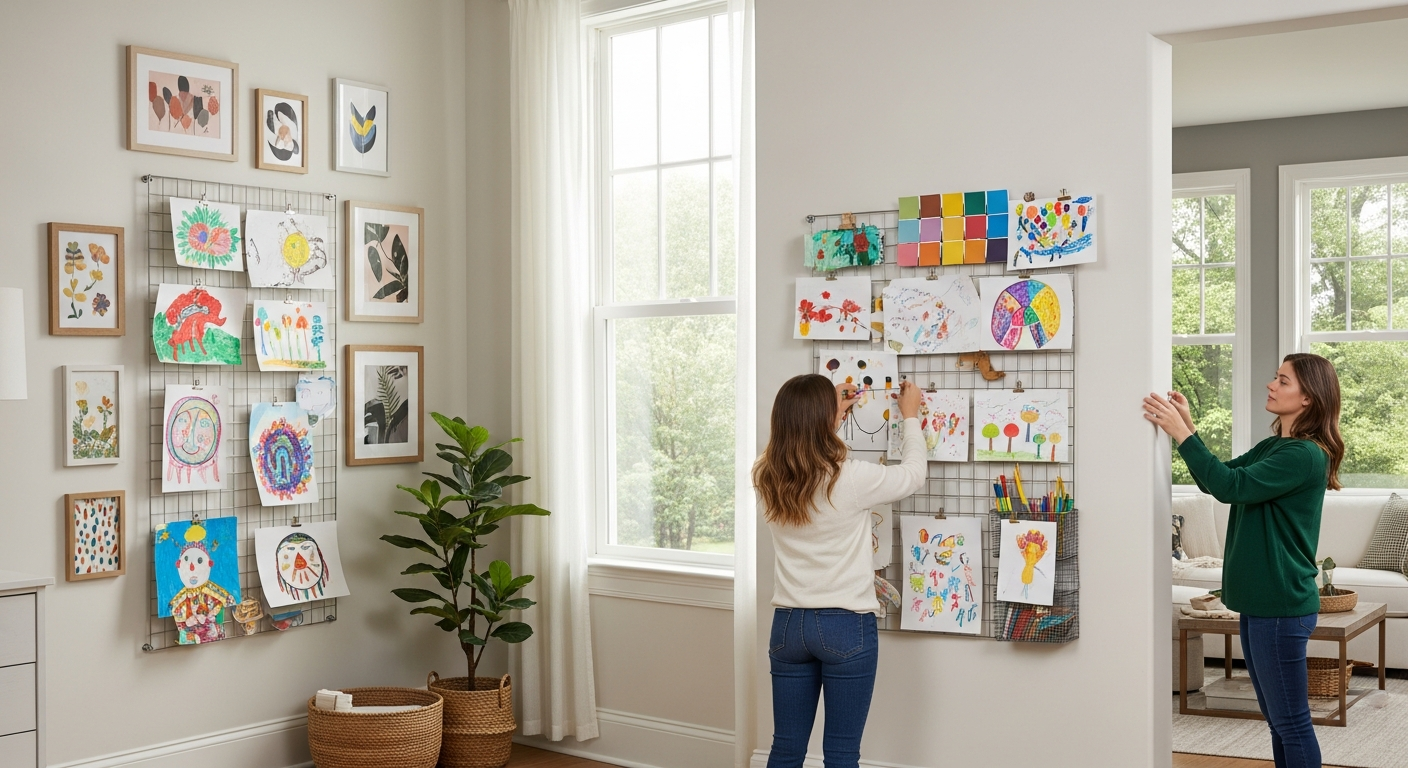
[IMAGE: Beautiful children’s art gallery wall with coordinated frames]
Why Displaying Kids’ Art Matters
For children:
- Validates their creative efforts
- Builds confidence and self-esteem
- Encourages continued creativity
- Shows their work is valued
For families:
- Creates meaningful decor
- Tells your family’s story
- Provides conversation starters
- Brings color and personality to spaces
For parents:
- Manages the overwhelming volume of art
- Creates a system for rotation
- Helps decide what to keep vs. let go
The Art Display System
Before choosing a display method, establish a system for managing the constant flow.
The Process
1. Admire and discuss: When art comes home, acknowledge it genuinely.
2. Display briefly: Use a temporary display spot (refrigerator, clothesline, etc.)
3. Rotate: After a week or two, rotate to make room for new work
4. Decide: Keep (special file), photograph, or let go
5. Curate: Truly special pieces move to permanent display
What to Keep
Not everything needs to be kept forever. Guidelines:
Keep:
- First self-portrait each year
- School photos and handprints
- Holiday gifts made for family
- Pieces showing significant skill development
- Art they’re especially proud of
Photograph and let go:
- Daily drawings and paintings
- Duplicative work (many similar pictures)
- Worksheets and basic crafts
- Anything damaged or deteriorating
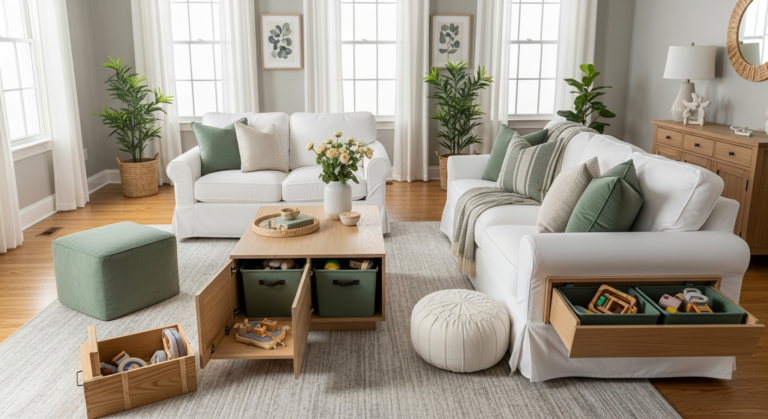
Playroom Organization Ideas: How to Tame the Toy Chaos
Temporary Display Ideas
For the constant rotation of new work:
The Classic: Refrigerator
Still works! Tips:
- Designate specific fridge zones per child
- Use uniform magnet style for cleaner look
- Rotate weekly
- Limit number of pieces at once (3-5 per child)
Clothesline Display
What you need: Twine or ribbon, small clips, two hooks
Cost: $10-15
Hang a line across a wall and clip artwork with mini clothespins. Easy rotation, whimsical look. Great for playroom or kids’ bedroom.
Clipboards
What you need: Clipboards (matching), wall mounting hardware
Cost: $15-25 for 3-4 clipboards
Mount clipboards on wall for instant, interchangeable frames. Swap art in seconds.
Cork Board Wall
What you need: Cork tiles or large cork board
Cost: $20-50
Designated space for pinning current art. Can paint frame around it for polished look.
Wire Photo Display
What you need: Wire mesh or photo wire system, clips
Cost: $20-40
Industrial-chic look that works in modern spaces. Multiple pieces displayed at once.
[IMAGE: Clothesline art display in kids’ room with colorful artwork]
Permanent Display Ideas
For those special pieces you want to showcase longer:
Gallery Wall
Traditional approach: Mat and frame artwork like “real” art. Creates sophisticated, intentional look.
Tips:
- Use consistent frame color (white or black works best)
- Standard frame sizes make swapping easy
- Consider double-sided frames for rotation
- Mix kids’ art with family photos or prints
Budget frames:
- IKEA Ribba or Fiskbo: $5-15 each
- Target frames: $10-20 each
- Dollar store frames, spray painted: $2-5 each
Art Display Frames
Specialty options:
- Articulate Gallery frames (swap art through front): $30-40 each
- Lil DaVinci frames (same concept): $25-35 each
- DIY version with cork backing and plexiglass
Benefits: Professional look, easy rotation, protects artwork
Canvas Transfers
Process: Print favorite artwork onto canvas using services like Easy Canvas Prints, Canvaspop, or Shutterfly
Cost: $30-80 per canvas depending on size
Transforms crayon drawings into gallery-worthy canvas art. Makes exceptional gifts for grandparents.
Digitized Art Book
Services: Artkive, Plum Print, Chatbooks
Process: Photograph or mail in artwork; receive bound book
Cost: $25-100 depending on size and service
Preserves years of art in single book. Great for storage and memory-keeping.
Shadowboxes for 3D Art
For: Sculptures, crafts, dimensional projects
Cost: $15-40 per shadowbox
Deep frames that showcase non-flat artwork. Great for clay projects, handprint crafts, etc.
[IMAGE: Gallery wall mixing framed children’s art with family photos]
Room-by-Room Ideas
Playroom
Go big: This is the space for abundant, colorful art display
- Clothesline across entire wall
- Designated “gallery wall” area
- Cork board accent wall
- Wire grid systems
Kids’ Bedroom
Their space: Let them curate
- Magnetic paint on one wall
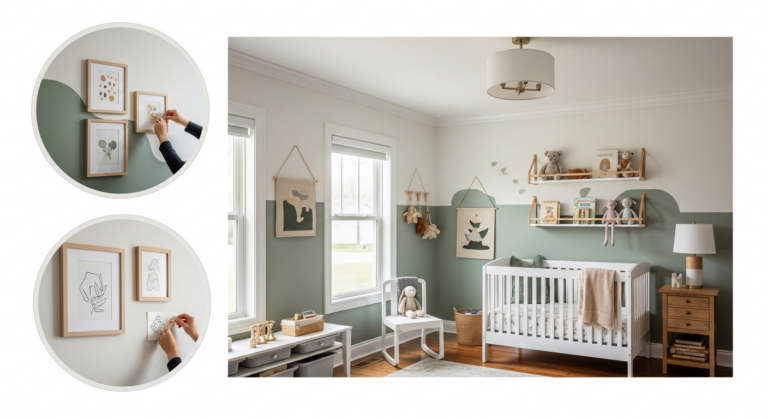
- Washi tape “frames” (renter-friendly)
- Floating ledges for rotating 3D art
- Over-the-bed gallery zone
Kitchen
High traffic = high visibility:
- Refrigerator (organized, not chaotic)
- Command-hook clipboards
- Small cork board near family message center
Living Room
Integrated, intentional:
- Framed art that matches decor
- Gallery wall with mix of adult art and kids’ art
- Rotating frame in prominent spot
- High-quality reproductions on canvas
Hallway
Gallery opportunity:
- Chronological display (art through the years)
- Full hall gallery wall
- Floating shelves with framed pieces
Budget Breakdown by Display Type
Super Budget: $20-30
- Clothesline + clips: $10
- Washi tape “frames”: $10
Budget-Friendly: $50-100
- 4-6 matching frames: $40-60
- Hanging hardware: $10
- Art display frame: $30
Investment Display: $150-300
- Gallery wall setup: $100-150
- Multiple art display frames: $100-150
- Canvas prints: $50-100
Managing the Art Overflow
Digital Archiving
Apps: Artkive (app includes storage), Google Photos, iCloud
Process: Photograph each piece, organize by date/child
Benefits: Unlimited “storage,” easy sharing, creates books
Physical Storage
What to keep physically:
- One piece per year per child (representative samples)
- Major milestones (first drawing, last preschool art)
- Gifts from child to family members
- Truly exceptional pieces
Storage method:
- Portfolio books (artist portfolio cases)
- Large flat boxes (under-bed storage)
- Acid-free folders in filing cabinet
Letting Go
Permission to release:
- You can’t keep everything
- The memory matters more than the object
- Photograph first if attached
- Recycle with gratitude
Involve kids (age-appropriate):
- Let them choose favorites to keep
- Explain that photos preserve memories
- Create art books together
Kid-Friendly Living Room Ideas That Still Look Stylish
FAQ
How do I display art without damaging walls?
Command strips, washi tape, clipboards with removable adhesive, or lean frames on shelves. Renters and commitment-phobes have options!
What about fairness between multiple kids?
Equal display space per child (or rotating who gets featured). Consider separate areas for each child’s art.
My child makes SO much art. Help!
Establish a one-in-one-out policy for temporary display. Photograph everything, keep selectively. They won’t remember every piece—neither will you.
How do I display large/awkward pieces?
Photograph and print at smaller size, lean against wall without hanging, or display temporarily then archive.
Conclusion
Displaying kids’ art doesn’t have to be chaotic or overwhelming. With the right system—temporary display for rotation, permanent display for special pieces, and digital archiving for everything—you can honor your child’s creativity while maintaining your sanity.
Choose one display method to start, establish your rotation routine, and enjoy watching your home fill with meaningful, personal art.
Playroom Organization Ideas: How to Tame the Toy Chaos
—