Kid-Friendly Living Room Ideas That Still Look Stylish
Learn how to create a stylish, kid-friendly living room by making smart choices about materials, layouts, and furniture. You'll find practical advice on selecting durable sofas, safe coffee tables, and easy-to-clean rugs that withstand the realities of family life.
- Prioritize performance fabrics like Crypton or leather for durable, spill-resistant sofas.
- Opt for round, upholstered ottomans or low, sturdy tables to ensure coffee table safety.
- Select machine-washable or indoor/outdoor rugs for easy cleaning and high durability.
- Integrate hidden storage and rounded edges in furniture to manage clutter and enhance safety.
This post contains affiliate links. As an Amazon Associate I earn from qualifying purchases.
You shouldn’t have to choose between a beautiful living room and one that actually works for your family. For too long, parents have been told to either embrace the chaos or wait until kids are older to have nice things. Neither option is acceptable.
The truth is, you can have a stylish living room that withstands the realities of life with kids—spilled snacks, sticky fingers, impromptu dance parties, and all. It just requires smarter choices about materials, layouts, and furniture.
Here’s how to design a living room that looks like it belongs in a magazine and functions like a family home.
In this article (11 sections)
The Philosophy: Functional Beauty
Kid-friendly design isn’t about sacrificing style. It’s about making smart choices that work harder for your family:
- Performance fabrics instead of delicate materials
- Rounded edges instead of sharp corners
- Wipeable surfaces instead of high-maintenance finishes
- Hidden storage instead of open clutter
- Durable pieces instead of trendy, fragile items
The goal is a room where everyone—from toddlers to adults—feels comfortable, and where spills are inconveniences rather than disasters.
Sofa and Seating Selection
The sofa is the foundation of any living room, and it’s the piece most impacted by family life. Choose wisely.
Performance Fabrics Are Non-Negotiable
What to look for:
- Crypton or Crypton-like treatments
- Indoor/outdoor fabrics (Sunbrella, Perennials)
- Tightly woven performance polyester
- Leather or faux leather (easy wipe-clean)
What to avoid:
- Silk, velvet (untreated), linen
- Light colors with no protection
- Anything labeled “dry clean only”
Best colors for hiding life:
- Warm neutrals (camel, tan, stone)
- Deep colors (navy, charcoal, forest green)
- Patterns or textures that camouflage
Sofa Structure Matters
Choose:
- Low profile (easier for kids to get on/off)
- Removable, washable cushion covers
- Sturdy frame (kiln-dried hardwood)
- Tight back or attached back (no lost toys)
Consider avoiding:
- Tufted details (crumbs get trapped)
- Exposed wood legs at kid height
- Very deep seats (hard for little ones)
[SHOP THE LOOK]
- Article Sven in leather – $1,799 (wipeable, durable)
- IKEA KIVIK with washable covers – $699
- Pottery Barn Turner Performance Tweed – $2,299
- West Elm Harris with stain-resistant fabric – $1,599
Coffee Table Considerations
Coffee tables are notorious kid hazards. Here’s how to handle them:
Option 1: Skip It Entirely
Replace the coffee table with:
- Large ottoman (soft landing, doubles as seating)
- Poufs or floor cushions
- Side tables only
- Nothing at all (more floor play space)
Option 2: Choose Kid-Safe Materials
Safe options:
- Upholstered ottoman with tray for drinks
- Round or oval tables (no sharp corners)
- Low, sturdy wood (not glass!)
- Acrylic/lucite (no sharp edges, easy to see)
DIY safety:
- Corner protectors for existing tables
- Tablecloth or runner to soften edges
- Move problematic table temporarily
Option 3: Coffee Table Storage
Tables with hidden storage earn their space:
- Lift-top coffee tables (hide toys inside)
- Storage ottomans (blankets, toys, games)
- Tables with baskets underneath
[SHOP THE LOOK]
- Target storage ottoman (round, soft) – $150
- IKEA LACK coffee table – $50 (can add corner protectors)
- West Elm round nesting tables – $349
- Tufted ottoman from Wayfair – $200-400
Playroom Organization Ideas: How to Tame the Toy Chaos
Rug Selection for Family Life
A rug anchors the room and adds warmth—but it also catches every spill, crumb, and tracked-in dirt. Choose strategically.
Best Rug Types for Kids
Indoor/outdoor rugs:
- Polypropylene or polyester
- Hose-off washable
- Stain and fade resistant
- Flat weave (nothing to trap crumbs)
Machine-washable rugs:
- Ruggable system (washable top + pad)
- Lorena Canals (cotton, machine washable)
- Tumble (designed for spills)
High-pile considerations:
- Harder to vacuum
- Traps more crumbs
- Softer for floor play
- May be worth it for designated play areas
Rug Patterns and Colors
Best choices:
- Multi-color patterns (hide everything)
- Medium tones (not too light, not too dark)
- Geometric or abstract patterns
- Natural fibers with texture
Avoid:
- Solid white or cream
- Black (shows every crumb and hair)
- Precious vintage rugs
[SHOP THE LOOK]
- Ruggable washable rug (many styles) – $229-600
- Dash & Albert indoor/outdoor – $100-500
- Loloi multi-color pattern – $200-600
- IKEA STOENSE (budget option) – $129
Smart Storage Solutions
In a family living room, storage is survival. Everything needs a home, and ideally, that home is hidden.
Built-In and Concealed Storage
Media console storage:
- Choose closed cabinets over open shelving
- Baskets inside for toys
- Cord management built in
Built-in bookshelves:
- Lower shelves for kid-accessible books and toys
- Upper shelves for decorative items and adult books
- Closed cabinets at bottom for hidden storage
Basket and Bin Strategy
Living room basket rules:
- Max 2-3 baskets visible at any time
- Neutral colors that blend with decor
- Large enough to be useful (small baskets = small chaos)
- Designated purpose (blankets, toys, books)
Basket placement:
- Next to sofa for blanket storage
- Under console table
- On lower bookshelves
- Beside reading chair for books
Furniture with Storage
Double-duty pieces:
- Storage ottoman (coffee table + toy bin)
- Console table with drawers (entry + storage)
- Media cabinet (closed, not open)
- End tables with shelves or drawers
Decor and Accessories
Yes, you can still have nice decor. You just have to be strategic.
What to Display
Kid-friendly decor:
- Woven wall hangings (soft, unbreakable)
- Large-scale art (too high to reach)
- Natural elements (wood, plants in safe spots)
- Soft textiles (pillows, throws)
- Photos in shatterproof frames
Keep out of reach:
- Breakable vases and ceramics
- Candles (fire hazard plus mess)
- Small decorative objects (choking hazards for littles)
- Anything precious or irreplaceable
Creating Visual Interest Safely
At kid level:
- Baskets (textural, functional)
- Books (art in themselves)
- Plants (non-toxic only)
- Soft poufs or cushions
Above kid level:
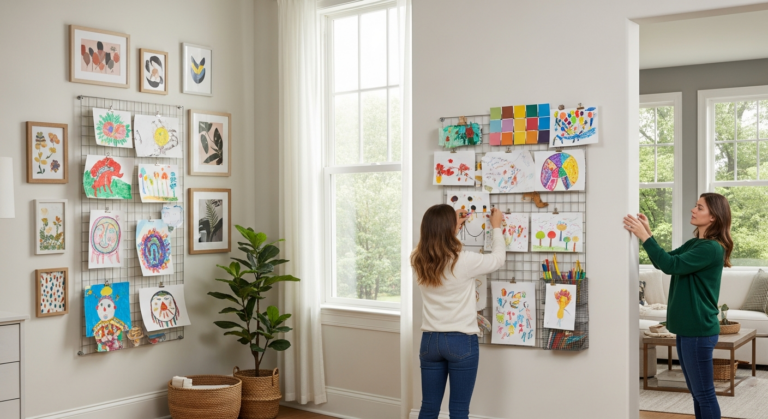
- Gallery wall with meaningful art
- Floating shelves with decorative objects
- Statement lighting (safely installed)
- Tall plants out of reach
Lighting for Family Life
Lighting affects both function and safety in a family living room.
Floor lamp safety:
- Weighted bases that won’t tip
- Out of traffic flow
- Cord management (no trip hazards)
- LED bulbs (don’t get hot)
Table lamp considerations:
- Stable bases
- Out of reach of little hands
- Shatterproof options available
Best choices:
- Overhead lighting (no floor obstacles)
- Wall sconces (permanently installed)
- Table lamps on high surfaces
- Heavy, stable floor lamps against walls
The Kid Zone Strategy
Sometimes the best solution is designating a specific area for kid stuff.
Create a contained kid corner:
- One corner with low bookshelf
- Baskets of toys at their level
- Washable rug in that area
- Cozy seating (pouf, floor cushion)
Benefits:
- Kids have their own space
- Mess is contained to one area
- Rest of room stays adult-friendly
- Easy to clean up “kid corner” only
The boundary trick:
- Use a rug to define the kid zone
- Different flooring (play mat)
- Furniture arrangement creates boundary
- Clear expectation: toys stay here
Cozy Reading Nook Ideas for Kids
Shop the Setup: The Play Corner Wall
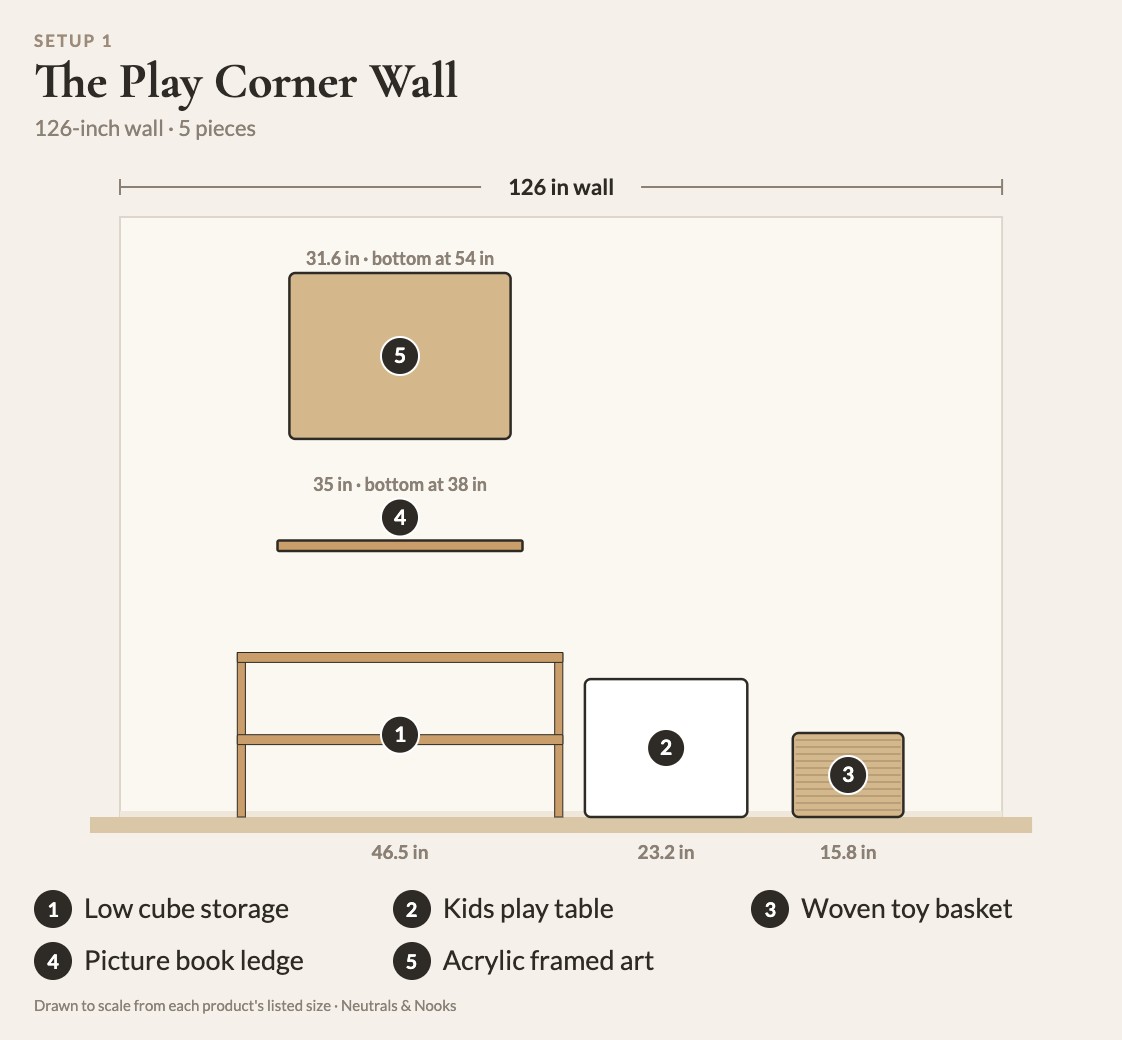
This is the kid zone from the section above, built on one 126-inch living-room wall for a toddler or preschooler who needs a spot for toys and books. The rest of the room stays calm and grown-up.
Shop this setup


3. Woven toy basket
Honey-Can-Do hyacinth storage basket
15.8" W x 14.5" D x 12" H · Natural
View on Amazon

5. Acrylic framed art
Chrspk natural oak poster frame
31.6" W x 21.6" D x 23.7" H · Natural Oak
View on Amazon- Why it works: The 46.5-inch cube storage (1), the 23-inch play table (2) and the woven basket (3) all sit at kid height, so cleanup stays in one corner, and the oak, white and natural tones blend into the room instead of shouting.
- Hang it: Mount the book ledge (4) with its bottom edge 38 inches above the floor, over the cube storage (1), so a preschooler can reach the covers, and hang the framed art (5) with its bottom edge 54 inches up, above the ledge, where it's out of grabbing range.
- Heads-up: The cube storage (1) is only 23.5 inches tall, so it doesn't need a wall anchor, but it's low enough to tempt climbers, so keep the play table (2) and basket (3) on the floor beside it and don't let it become a step up to the ledge (4).
Room Layout Considerations
How you arrange furniture affects both style and kid-friendliness.
Traffic flow:
- Clear paths through room
- No tight squeezes between furniture
- Space for spontaneous play
- Room to run (a little)
Safety considerations:
- Anchor tall furniture to walls
- TV mounted or very stable on stand
- No cords across walking paths
- Space between furniture and fireplace
Family-friendly arrangements:
- Conversational seating (two sofas or sofa + chairs facing each other)
- Central ottoman instead of coffee table
- Open floor space preserved
- Media viewing works for multiple angles
Neutral Nina
Neutral Nina is an interior design enthusiast and mom of three who proves that beautiful, organized spaces and family life can coexist. She shares practical strategies for creating calm, functional homes that work for kids and grown-ups alike.
Frequently Asked Questions
How do I keep my living room from being taken over by toys?
Set clear boundaries (toys in kid corner or playroom), use attractive storage (baskets), and enforce a nightly reset. Not every room has to be a playroom.
Is leather really kid-friendly?
Quality leather is very kid-friendly—it wipes clean, ages well, and doesn’t absorb spills. Faux leather works too. Avoid light colors and very soft, porous leathers.
What about glass and mirrors?
Mount mirrors securely, use safety film on large mirrors at kid height, skip glass coffee tables, and keep breakables up high. Acrylic can substitute for glass in some applications.
How do I balance my style with family function?
Start with function—the durable fabrics, the smart storage, the safe layout. Then layer in your style through art, textiles, and accessories. Style is adjustable; safety isn’t negotiable.
Conclusion
A stylish, kid-friendly living room isn’t a myth—it’s a matter of making smarter choices. Performance fabrics, wipeable surfaces, hidden storage, and thoughtful layouts allow you to have a beautiful space that actually works for real life with kids.
You don’t have to wait until kids are older to have a nice living room. You just have to design one that’s built for life as it actually is.
—