Montessori Gifts by Age: Picks That Fit on One Shelf (1 to 4)
This guide helps you select Montessori gifts for ages 1-4, focusing on shelf fit, rotation, and safety. You'll learn to choose toys based on their clear purpose and manage your child's play space effectively.
- Choose gifts by shelf fit and clear purpose, not just the label.
- Ensure your child can manage and put away each activity independently.
- Prioritize safety: check for choking hazards and anchor shelves securely.
- Limit items out at once and rotate toys regularly by age.
- Download the free 'Shelf & Gift Fit Kit' for detailed planning.
This post contains affiliate links. As an Amazon Associate I earn from qualifying purchases.
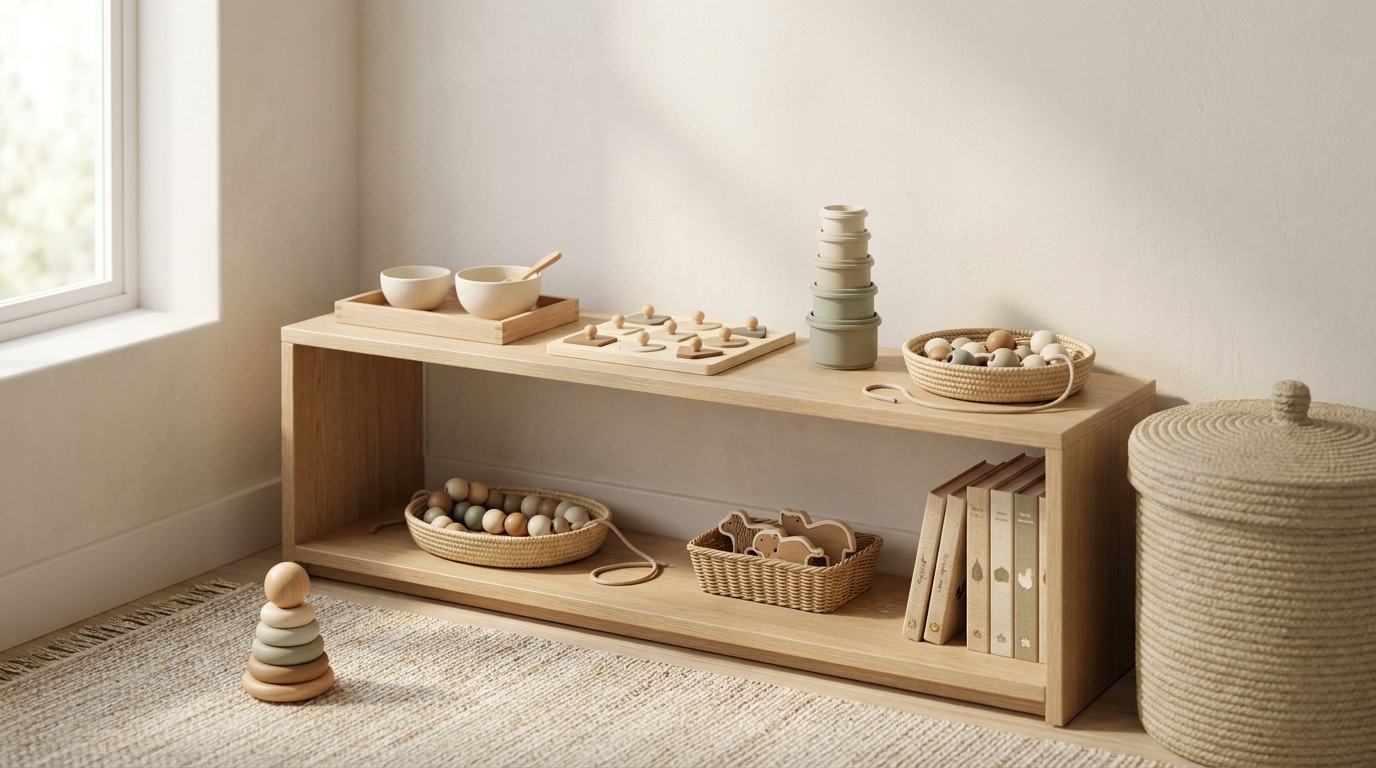
A Montessori shelf works when gifts fit the space, not the label. This guide gives picks for ages 1 to 4, how many to put out, what to rotate out and the safety checks for each age. To see it all at once, jump to the sample shelves.
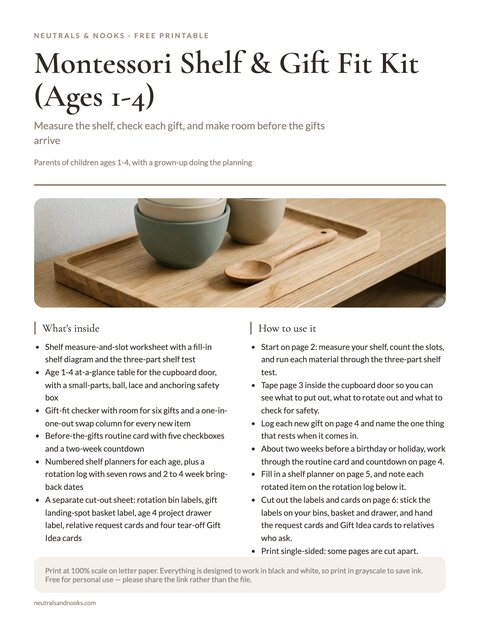
Free printable · 6 pages
Montessori Shelf & Gift Fit Kit (Ages 1-4)
A shelf measure-and-slot worksheet, an age 1-4 at-a-glance table with a safety box, a gift-fit log with one-in-one-out swaps, a before-the-gifts routine with a two-week countdown, numbered shelf planners for each age, a rotation log with bring-back dates, and a cut-out sheet of bin, basket and project-drawer labels, relative request cards and tear-off Gift Idea cards.
Free. Your download link appears right here. You'll also join the Monthly Home Reset. Unsubscribe anytime. Privacy
In this article (15 sections)
- Choose by the Shelf, Not the Label
- The Age Table at a Glance
- Montessori Gifts for a 1 Year Old
- Montessori Gifts for a 2 Year Old
- Montessori Gifts for a 3 Year Old
- Montessori Gifts for a 4 Year Old
- Non-Toy Gifts for Toddlers That Still Fit the Shelf
- How Many to Put Out at Once
- How to Make Room Before the Gifts Arrive
- What to Tell Relatives Who Ask
- A Sample Shelf for Each Age
- Common Mistakes to Avoid
- Montessori-friendly picks from our sister brands
- Frequently Asked Questions
- Montessori Gifts That Fit One Shelf: The Short Version
Choose by the Shelf, Not the Label
“Montessori” is not a regulated word on a toy box. It can mean a thoughtfully designed wooden material or it can mean a plastic toy with a calm colour palette. I have seen both in the same cart. Instead of trusting the label, I use a three-part shelf test before anything earns a place in the playroom.
- It has one clear job. Good materials for small children usually do one thing, and the child can see what that thing is. A box with a hole and a ball to push through it has an obvious job. A toy with eleven buttons, three sounds and a light show has no job. It has an agenda.
- The child can fetch it and put it back alone. If a toddler cannot lift it from the shelf and carry it to a rug or table, it will live on top of the wardrobe. It comes out only when an adult has time. A tray makes this possible: one tray, one activity, all the pieces together.
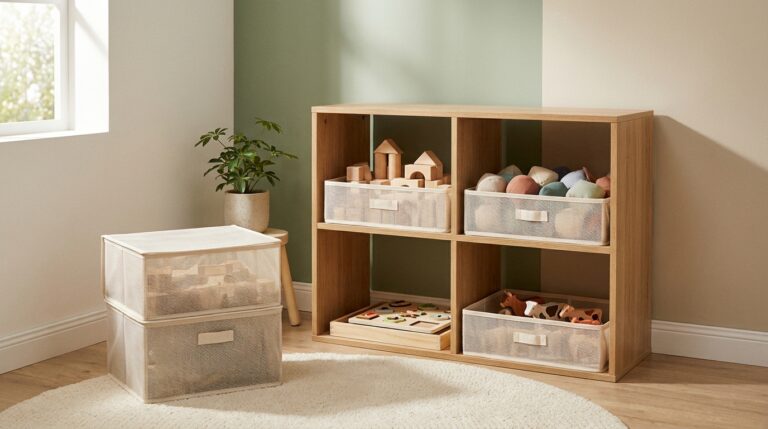
- It fits the space you actually have. This is the test most gift guides skip. Measure the shelf. If the shelf has four slots, the child’s whole “out right now” collection is four things. Each new gift has to either replace something or wait its turn.
What counts as “one tray”
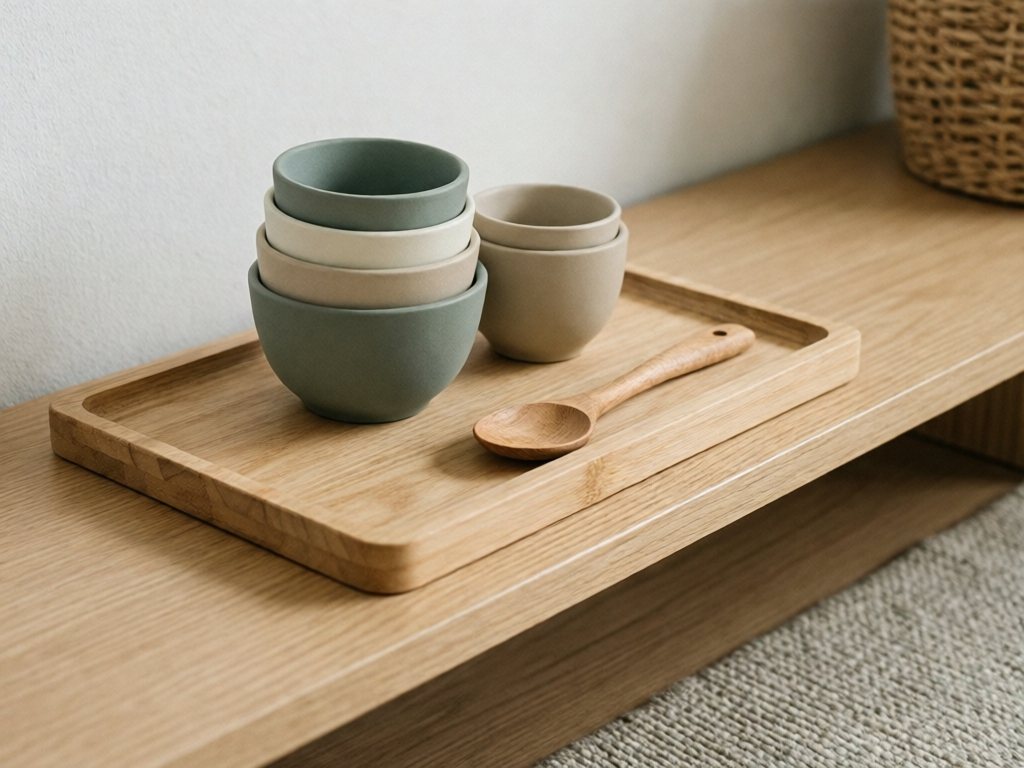
When I say a gift should fit on one tray, I mean that the material and every piece it needs can sit together on a flat carrier a toddler can hold with two hands. In practice that is a shallow tray or basket roughly the size of a small cutting board to a large serving platter. Anything that cannot be contained that way (a big sorting tower, a sprawling track set) is not automatically a bad gift. It just needs a different kind of space, such as a floor corner or a hook on the wall, and it counts as one of your slots.
Small-parts and shelf safety
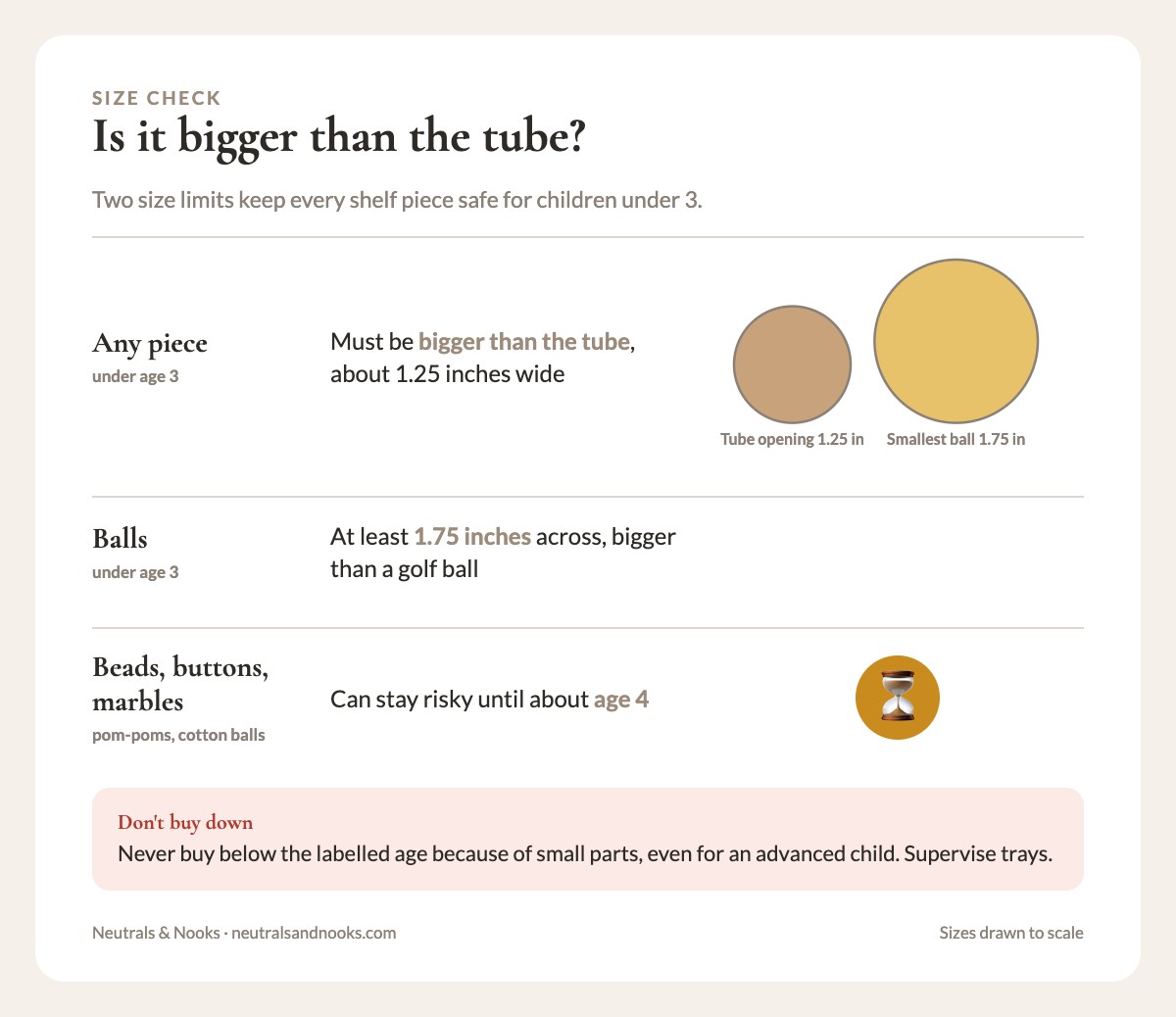
Safety firstAnything that fits inside a toilet-paper tube (about 1.25 inches wide) is a choking hazard for children under 3. Small items such as beads, buttons, marbles, pom-poms and cotton balls can stay risky until about age 4. Every piece in this guide should be larger than the tube.
Balls have a stricter rule. For children under 3, any ball should be at least 1.75 inches across, which is bigger than a golf ball. A round object that only just clears the tube can still block a small airway.
Never buy below the labelled age because of small parts, even for an advanced child. Supervise trays, and keep younger siblings away from small-item sets.
Anchor any shelf to the wall, even a low one, because toddlers climb. Keep the heaviest materials on the bottom shelf.
The Age Table at a Glance
Here is the whole plan in one place, including how many items to put out at each age.
| Age | Items out at once | Material type | Skill it practises | What to rotate out |
|---|---|---|---|---|
| 1 | 3 to 4 | Object permanence box, put-in toy, knobbed puzzle, stacking rings, soft balls | Grasp, release, cause and effect | Outgrown rattles, light-up toys |
| 2 | 4 to 6 | Transfer tray, knobbed shape puzzle, nesting cups, lacing set, board books | Wrist control, problem solving, pouring | Mastered puzzles, noisy toys |
| 3 | 6 to 8 | Inset puzzles, sorting sets, pattern beads, play-dough kit, dress-up, first building set | Fine motor, sorting, pretend play | Early puzzles, babyish toys, duplicate sets |
| 4 | 7 to 9, with a project slot | Counting materials, letter sounds, craft box, bigger building set, board game, weaving card, 12 to 24 piece puzzle | Counting, reading readiness, planning, turn-taking | Mastered counting sets, time-fillers, anything they ask to retire |
The “rotate out” column is the part most people skip, and it is the part that keeps the table from becoming a pile.
Montessori Gifts for a 1 Year Old
A one-year-old is mostly working out how hands work. They grab, they let go, they drop, and then they do it forty more times. The best gifts at this age give those repeated actions a satisfying result.
What to look for
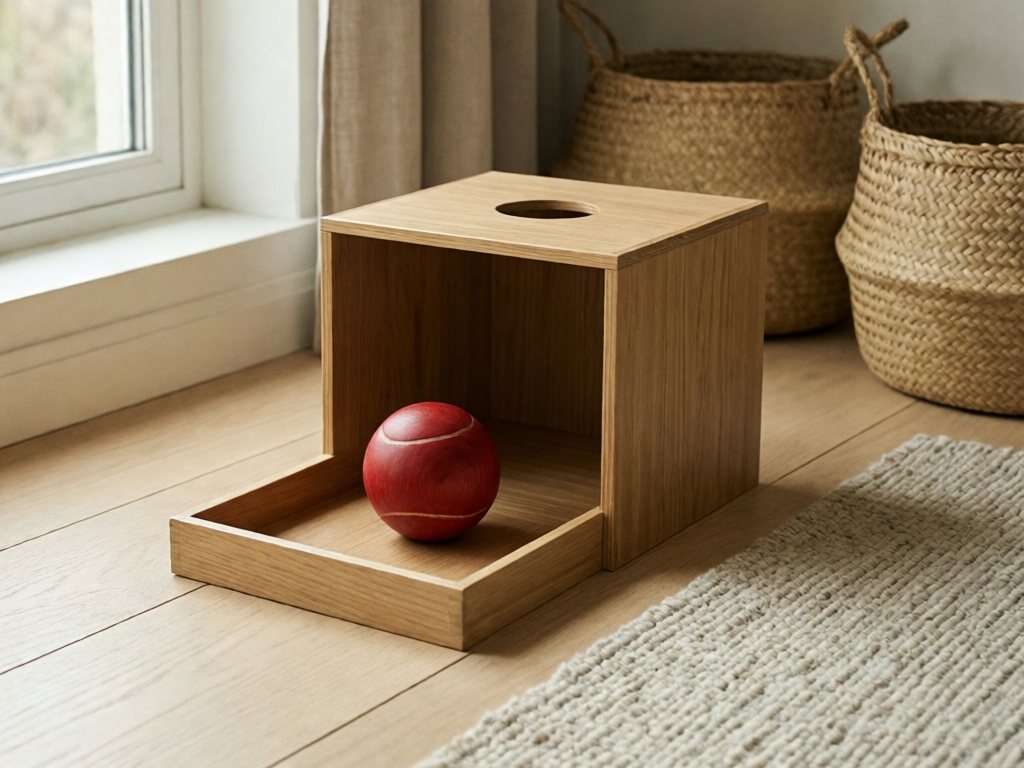
- An object permanence box. This is a small box with a hole in the top and a ball or disc that vanishes inside and reappears in a tray. It teaches the idea that things exist when you cannot see them, and it keeps a baby busy with a single repeatable motion. Look for smooth, rounded edges and a box with no loose or removable small parts. A ball should be at least 1.75 inches across, bigger than a golf ball. A disc should be clearly larger than the toilet-paper tube (about 1.25 inches).
- A single-shape put-in toy. Start with one shape, such as a round peg or a simple disc clearly larger than the toilet-paper tube, before anything more complicated. One shape, one hole, one success. A puzzle with six different shapes is a 2-year-old gift disguised as a 1-year-old gift.
- A chunky knobbed puzzle. A board with three or four large pieces and thick knobs fits small fists, and every piece should be bigger than the tube. Wood, with pieces that sit in clear cut-outs, is easier for a child to feel their way through than a printed picture puzzle with flat cardboard pieces. Choose non-toxic, lead-free finishes. Check knobs and pieces regularly for cracks or loose parts, and retire anything that breaks.
- Stacking rings with a flat base. Many stacking toys have a rounded base that wobbles, which is frustrating at this age. A flat base lets the child focus on placing, not balancing. Check that the smallest ring and any top piece are larger than the toilet-paper tube.
- A few soft or fabric balls. Balls roll, bounce, and get carried around. Choose balls at least 1.75 inches across, bigger than a golf ball and ideally tennis-ball size, with firmly stitched seams. A shallow basket holds them, and they take the place of a dozen smaller toys.
How many to put out
Three to four items, no more. I put one in the shelf’s first slot, one in the second, and keep a basket of balls or a board book display on the third. A one-year-old does not need a choice of fifteen things. They need two or three they can master by repeating.
Safety firstFor babies under 12 months, follow AAP safe sleep guidance: a firm, flat surface in a crib, bassinet or play yard, with nothing soft or loose in the sleep space. Keep the toy shelf, toys and any cords well away from the sleep area.
What to rotate out
Anything that lights up, sings, or does the activity for the child is a candidate to leave in the cupboard. A one-year-old playing with an object permanence box is practising. A one-year-old watching a toy perform is just watching. If a rattle has not been picked up in a week, retire it and bring back a favourite from the cupboard instead.
Montessori Gifts for a 2 Year Old
Two is when children begin to say “me do it.” The best gifts at this age let them do it: pouring, scooping, carrying, matching, pressing, and putting things back.
Tray sets for transferring
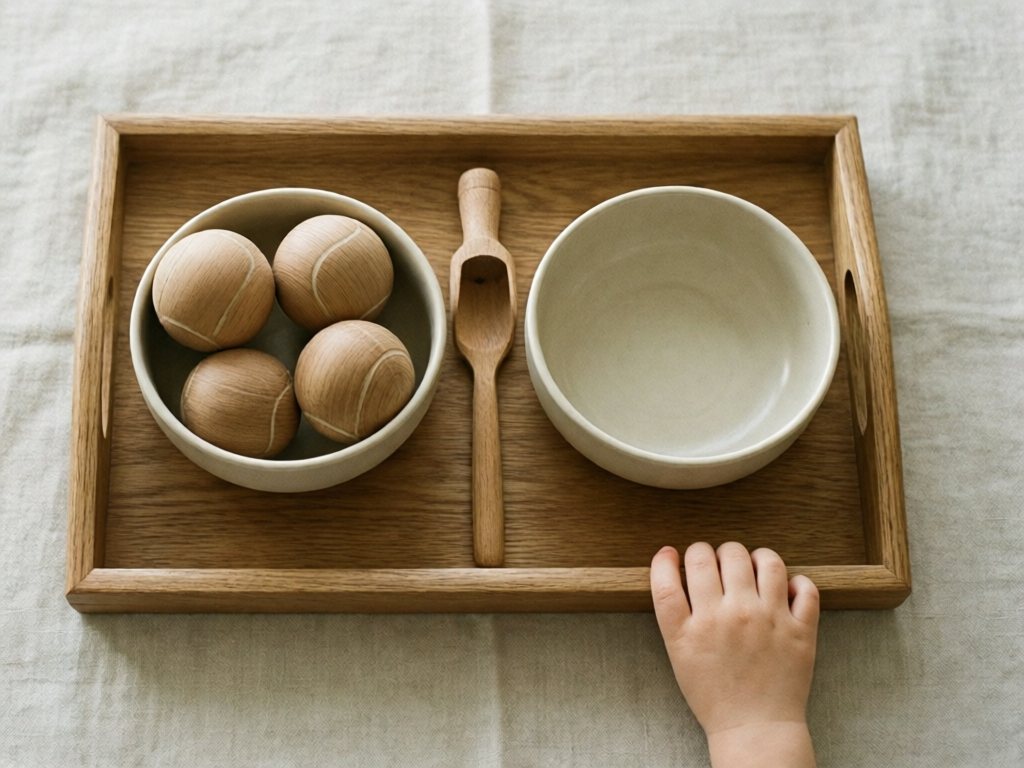
A transfer tray is the classic two-year-old material. The tray holds two small bowls and a tool, such as a scoop, a pair of child-safe tongs, or a spoon. The child moves objects from one bowl to the other. That tiny job builds wrist control and concentration, along with the hand skills used later for writing.
What to look for: a tray with a lip so nothing slides off, bowls that are stable and not too small, and a tool the child can grip with a whole hand. Transfer trays need an adult nearby, since the objects can end up in a mouth.
Use objects that stay larger than the small-parts tube, such as large sponges, big wooden beads or wooden balls. Any ball or round bead should be at least 1.75 inches across: bigger than a golf ball, and ideally closer to tennis-ball size. Make the activity harder by changing the shape, texture or tool, never by shrinking the objects.
Simple shape puzzles with knobs
By two, the single-shape toy is easy. A puzzle with four to six distinct, familiar shapes, each with its own knob, is the right next step. Look for puzzles with a clear picture underneath each piece (the “answer” shows when it is removed), because that helps a child check their own work without you.
Nesting cups
Nesting cups are one of the best value-per-inch materials you can own. They stack, nest, hide things, scoop sand, float in the bath (with an adult within arm’s reach near water), and serve as a sorting bowl. A set of five to eight cups takes up the space of one cup.
A basic lacing or threading set
Start with large wooden beads and a thick lace with a stiff tip. Every bead should be bigger than the tube, and round beads at least 1.75 inches across. The child may only manage two or three beads at first, and that is fine. Add beads and simple patterns over the weeks, but keep the lace under about 12 inches.
Safety firstLaces are a strangulation risk. Every lace in this guide stays under about 12 inches and is used at a table with an adult nearby. Afterwards, the lace goes into a lidded box up high, not on the open shelf, while the beads or cards can stay within reach. Never let a child wear a lace or take one to bed.
A small set of board books
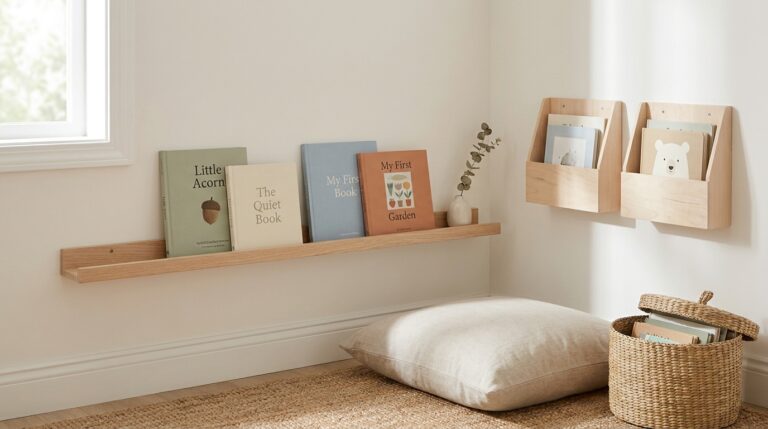
Books are a gift that fits the shelf especially well, because a front-facing ledge holds four or five with the covers showing. Choose sturdy board books with clear illustrations and short, repeated text. The child can reach, pick, and “read” independently.
How many to put out
Four to six. A good two-year-old shelf might hold: one transfer tray, one knobbed puzzle, one set of nesting cups, one lacing activity, and a ledge of books. That is a full shelf, and it is plenty.
What to rotate out
The first thing I remove is anything the child has plainly mastered. A single-shape toy that used to fascinate may now be ignored, so retire it for a few weeks and see if it comes back with new interest. The second thing to remove is anything noisy, because a toy that makes noise on its own tends to crowd out the quiet materials. If you want help planning the rotation, my guide to how many toys should be out at once walks through the numbers by age.
A note on the bedroom
If your two-year-old’s room is part of the picture, the same principles apply there. A low, anchored shelf and a few things in reach make a room where a child can act independently. A floor bed is only for a toddler who has left the crib. I wrote about that setup in the Montessori toddler bedroom guide, and it is a good companion to the shelf you are building here.
Montessori Gifts for a 3 Year Old
By three, a child has the hand control for real puzzles, the attention for longer tasks, and the imagination for pretend play. The best gifts mix precise, hands-on work with open-ended play.
Inset puzzles with more pieces
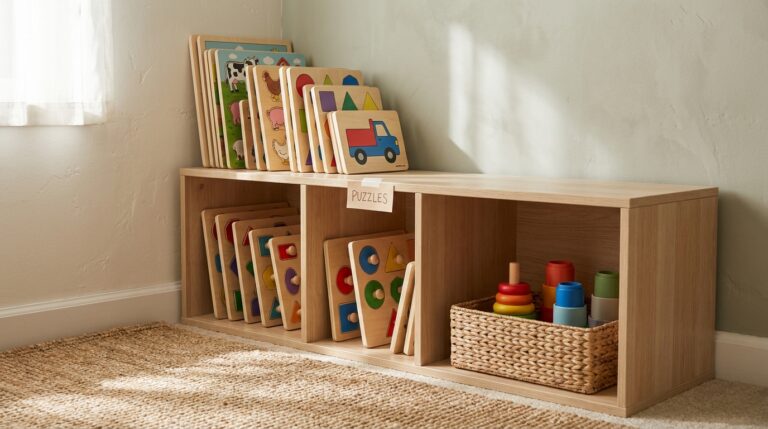
Move from knobbed puzzles to puzzles with eight to twelve pieces and a clear frame. Wooden puzzles with a theme the child already loves (animals, vehicles, plants) are especially motivating. A good puzzle shelf holds one or two at a time.
Matching and sorting sets
Sorting by colour, size, or category is a core skill at this age. Look for sets with real variety: different shapes, different sizes, a few categories that overlap in interesting ways. Large discs or large craft buttons sorted by colour, or animal figures of a similar size sorted by habitat, make a rich tray activity. Every piece should be bigger than the toilet-paper tube. An adult supervises sorting trays, and sets with small items are only for children who no longer mouth objects.
Simple threading beads and patterns
Three-year-olds can string a dozen beads and begin to follow a simple pattern, such as red, blue, red, blue. A set of beads with pattern cards turns an ordinary threading activity into early maths. Use large beads, bigger than the tube, and follow the same lace rules as at age 2.
Play-dough tools
A small kit with a rolling pin, a few cutters and a plastic play-dough knife fits in a small lidded box. The dough is cheap to refill, and rolling and cutting build the hand strength used later for writing. Play-dough is not food, so use it at a table with an adult nearby, and check the label for wheat and other allergens.
Dress-up basics
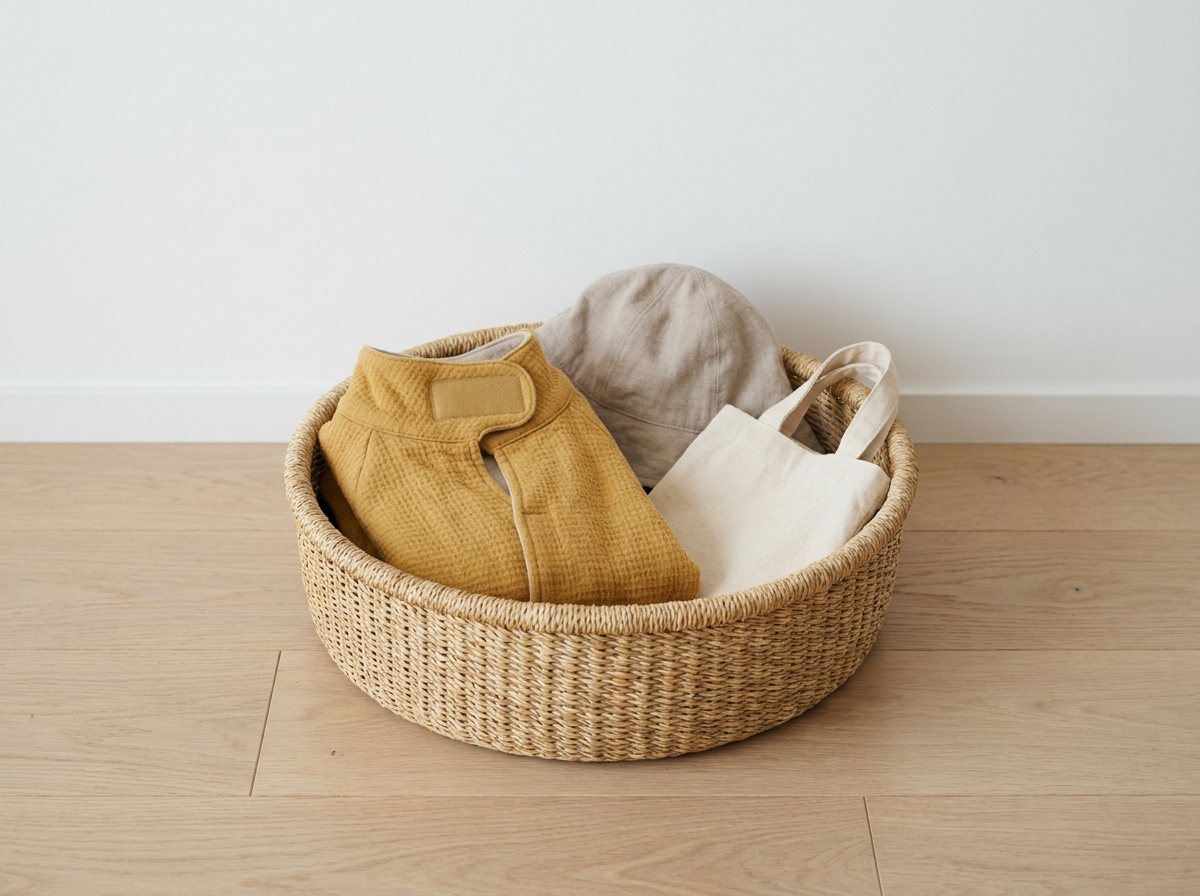
You do not need a full costume trunk. A few pieces such as a cape, a hat, a short-handled bag and a short scarf are enough to launch most pretend games. A single low basket fits them all.
Safety firstCapes, scarves and bag straps can catch around a child’s neck. Choose capes with a breakaway or hook-and-loop closure at the neck, and skip long scarves and long bag straps. Dress-up play happens with an adult nearby.
If you hang pieces on a low hook, lift each one off before your child puts it on, and keep play away from the hook so nothing being worn can catch on it.
A first building set
A modest set of wooden blocks or interlocking pieces gives the child something to design with. One bin, no more, with pieces that all belong together.
How many to put out
Six to eight. The three-year-old shelf is a little fuller than the two-year-old shelf because the child can take care of more. Even so, I like to leave a slot or two open. A shelf that is totally packed is harder to keep tidy, and children often play better when they can see the whole of each activity.
What to rotate out
Early puzzles and the simplest stackers are the usual candidates. If a toy now looks babyish to your child, they will tell you with a “that’s for babies.” Take it as the cue to retire it. Duplicate sets that do the same job (two sorting sets, two building sets) are also worth paring down to one. For a step-by-step approach, see my toy rotation system.
Montessori Gifts for a 4 Year Old
By four, a child often wants to do real work: measure, build, make something, and finish it. The gifts that land best have a clear end point or a way for the child to check their own work.
Pattern and counting materials
A set that links numbers with quantities, such as counting beads, number rods, or a number puzzle, builds the foundation for early maths. Look for materials that let a child check their own answers, such as a control card or a clear order of pieces.
Early letter-sound work
You do not need to push reading. Many four-year-olds enjoy a basket of everyday objects, each larger than the tube, paired with letter cards for the first sound, or a set of tactile letters they can trace. It is play that happens to lead toward reading, and a child who is not interested can simply skip it.
A real-tool craft kit
A box with blunt-tipped scissors, a hole punch, a glue stick, paper tape and a few kinds of paper is enough for cards, collages and paper models. Show each tool once, slowly, before the box goes on the shelf.
Safety firstCraft tools are used with an adult nearby. Keep staplers off the shelf, since they are a finger-injury risk and loose staples are a hazard. Choose glue, paint and crayons labelled non-toxic.
A bigger building set
If your child has outgrown the simple wooden blocks, a larger set with more variety lets them plan and construct. A bin with a lid, sized to the shelf, holds it all.
A simple board game
Turn-taking, counting, and handling a small loss are all part of a basic board game. Choose one with short rounds and clear rules. It stores flat on the shelf, but game pieces are often small, so keep the box away from younger siblings.
A beginner sewing or weaving card
A sturdy card with large holes and a blunt needle or lace is quiet work that ends with something the child made, and it stores in a flat box. Use it at a table with an adult nearby. The same lace rules apply as at age 2: keep the lace under about 12 inches, and put the lace and needle in a lidded box up high afterwards.
How many to put out
Seven to nine, with one slot reserved for a project in progress. Four-year-olds often start something and want to return to it later. A shallow drawer or a lidded box labelled with the child’s name is enough to hold a half-finished weaving or a partly built structure.
What to rotate out
Counting sets the child has mastered, toys that only fill time, and anything the child asks you to remove. A four-year-old is often a good judge of what they still enjoy. Ask them. Letting a child choose what goes into the cupboard also teaches them that the shelf is theirs to manage.
Non-Toy Gifts for Toddlers That Still Fit the Shelf
Some of the best gifts for toddlers are not toys at all. They are real objects scaled to a child’s size, or experiences that leave no clutter behind. If you are buying for a family whose shelf is already full, these are often the easiest to say yes to.
Real-life tools, child-sized
- A small pitcher and a set of tiny cups for pouring water at the table.
- A child-safe knife and a cutting board for slicing soft foods like banana, for ages 3 and up with close adult supervision. Quarter grapes and similar round foods lengthwise for children under 4.
- A small broom and dustpan that actually sweep.
- A watering can for the houseplants.
- A cloth apron with a breakaway or hook-and-loop neck strap and short ties. Put it on and take it off with an adult nearby, and keep play away from its hook so nothing being worn can catch on it.
Most of these live in the kitchen or by the door, not on the shelf, which means they add to the child’s day without adding to the toy count. If you are curious about how to set up a kitchen where a toddler can use these, I covered it in creating a toddler-friendly kitchen.
Consumable gifts
Art supplies, a fresh set of paper, a tin of good crayons, a few seed packets to plant together, or a bag of clay all get used up. None of them takes a shelf slot or needs rotating out.
Safety firstSeeds are small and easy to mouth, so they stay with an adult. You hold the packet and plant the seeds together with your child, and any spare seeds go up high, not on the shelf. Choose clay and crayons labelled non-toxic. For children under 3, use them at a table with an adult nearby.
Experience gifts
A membership to a children’s museum, a nature class, a swimming lesson block, or a zoo pass takes up no shelf space at all. For a family who says “please, no more stuff,” this is often the answer. I have a longer list in my non-toy gifts guide by age.
Books
Books are the exception to the “no more stuff” rule in most households I know. A small, rotating set of face-out books respects the shelf, and a new title adds fresh interest without needing its own slot. If you add one, take one back to the cupboard.
How Many to Put Out at Once
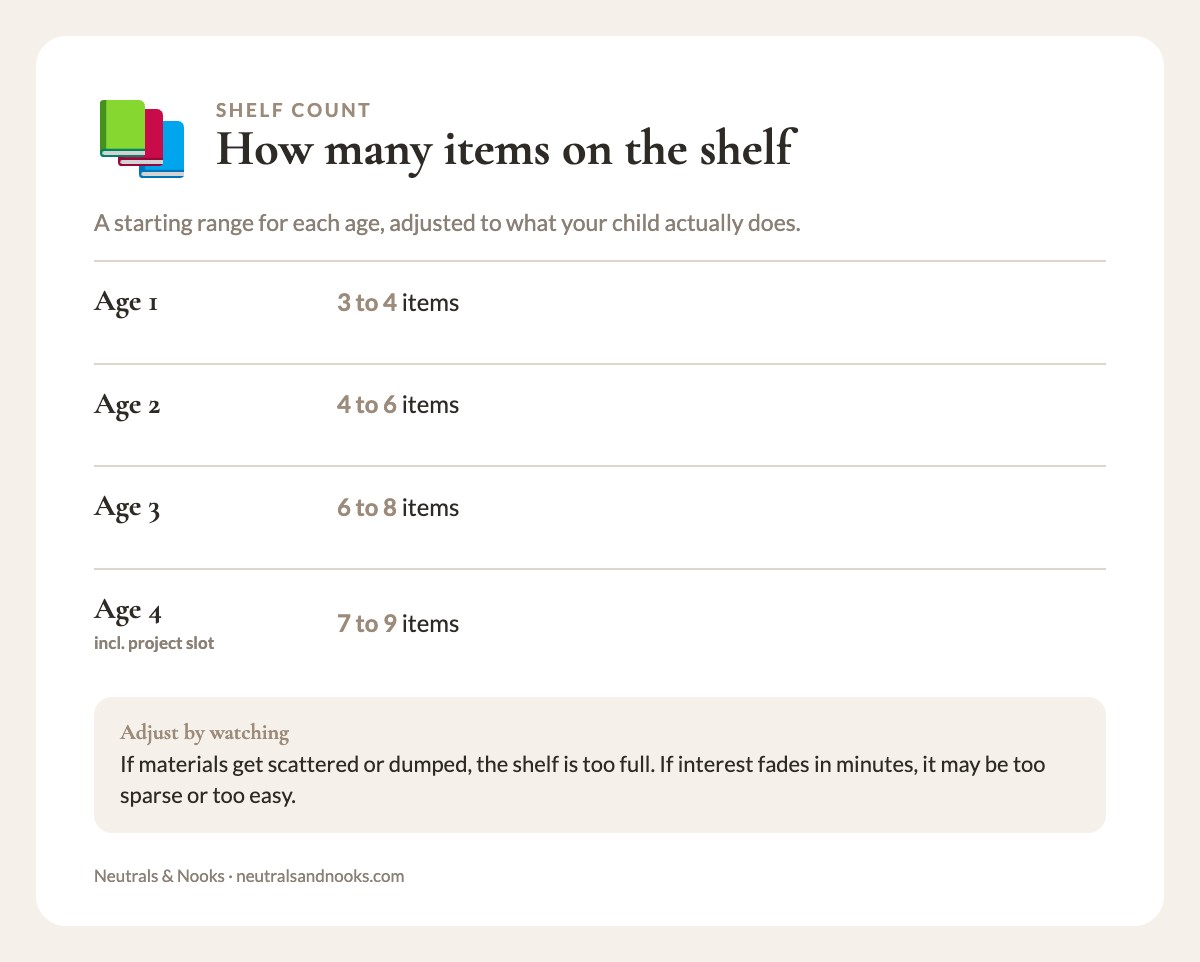
Parents often ask me for a magic number. There isn’t one, but the age table above gives a starting range for each age. Watch your child for a week and adjust. If they ignore half the shelf, it is too full. If they empty it in two minutes and wander off, it may be too sparse or too easy.
The one-in, one-out habit
The simplest system I know is also the most reliable. When a new material arrives, one material goes into the cupboard. The child does not lose anything permanently. They lose a spot on the shelf, and the cupboard becomes a small library of things to return to.
I explain the full method in the toy rotation system post. The short version: store rotated toys in labelled bins out of the child’s sight. Bring a few back every two to four weeks. Then watch for the moment an old favourite feels new again.
Signs the shelf is too full
- Materials end up on the floor, mixed together.
- The child dumps trays without using them.
- You can’t see the back of a shelf slot.
- Tidying takes longer than the play did.
Any of these is a signal to take something away, not to buy another basket.
How to Make Room Before the Gifts Arrive
Birthdays and winter holidays are when shelves overflow. I have a small routine that makes the day easier, and it starts about two weeks before the event.
- Do a quiet audit. Look at what is on the shelf now. Which items have not been touched in two weeks? Those go into the cupboard bin first.
- Clear two slots. Even if you have no idea what is coming, empty two spots on the shelf. A new gift can then go straight into a free space, not on top of a pile.
- Choose a landing spot. I use a single basket or box near the shelf. New items wait there until the child is ready.
- Introduce slowly. On the first day, add one new material to the shelf. On the second day, maybe another. A toddler who receives five new things at once often plays with none of them properly.
- Rotate out with the child. Invite them to choose one thing to rest. It teaches that the shelf has limits, and it avoids the surprise of a missing favourite.
If you need ideas for fitting this into a smaller space, my post on small playroom ideas that maximize space has layouts that work when the “playroom” is a corner of the living room.
What to Tell Relatives Who Ask
One of the hardest parts of this whole topic is the part that involves other people. Grandparents, aunts, and friends want to give something, and the answer “nothing” feels unkind to them. I have found that a specific, warm request works better than a general “no.”
A few scripts that work
- “She’s really into pouring and scooping right now. A small pitcher or a set of scoops would be a hit.”
- “We’re keeping the shelf small this year, so a book or an experience would fit best.”
- “He loves puzzles. A wooden one with a few big pieces would be perfect, and it’ll go straight on his shelf.”
- “If you’d like to give something that lasts, a membership or a class would be wonderful.”
TipName one specific item and the slot it will go in. People want to give a thing, and a clear suggestion with a home already waiting makes saying yes easy.
When gifts arrive anyway
Say thank you, and mean it. Then handle the gift as you see fit. A gift that doesn’t fit the shelf can wait in the cupboard, be offered to a friend, or be exchanged. You are allowed to keep the shelf small. The child will not remember who gave which wooden puzzle, but they will remember a calm, welcoming room where they could find what they wanted.
A Sample Shelf for Each Age
If it helps to see it all laid out, here are four sample shelves. These are suggestions, not prescriptions, and your child’s interests should steer the final mix.
Age 1 (four items)
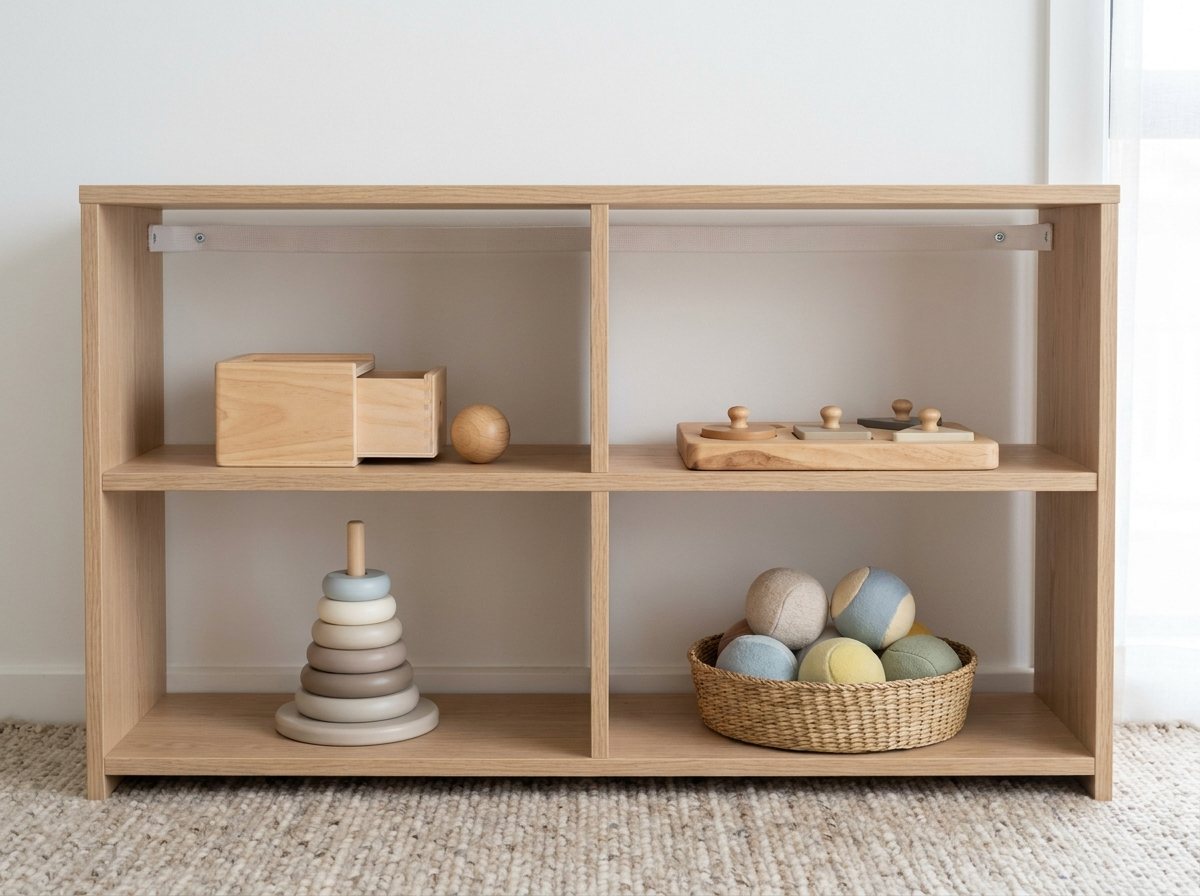
- Object permanence box
- Chunky knobbed puzzle
- Stacking rings with a flat base
- Basket of soft balls
Age 2 (five items)
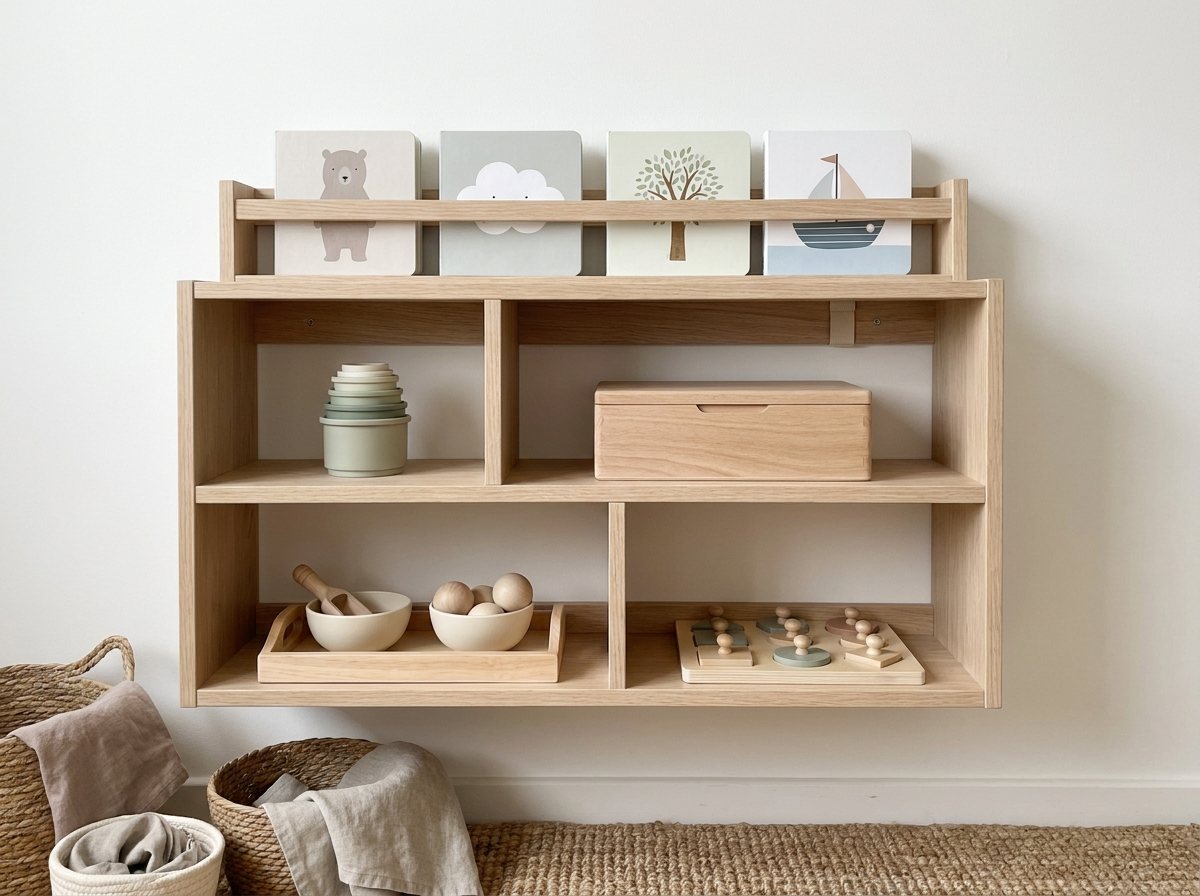
- Transfer tray with scoop and two bowls
- Knobbed shape puzzle
- Nesting cups
- Large-bead lacing set (lace stored up high)
- Board book ledge with four titles
Age 3 (seven items)
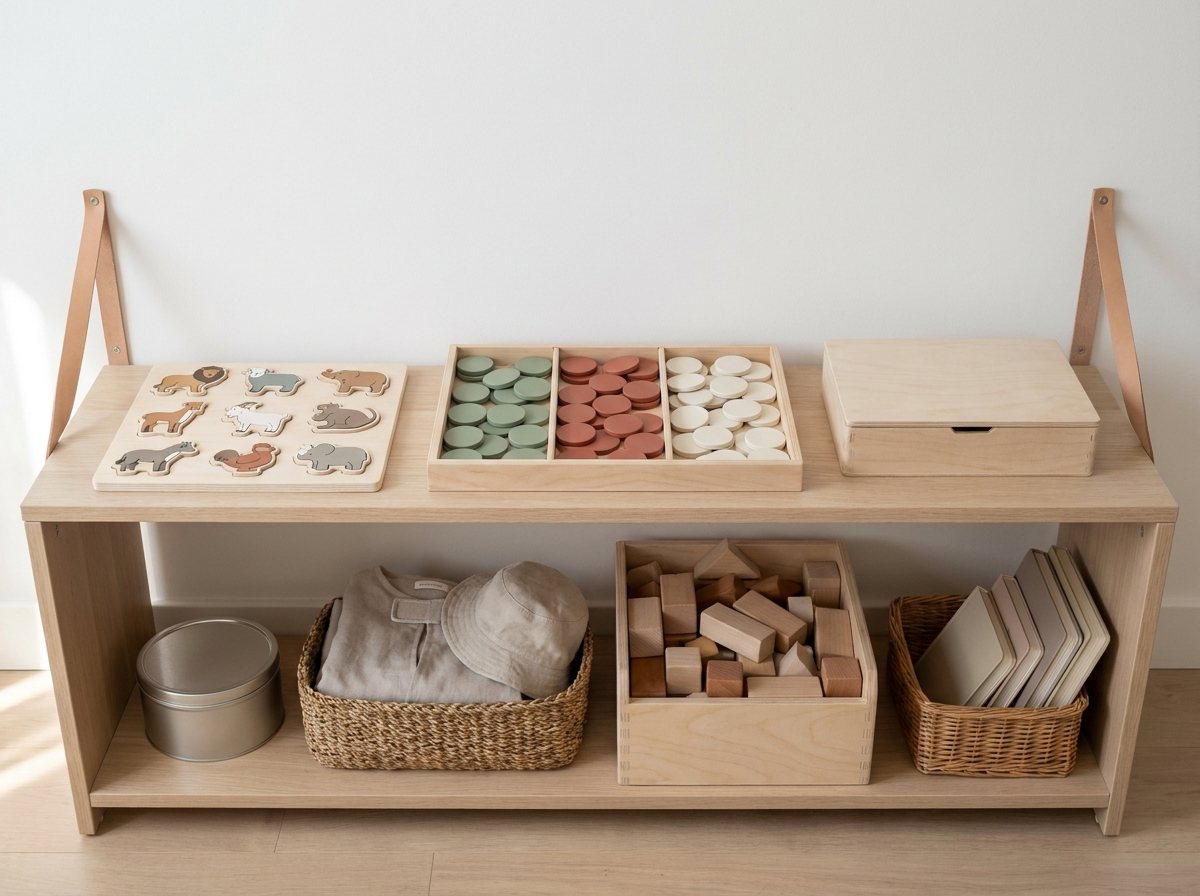
- Inset puzzle (10 pieces)
- Sorting tray with a colour or category set
- Pattern beads and cards (lace stored up high)
- Play-dough kit in a lidded box
- Dress-up basket with three pieces (breakaway cape, no long scarves or straps)
- Wooden building bin
- Small basket of books
Age 4 (nine slots including the project drawer)
- Counting materials with a control card
- Tactile letters or sound objects
- Real-tool craft box
- Larger building set
- Simple board game
- Weaving or sewing card (lace stored up high)
- 12 to 24 piece puzzle
- Books, face out
- Project drawer for work in progress
Each item has its own space, so the child can see what is available at a glance.
Common Mistakes to Avoid
I see the same mistakes whenever I help a friend reset a shelf.
- Buying for the age on the box, not the child. A “2+” label is a safety floor, not a developmental promise. Watch what your child can actually do.
- Choosing by theme instead of by job. Ten animal toys do the same job. One sorting set and one puzzle with animals do more.
- Treating the shelf as a display. A shelf that looks beautiful but cannot be played with has missed the point. A little mess is a sign it is working.
- Over-explaining. Show a material once, slowly, without talking much, then step back. The child will find their own way.
From our sister brands
Montessori-friendly picks from our sister brands
None of these goes on the toy shelf. They support two things Montessori homes care about: dressing independently and books about real life.
Akoni Books and White Loft are sister brands of this site. When you buy through these links we may earn a portion of the revenue, at no additional cost to you.
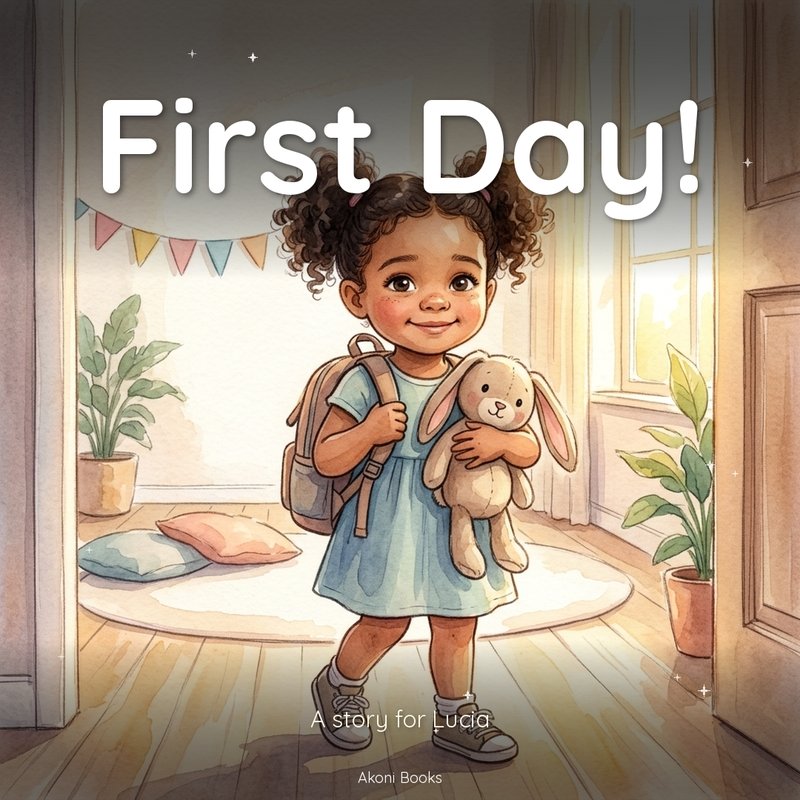
Akoni Books
A real-life storybook starring your child
Montessori shelves favor stories about real life. Akoni Books has themes such as bedtime, the first day of school, a new sibling and potty training, with pictures drawn from one photo to look like your child. For ages 2 to 10.
Digital $9.99 · Softcover $29.99 · Hardcover $39.99, shipping included
First book? Code WELCOME5 takes $5 off at checkout.
Preview it free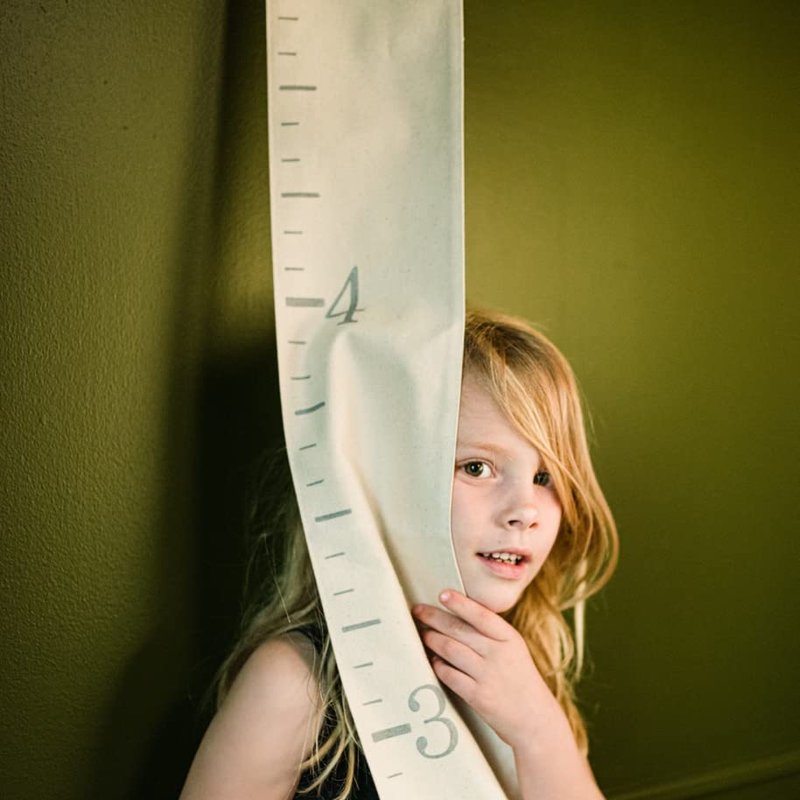
White Loft
Hang it at their height, measure on the same day each year and let them make the mark with the fabric pen that comes with it. Cream canvas with gray ruler numbers.
$40.99 on Amazon
See it on Amazon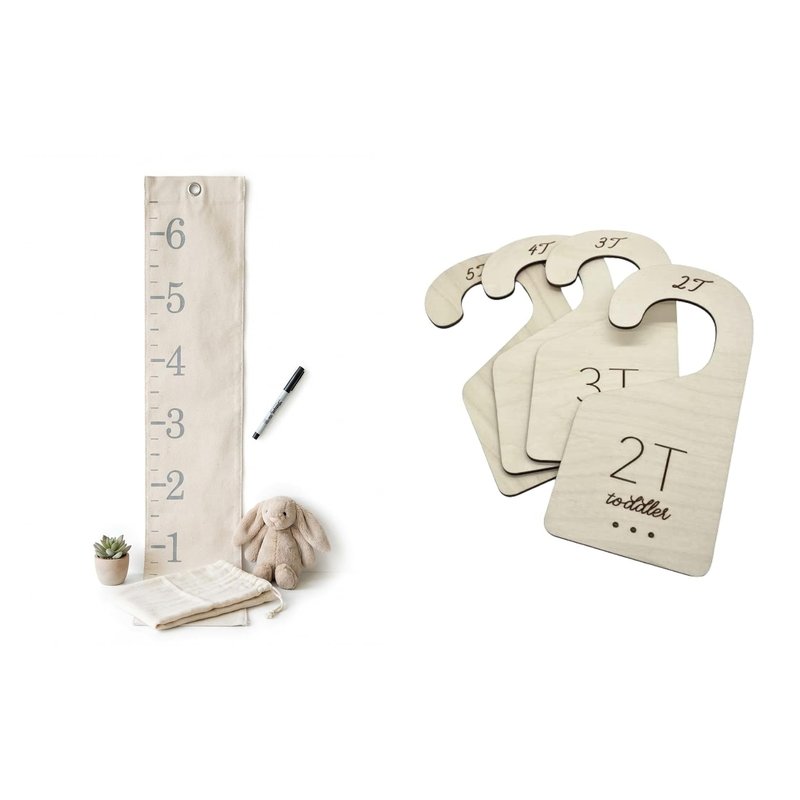
White Loft
Adds four birch closet dividers etched 2T to 5T to the canvas chart. With only the current size at one end of a low rail, a child can pick an outfit that fits. The set costs 15% less than the two bought separately.
$54.35 on Amazon
See it on AmazonPrices checked October 2026; they can change.
Frequently Asked Questions
What are the best Montessori gifts for a 2 year old?
Look for materials with a clear job that a two-year-old can do alone. Good picks are a transfer tray with a scoop and two bowls, a knobbed puzzle, nesting cups, a large-bead lacing set and a few sturdy board books. Choose two or three rather than a whole set, so each has room to be used.
What are good Montessori gifts for a 1 year old?
Simple materials with a satisfying result work best: an object permanence box, a single-shape put-in toy, a chunky knobbed puzzle, stacking rings with a flat base, and a basket of soft balls. Keep every piece larger than a toilet-paper tube and every ball at least 1.75 inches across. Put out only three or four at a time.
Are Montessori toys safe for children under 3?
Only if every piece passes the small-parts check, because a Montessori label is not a safety rating. Anything that fits inside a toilet-paper tube (about 1.25 inches wide) is a choking hazard for children under 3. Any ball for an under-3 should be at least 1.75 inches across, bigger than a golf ball. Never buy below the labelled age, supervise trays and lacing, and keep older siblings’ small-part sets out of reach.
What should I give a 3 or 4 year old who has outgrown toddler toys?
For a three-year-old, try inset puzzles with eight to twelve pieces, sorting sets, pattern beads, play-dough tools, and a few dress-up pieces. For a four-year-old, add counting materials, early letter-sound work, a real-tool craft box, a larger building set, a simple board game, and a beginner weaving or sewing card.
What are some non-toy gifts for toddlers?
Child-sized real tools make good non-toy gifts: a small pitcher, a tiny broom, a watering can, or a child-safe knife and board from age 3 with close supervision. Consumables like paper, non-toxic crayons and clay, or seeds an adult plants with the child get used up. Experiences like classes, museum visits or a swimming block take up no shelf space at all.
How many Montessori toys should I put out at once?
Start with three to four items for a one-year-old, four to six for a two-year-old, six to eight for a three-year-old, and seven to nine for a four-year-old, including a project slot. If materials end up scattered or dumped, the shelf is too full; if the child loses interest in minutes, it may be too sparse or too easy.
Do I need special Montessori furniture to use these gifts?
No. A low, open shelf the child can reach without climbing, plus a few trays or baskets, is enough, as long as it is anchored to the wall with the heavier items on the bottom.
What do I do with the gifts that don’t fit the shelf?
Store them in a rotation bin in a cupboard, out of sight, and bring a few back every two to four weeks when you swap something out. If something truly doesn’t suit your child, it is fine to pass it along or exchange it.
Montessori Gifts That Fit One Shelf: The Short Version
Test every gift for a clear job, one-tray size and a free slot. Keep every piece larger than a toilet-paper tube until about age 4, and every ball at least 1.75 inches across for under-3s. Then keep to one in, one out.
Last November I stood in my friend’s living room looking at fourteen birthday gifts and a shelf with room for six. We kept five and put the rest in a labelled bin in the hall cupboard. Two weeks later we swapped one puzzle, and her son lit up as if he had never seen it before.
Nothing about that was complicated, and none of it required a label. It only required looking at the shelf, thinking about the child, and being willing to say “not right now” to a perfectly nice thing. Not everything has to fit at once. A few good materials, a clear tray, and a bit of space to move are plenty.