Non-Toy Gifts for Kids: Clutter-Free Ideas by Age (1 to 8)
Two Januarys ago, I stood in our playroom holding a plastic xylophone that had played exactly one song. It was a thoughtful gift, and my daughter loved it for about forty minutes.
The xylophone wasn’t the problem, and neither was the person who gave it. Nobody had asked the question I now ask first: where does this live after the wrapping paper is gone?
This guide covers non-toy gifts for ages 1 to 8, sorted by where each gift lives after the holiday. You’ll find an age-by-age table, experience ideas, safety notes, and tips for asking relatives. I stick to gift types and what to look for, with no brand names or prices.
In this article (16 sections)
- The Four Homes: Judge a Gift by Where It Lives
- Non-Toy Gifts by Age: The At-a-Glance Table
- What “Non-Toy” Actually Means (and Why It’s Not the Goal)
- Age 1: Non-Toy Gifts for One-Year-Olds
- Age 2: Non-Toy Gifts for a Two-Year-Old
- Age 3: Non-Toy Gifts for Three-Year-Olds
- Ages 4 and 5: Non-Toy Gifts for Preschoolers and Kindergarteners
- Ages 6 to 8: Non-Toy Gifts for Early Elementary Kids
- Experience Gifts for Kids: Clutter-Free Ideas by Size
- Non-Toy Christmas Gift Ideas for Kids (and How to Keep the Morning Calm)
- How to Ask Grandparents and Relatives for Clutter-Free Gifts
- A Small-Space Gift Checklist: Questions to Ask Before You Buy
- Where the Gifts Live: A Quick Storage Reference
- Non-toy keepsakes from our sister brands
- Frequently Asked Questions
- A Calmer Way to Give
The Four Homes: Judge a Gift by Where It Lives
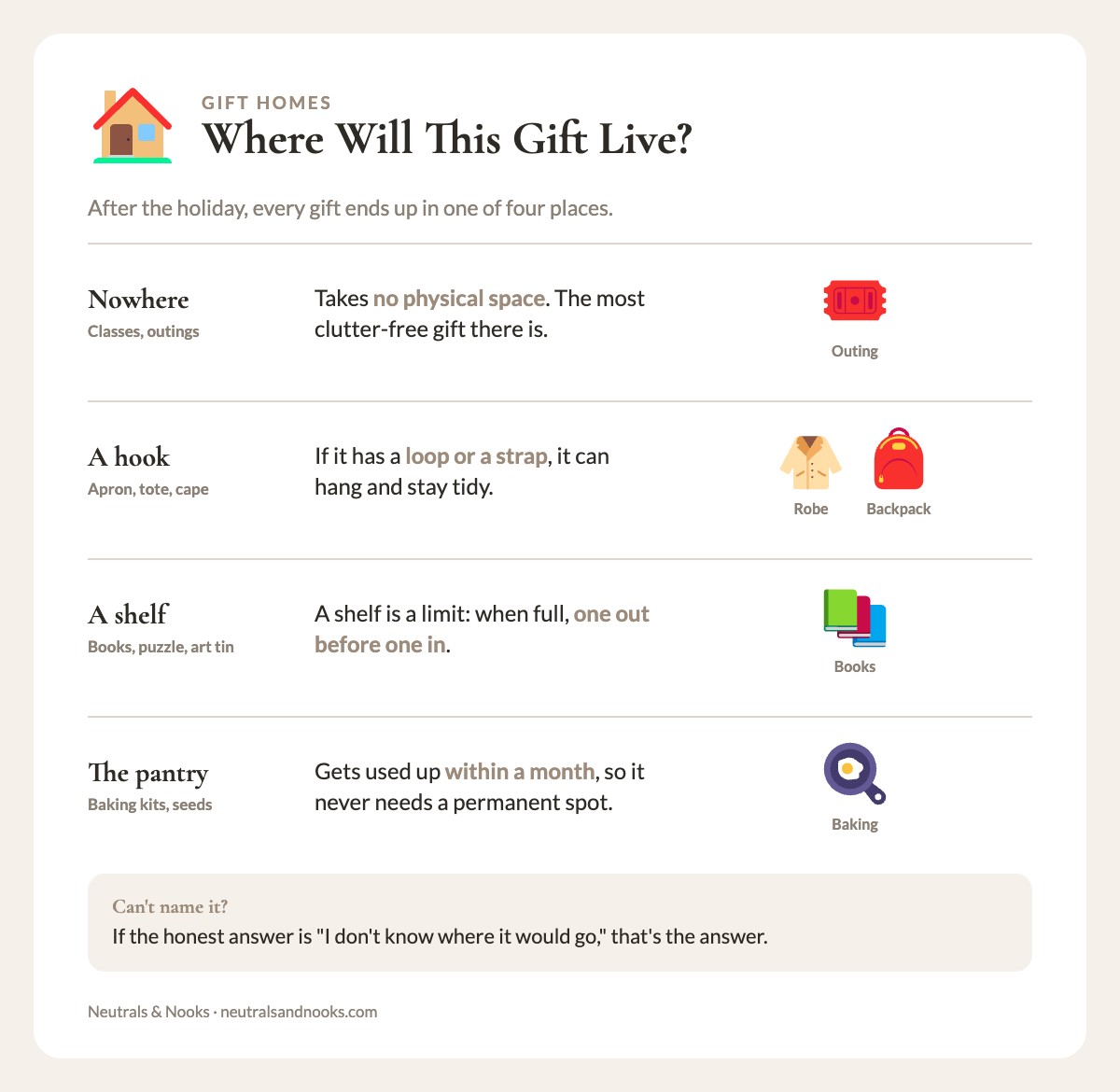
Here is the framework behind the whole guide. After the holiday, every gift ends up in one of four places.
| Home | What goes there | Rule of thumb |
|---|---|---|
| Nowhere | Classes, outings, memberships, a one-on-one day out | Takes no physical space. The most clutter-free gift there is. |
| A hook | Apron, tote, cape, robe, small backpack, lantern | If it has a loop or a strap, it can hang and stay tidy. |
| A shelf | Books, a puzzle, an art tin, a building set | A shelf is a limit as well as a place. When it’s full, one thing goes out before another comes in. |
| The pantry | Baking kits, tea-party snacks, a cooking project, seeds | Gets used up within a month, so it never needs a permanent spot. |
Hooks are the easiest storage there is. If you haven’t set up hooks at child height yet, my Montessori-inspired coat closet guide walks through the heights and spacing.
When someone asks what to buy my kids, I don’t start with ideas. I ask which of these four homes the gift would fit. If the honest answer is “I don’t know where it would go,” that’s the answer.
Non-Toy Gifts by Age: The At-a-Glance Table
Here’s the whole guide in one place, with each gift matched to one of the four homes. Screenshot it, send it to the grandparents, pin it to the fridge. The sections further down cover each age in more detail.
| Age | Gift type | Why it gets used | Where it lives afterwards |
|---|---|---|---|
| 1 | Sturdy board books | Repetition is how one-year-olds learn; they want the same book fifty times | A low shelf or a front-facing ledge |
| 1 | Nesting or stacking cups for bath and sand play | Doubles as bath, sand, and kitchen-floor play | Bath caddy or a kitchen drawer |
| 1 | A first library card visit or music class | Builds routine and gives you an outing | Nowhere |
| 2 | Washable chunky crayons and large paper | Scribbling is the main creative outlet at this age | A shelf tin, out of reach until supervised |
| 2 | A child-size apron plus real kitchen tools (whisk, wooden spoon, small pitcher) | Two-year-olds want to do what you do | A hook and a low drawer |
| 2 | Rain boots or sturdy sandals | Worn often in wet months; gets them outside | By the door |
| 3 | A watering can and a pot with a starter herb plant, or large seeds an adult plants | Gives a three-year-old a job and a result | Hook, windowsill, or garden |
| 3 | Playdough supplies or clay with simple tools | Open-ended, hands-on, calming | A shelf bin with a lid |
| 3 | Zoo, aquarium, or museum membership | Repeatable outings through a whole year | Nowhere |
| 4-5 | A real art kit: watercolors, brushes, good paper | Kids this age start wanting “real” materials | A shelf caddy |
| 4-5 | A beginner baking or cooking kit | Builds skill and ends up as dinner | The pantry |
| 4-5 | A child-size backpack, flashlight, and nature journal for “expeditions” | Fuels outdoor play for months | A hook and a shoebox |
| 6-8 | A hobby class or lessons (art, swimming, music, climbing) | Real skills, real progress, built-in motivation | Nowhere |
| 6-8 | Chapter books and a reading light | Reading takes off at this age | A bookshelf or bedside basket |
| 6-8 | Sewing, woodworking, or science project kits, or a real tool set | They want to make things that are actually useful | A shelf or a project box |
| 6-8 | A one-on-one day out with a parent or grandparent | Attention is the thing they remember | Nowhere |
What “Non-Toy” Actually Means (and Why It’s Not the Goal)
The goal isn’t zero toys. Children learn through play, and a set of wooden blocks might be the best gift on this list. What I want less of is anything loud, single-purpose, and temporary.
When I say “non-toy gifts,” I mean gifts in one of these buckets:
- Experiences: things you do together, with no object left behind.
- Consumables: art supplies, baking ingredients, seeds, and other things meant to be used up.
- Tools and real-life gear: a real child-size whisk, a watering can, a flashlight, a library bag.
- Books, wearables, and memberships: chapter books, rain boots, a zoo pass. Each one already has a home, or needs none.
None of these require a new bin. That’s the whole idea.
Age 1: Non-Toy Gifts for One-Year-Olds
At one, a child can’t tell a gift from any other object in the room. They don’t know it’s their birthday. The best things you can give a one-year-old are things that fit what they’re already doing: mouthing, banging, stacking, turning pages, and watching you.
What to look for
- Board books with simple pictures. One-year-olds want the same book again and again, and they will chew the corners. Look for thick pages, rounded edges, and photos or clear illustrations of everyday things like animals, food, and faces.
- Bath-friendly cups and scoops. Plain stacking or nesting cups work in the bath, in the sandbox, in the kitchen, and in the laundry basket. One set does the job of five single-use toys.
- A real, safe household object to explore. Try a smooth wooden spoon, a soft baby brush, or large measuring cups. Choose one-piece items with no splinters or detachable parts. The handle should be too big to fit fully in the mouth. Keep an adult within reach.
- A first experience. A baby music class, a toddler swim session, or a regular story time at the library is a gift for the child and for the parent who needs a reason to leave the house.
What to skip
I’d steer away from anything with lots of small parts, anything with a screen, and anything that does the “playing” for the child. At this age you want the child doing most of the work, not the toy.
Safety firstFor children under 3, choose smooth, one-piece items labeled for under-3s. Avoid loose parts, small magnets, and battery compartments that open easily. Stay within arm’s reach of any water.
Food choking hazards apply to children under 4. Keep whole grapes, popcorn, whole nuts, hard candy, hard raw vegetables, hot dogs, chunks of cheese or meat, and spoonfuls of peanut butter away from them. Cut grapes and other round foods lengthwise into quarters.
Skip dried beans and other small loose fillers in sensory bins.
Where it lives
Books go on a low, front-facing shelf where the child can reach them. Cups go in the bath caddy. Everything else is an outing, so nothing lives anywhere.
If you’re a grandparent reading this: a one-year-old’s favorite gift is you, on the floor, with a book. The object is optional.
Age 2: Non-Toy Gifts for a Two-Year-Old
Toddlers are easy to buy for and easy to overbuy for. At two, my daughter ignored most of what came in a box and carried one small tote around the house for weeks.
Two-year-olds are also in the “me do it!” phase. They want to pour their own water, carry their own bag, and wear their own boots. The best non-toy gifts for toddlers give them real versions of what they see you doing.
Gift ideas that work for two
Kitchen helper gear. A child-size apron, a small whisk, a wooden spoon, and a little pitcher. This one is a favorite of mine because it turns daily life into play.
If you add a step, use a stable learning tower or a stool with rails. Keep your toddler away from the stove and hot liquids, and stay with them at all times. My guide to a toddler-friendly kitchen covers the setup.
Large washable crayons and a roll of paper. Two-year-olds scribble, and scribbling is real developmental work. Look for chunky, washable crayons and paper big enough that they don’t run off the edge.
A roll of plain paper takes less space than a stack of coloring books and gives them room to go big. Broken crayon bits and small caps are choking hazards, so supervise and put supplies away after use.
Rain boots and a little raincoat. Not exciting to unwrap, but they get worn often in wet months. Puddle-jumping is a full afternoon activity at this age. Size boots for current fit with toe room, not to grow into.
A soft cloth or sturdy board book. More durable than paper, and good for car rides.
A small basket or tote. Two-year-olds love to carry things from one place to another. A little tote is a toy, a storage container, and a way to help you tidy, all in one.
Water play supplies. A couple of cups, a funnel, and a plastic tub on a towel make a “sink” for the kitchen floor. Keep the safety note below in mind.
Where it lives
| Gift | Home |
|---|---|
| Apron | A hook at child height |
| Whisk, spoon, pitcher | A low drawer or a small basket in the kitchen |
| Crayons and paper | A shelf tin; roll of paper stored upright |
| Boots and raincoat | By the door |
| Tote | A hook, or in use |
The two-year-old version of a clutter-free home is one where everything has a spot they can reach. If a toddler can put a thing away without help, they’ll sometimes actually do it.
Safety firstChoose crayons and paints labeled non-toxic and keep small items away from mouths. Never leave a toddler alone with standing water, even briefly. Stay within arm’s reach and empty the tub afterward.
Age 3: Non-Toy Gifts for Three-Year-Olds
Three-year-olds ask a hundred questions a day, hold strong opinions about socks, and play pretend in earnest. They can also sit longer with a task they care about.
Gift ideas that work for three
A small gardening set. A watering can, a trowel, and a pot with a starter herb plant, or a few large seeds such as sunflower or bean. Three-year-olds adore tending a plant, and the payoff (a sprout!) is quick enough to hold their interest.
I skip bulbs, because daffodil, tulip, hyacinth, and amaryllis bulbs are toxic if eaten and a three-year-old may mouth them. In a small apartment, a windowsill herb pot gives the same pleasure.
Safety firstSeeds and dried beans are choking hazards for children under 4. An adult keeps the packet, handles the seeds, and does the planting. The child does the watering.
A starter plant avoids loose seeds altogether. If you do buy seeds, choose large ones and read the packet. Skip any seed labeled as treated with a fungicide or pesticide. Store the packet out of reach, and wash hands afterward.
Playdough or clay with simple tools. A set of rolling pins, cookie cutters, and a few blunt tools turn a tub of dough into an hour of quiet. Store the dough in an airtight container. It lasts for weeks and then it’s done.
Choose non-toxic dough labeled for the age, check for wheat if allergy is a concern, and discourage eating it. Homemade dough is very salty and not for eating.
A pretend-play kit built from real things. Think of a “doctor’s bag” made from an old tote with a stethoscope, bandages, and a notepad. Or a “café” built from a tray, cups, and a small pad of paper.
You can assemble these from things you already own, and the whole thing lives in a single bag on a hook. The same idea works for a “post office” (envelopes, stickers, a shoebox) or a “picnic” (blanket, basket, a few plates).
A membership to a zoo, children’s museum, or science center. I recommend these over and over, because a three-year-old will ask to go back again. In my experience, kids often get more out of revisiting a place they love. A membership turns a single present into a year of outings.
A kid-friendly flashlight. For tent-building, bedtime reading, and exploring the dark hallway. A good one takes very little space and gets used nightly.
A dress-up cape or simple costume pieces. Not a full licensed costume with fifteen accessories, but one or two open-ended pieces, such as a cape or a crown. They work for any story. In our house, the plain cape outlasted every character costume.
Safety firstChoose a flashlight with a screw-closed battery compartment and keep spare button batteries out of reach. Swallowed button batteries can seriously injure or kill a child of any age, and children under 6 are at the highest risk. If a child may have swallowed one, go to the emergency room at once. In the US, call the National Battery Ingestion Hotline at 800-498-8666 or Poison Help at 1-800-222-1222 on the way. Don’t induce vomiting, and don’t wait for symptoms. For capes, choose breakaway or hook-and-loop closures and skip long neck ties. Never let a child wear a cape or scarf on playground equipment.
Where it lives
The garden set goes outside or in a basket by the door. Playdough goes in a lidded bin on a shelf. The pretend-play kit hangs on a hook. The flashlight goes in a bedside drawer. A membership lives on your phone.
If you’re starting to feel the play area getting full, this is the age to introduce rotation. I wrote a full guide on how many toys should be out at once. A three-year-old is just old enough to help pick which things go away for a while.
Ages 4 and 5: Non-Toy Gifts for Preschoolers and Kindergarteners
By four, children have preferences, favorite shows, and a sense of fairness that can make birthday parties tense. They also have much better hands. They can cut with scissors, pour without spilling (mostly), and follow multi-step instructions.
This is the age when the “real thing” matters. Preschoolers notice the difference between a toy version of a tool and the actual tool in a smaller size.
Gift ideas that work for four and five
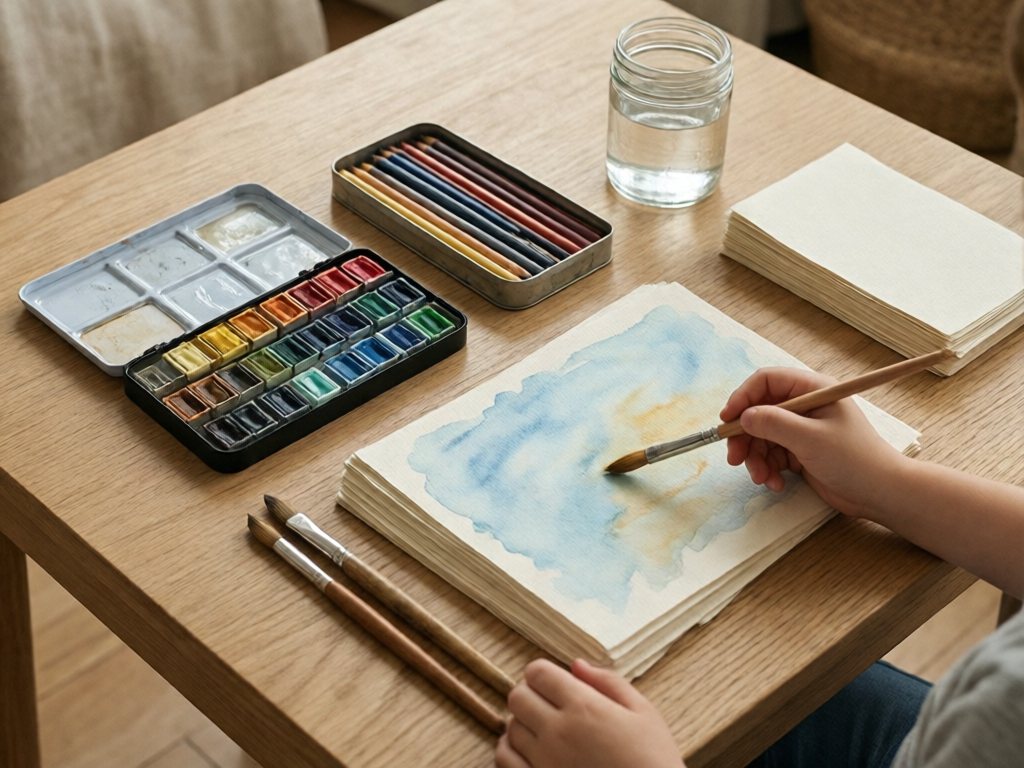
A real art kit. Watercolors with decent brushes and thick paper. A set of colored pencils in a tin. A small easel or a clipboard. Four- and five-year-olds are ready for materials that behave like the real thing, and they notice when they get them.
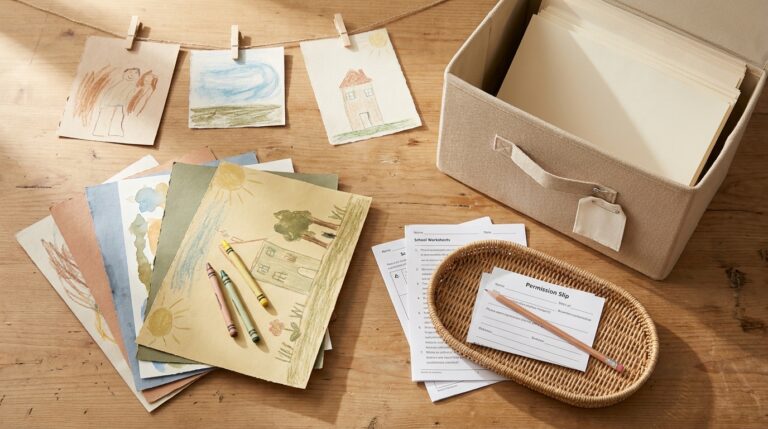
TipPair an art kit with a plan for the finished pieces, such as a folder or a rotating display, because one kit can become forty drawings very fast. My post on kids’ artwork and school papers offers a simple system for sorting and storing them.
A beginner baking or cooking kit. A child-size rolling pin, a few cookie cutters, a set of measuring spoons, and a simple recipe card. Or pre-measured dry ingredients for a batch of muffins.
This one lives in the pantry and ends up on a plate. Children this age love to cook something and then eat it, and it’s one of the very few gifts that ends up as dinner.
Safety firstAn adult handles the oven, the stove, and anything hot. No tasting raw dough or batter, because raw flour and raw egg can carry germs. Wash hands before and after.
Check the ingredients for your child’s allergens, such as wheat, egg, nuts, and dairy. If there’s any cutting, use only a kid-safe nylon knife and stay beside them.
Nature exploration gear. A small backpack, a magnifying glass, a flashlight with a screw-closed battery compartment, a notebook, and a pencil. Give it all in a bag with a note saying “expedition kit.” The backpack hangs by the door, and the rest fits in a shoebox.
A set of simple board games or card games. Four- and five-year-olds can play cooperative games and simple matching games. A deck of cards and a game with a few pieces fit in a small basket and bring the whole family to the table.
Choose games that take under fifteen minutes. Check the age label, avoid small pieces if a child under 3 lives in your home, and store games out of the younger child’s reach.
Lessons or a short class. A swim class, a dance class, a first art class. At this age, keep it short and playful, and let the child try it before committing for a whole season.
A personal library of their own. A handful of picture books chosen for this specific child. Add a cordless, rechargeable reading light and a basket by the bed. If you want a calm place to put them, see my guide to kids’ bookshelf and reading nook organization.
Where it lives
| Gift | Home |
|---|---|
| Art kit | A shelf caddy or a lidded box |
| Baking kit | The pantry, on a labeled low shelf |
| Expedition backpack | A hook by the door |
| Games | A basket on the game shelf |
| Lessons | Nowhere |
A low pantry shelf does a lot of work here. If you keep a low, labeled shelf for the child’s baking and snack items, they can grab what they need on their own. My pantry label system has printable labels that make a kid-friendly shelf work.
Ages 6 to 8: Non-Toy Gifts for Early Elementary Kids
Six-to-eight-year-olds are the hardest group to shop for with toys, because their interests are narrowing and intensifying. One child wants everything about dinosaurs. Another wants to learn magic tricks. Another doesn’t want to put down a book. Generic toys miss.
But this is the easiest group for non-toy gifts, because they’re old enough to care about skills, projects, and time with the people they love.
Gift ideas that work for six to eight
Before you buy a kit, tool set, or science set for this age, run three quick checks:
- The manufacturer’s age label matches the child.
- No small parts, magnets, or button batteries a younger sibling could reach.
- An adult is free to supervise the first few uses.
Lessons or classes in something they love. Swimming, art, music, climbing, martial arts, chess, coding for kids. Choose something the child asked about, not something you think they should do.
A class gives them a regular outing, a teacher who isn’t you, and visible progress.
A big stack of chapter books and a good reading light. At this age reading takes off. A child who’s just starting chapter books needs a steady supply, and a book is a gift that grows with the reader. Choose a cordless rechargeable light with a screw-closed battery compartment.
If you’re worried about bookshelf overflow, set a rule: books stay on one shelf, and when it’s full, some go to a donation bag or a friend.
A craft or maker kit that produces something. Sewing a small stuffed animal, weaving a bracelet, building a birdhouse, or growing crystals. The point is that the child makes a finished thing, and the kit is used up in the process.
Safety firstChoose age-labeled kits, such as melt-and-pour soap. An adult does the melting, handles hot wax, heat, and any chemicals, and supervises needles. Soap base, fragrance, and colorants are not edible and should stay away from eyes.
Skip battery tea-lights in kits and craft projects. They run on lithium coin batteries, and most have a compartment that slides or twists open by hand. Only accept one whose battery compartment needs a tool, such as a screwdriver, to open.
Swallowed button batteries can seriously injure or kill a child of any age, and children under 6 are at the highest risk. Keep loose batteries, and any device with a battery compartment that opens easily, out of every child’s reach.
If you think a child has swallowed a battery, go to the emergency room at once. In the US, call the National Battery Ingestion Hotline at 800-498-8666 or Poison Help at 1-800-222-1222 on the way. Don’t induce vomiting, and don’t wait for symptoms.
If the finished project is displayed on a shelf or given away as a gift, the kit itself leaves no trace.
A real tool set, child-size. A small hammer, a screwdriver, a measuring tape, and a pair of safety glasses. A six-year-old with a measuring tape will measure every doorway in the house.
Safety firstTools are for adult-supervised use only. Safety glasses must be worn whenever hammering, and tools are stored out of reach when not in use.
A science project. A simple chemistry set, a magnifier and specimen jars, a basic telescope, a bird feeder with a bird-identification guide. These are the gifts that make a child say “did you know…?” at dinner.
Check the manufacturer’s age label, since chemistry sets are often labeled for older kids. Supervise all experiments, and never point a telescope at the sun.
A one-on-one day out. This is the one I’d put at the top of the list. A day at the museum, a train ride to a nearby town, a hike followed by lunch. In our family, the days out are what get talked about long afterward.
It requires no storage, and it gives them what they actually want most, which is your full attention.
Practical upgrades they’ll love. A proper backpack that fits their back, a water bottle with their name on it, a cozy robe, a headlamp with a screw-closed battery compartment. These feel boring to adults and thrilling to kids who’ve been asking for them.
Their own money jar or a simple savings setup. A clear, shatter-resistant plastic jar and a notebook to track what’s inside make a fun introduction to saving. Choose a lid your child can open but a toddler can’t. It’s not flashy, but the “I saved up for this myself” moment is a good one. Keep the jar and coins out of reach of children under 4, and of any child who still mouths objects.
Where it lives
Lessons, outings, and money skills live nowhere. Books go on the shelf or in a bedside basket. A maker kit lives in a box until the project is done, and then the project goes on display and the box goes in recycling. Tools go in a labeled bin in the garage or a drawer in a utility closet.
Experience Gifts for Kids: Clutter-Free Ideas by Size
Experience gifts for kids are the single biggest category of “nowhere” gifts, so they get their own section. If you’re trying to cut down on stuff, this is your starting point.
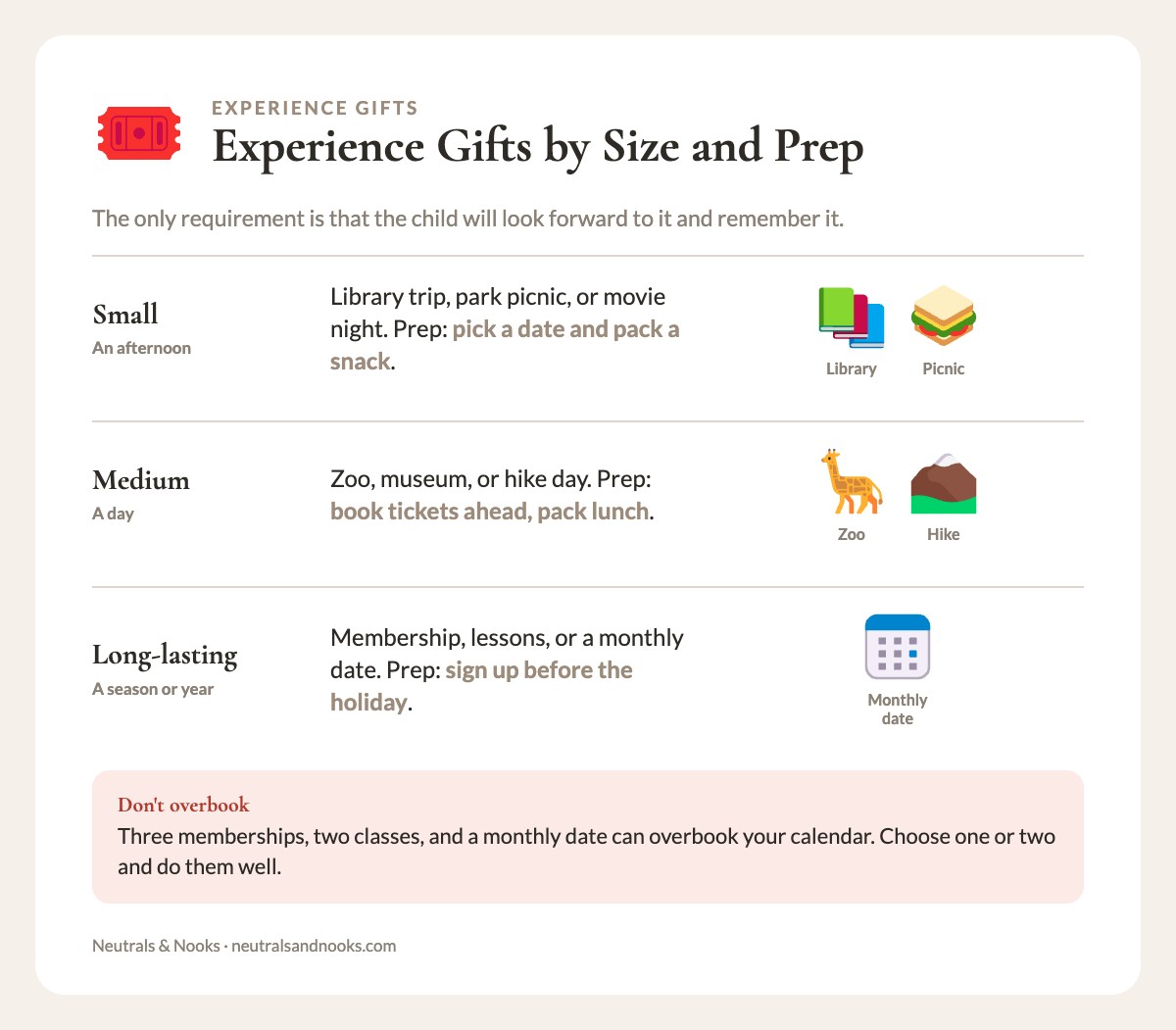
The experience can be small or big. The only requirement is that it’s something the child will look forward to and remember.
Ideas by size
| Size | Ideas | Prep needed |
|---|---|---|
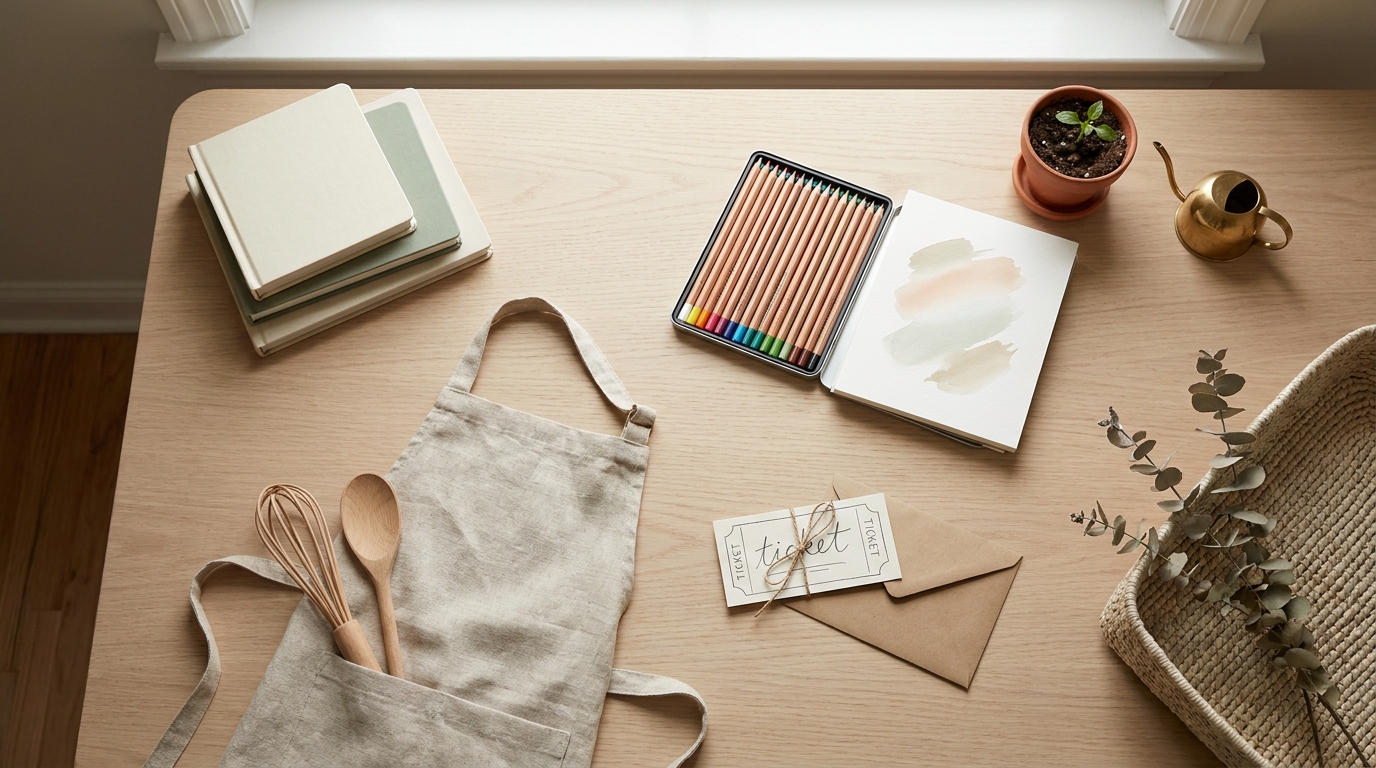
| Small (an afternoon) | A library trip with a promise to check out whatever they like. A picnic at a park you don’t usually visit. A baking afternoon with a grandparent. Pajamas, a snack, and a movie night with a “ticket” they can hold. A special breakfast out, just the two of you. | Very little. Pick a date and pack a snack. |
| Medium (a day) | A zoo, aquarium, or museum day. A hike or beach day with a packed lunch. A day at a pick-your-own farm. A train, bus, or ferry ride to somewhere new. A craft or pottery workshop. | Book tickets or a spot ahead, and pack lunch. |
| Long-lasting (a season or a year) | A membership to a local museum, zoo, or nature center. A series of lessons. A monthly standing date (“first Saturday of the month is our day”). A kids’ magazine or activity box subscription. | Sign up before the holiday and put the dates on the calendar. |
For a subscription, choose mostly paper, consumable ones. Check the age label, and remove small parts if a younger child lives at home.
How to wrap an experience
Kids need something to unwrap, and the experience itself isn’t visible. A few ideas:
- A coupon booklet. Hand-drawn “tickets” for a bike ride, a bake-off, a camp-out in the living room.
- A mystery envelope. A card with a clue or a picture, and the reveal comes when you head out.
- A small related item. A mini backpack for the hike, a new swimsuit for swim lessons, a sketchbook for the art class. The item is small, and it makes the experience feel real.
- A countdown. Put the date on the calendar and let the child cross off the days.
One caution on experiences
Experiences can also pile up in a different way: on your schedule. Three memberships, two classes, and a monthly date can turn into an overbooked calendar. Choose one or two and do them well. A gift that you can’t actually follow through on is just a different kind of clutter.
Non-Toy Christmas Gift Ideas for Kids (and How to Keep the Morning Calm)
The December version of this question, “non toy christmas gift ideas for kids,” comes with its own pressures. There’s the tree, the stockings, the relatives, the photos, and the expectation that there should be a lot under the tree.
Here is what has helped our family.
Use a simple framework for the main gifts
Many families use a “want, need, wear, read” rhythm. That’s one thing the child wants, one thing they need, one thing to wear, and one thing to read.
It limits the number of gifts and leaves room for non-toy items. You can also add a fifth for an experience: something to do.
Fill the stocking with consumables
Stockings are the easiest place to go non-toy, and they’re where the most unnecessary plastic ends up. Instead, try:
- A fresh set of crayons or colored pencils.
- Stickers and a small sticker book.
- A special pencil and a small notebook.
- Fancy hair clips, a new toothbrush in a favorite color, a funny pair of socks.
- A little bag of special snacks or hot cocoa mix.
- A packet of seeds for spring planting. An adult keeps the packet and does the planting for children under 4.
- A handwritten note or a “coupon” for one-on-one time.
Everything here is either used up quickly or lives in a drawer. Nothing needs a bin.
Plan the space before the day
Before the holiday, take twenty minutes to clear one shelf or bin. The point isn’t to make a big purge. It’s to create a landing spot for whatever comes in. If you know a few books are on the way, there’s room on the shelf. If a set of art supplies is arriving, the tin has a home.
I covered this timing in my Christmas planning checklist. It breaks the season into an eight-week timeline, so the clearing happens early and not on Christmas Eve.
Open gifts slowly
This isn’t a storage tip exactly, but it’s the best clutter-prevention trick I know. If gifts are opened one at a time, with a pause to play or look at each one, children notice and enjoy what they have. If they’re all torn open in ten minutes, the second half gets ignored. A slow morning has far less leftover than a fast one.
The January check-in
A week or two after the holiday, spend fifteen minutes with your child going through the new things. Ask which ones they’ve been using. Put the rest into a rotation bin. I describe how to run a rotation in my toy rotation system post, and it works the same way for new gifts. Anything that isn’t being used goes into the bin for a month, and then comes back out as if it were new.
How to Ask Grandparents and Relatives for Clutter-Free Gifts
This is the part many parents dread. The relatives who love your children want to give them something, and the thing they want to give is often a big, loud, plastic-heavy item. You don’t want to hurt anyone’s feelings, and you also don’t want to live in a toy store.
Here’s what I’ve learned.
Give them a short, specific list
Vague requests like “no toys, please” tend to go unheard, or leave people stuck. A list gives them something concrete to say yes to. Share three to five items, like:
- A book on a topic the child loves.
- Tickets for a day out or a membership.
- A class or lesson.
- A practical item (rain boots, pajamas, a water bottle).
- A contribution toward a bigger goal (a savings jar, a bike, a trip).
Tell them why, kindly
The simplest way is to explain the reason so it doesn’t feel like criticism. For example:
Good to knowA message you can copy and paste: “We’re trying to keep the playroom manageable, so we’d love gifts that get used up or that we can do together. [Child] would be thrilled with a trip to the science museum with you, or a few new chapter books.”
Most relatives respond well to this, especially when you give them a way to be involved. A grandparent who wants to “be there” will often love the idea of a standing monthly date.
Offer a “yes” before a “no”
People are more flexible when they feel they’ve been invited to do something, not told what not to do. “We’d love for you to take her to the zoo” lands better than “please don’t buy more stuffed animals.”
Make it easy to say yes
Include a link to the museum, the class, or the book list. If a gift is easy to buy and easy to wrap, it’ll happen. If it takes a lot of work, it won’t.
Have a gentle plan for the gifts that come anyway
Sometimes a big plastic gift shows up regardless. That’s okay. Say thank you, let the child enjoy it, and later decide whether it stays. Many families use a one-in, one-out rule. A new item arrives, and the child picks one to donate. Children are often surprisingly good at this when they are the ones who decide.
You don’t have to give up on every gift you didn’t choose. You only have to protect the space you’re trying to keep calm.
A Small-Space Gift Checklist: Questions to Ask Before You Buy
When I’m choosing a gift, I run through a short mental list. You can use it for your own shopping or send it to a relative.
- Where will this live? Can I name the specific hook, shelf, or drawer?
- Used more than once. Does it work for open-ended play, or only one way?
- Batteries or small parts. Does it need batteries, a screen, or many pieces? If so, will it hold the child’s interest, or will it run out of novelty by Tuesday?
- Grows with the child. Could a three-year-old and a six-year-old both use this?
- Consumable. Art supplies and baking kits get used up, which makes them easy to replace.
- Involves a person. Gifts that need a grown-up or a sibling tend to be remembered.
- Would the child ask for it? The best gift is one that matches an interest the child already has.
If a gift passes four or five of these, it’s likely a good one. If it fails most of them, it may be better as an experience or a book.
TipAim for four or five gifts in total, and mix budgets. Consumables and small outings are usually the least expensive, and a class series or membership is usually the splurge. Costs vary a lot by area, so I don’t list prices here. Set your own limit per gift before you shop. If a gift isn’t used, hold it in the “someday” box for a month before donating it.
If you’d like to plan gifts on paper, the free Clutter-Free Gift Planner for kids ages 1 to 8 helps you match each gift to the place it will live before the holiday.
Where the Gifts Live: A Quick Storage Reference
You’ve picked the gifts. Here is the setup I’d have ready before the holidays, so every gift has a landing place from day one.
| Zone | Size and limit | What lives there | Overflow rule |
|---|---|---|---|
| Hook rail | About two feet of wall, at child height | Backpack, apron, tote, cape, robe | Full rail means something comes off before something goes on |
| Art and craft shelf | One shelf, four lidded bins (drawing, painting, clay, special projects) | Art supplies | Use up or pass on the oldest supplies first |
| Book basket | One basket or ledge, covers facing out | Current favorites | Outgrown books rotate out; cherished ones stay |
| Pantry shelf | One low, labeled shelf | Baking and snack items | Restock as things are used up |
| “Someday” box | One closet box | Gifts for an older age or a future project | A woodworking set at five can wait until seven |
| Outgoing bag | One bag in the closet | Outgrown or unwanted things | When it’s full, it leaves the house |
If siblings share a room, the same ideas work along one wall. My guide to shared kids’ bedroom organization covers how to divide the space, and the art shelf pairs well with my post on kids’ craft supply organization.
For more room-by-room storage ideas, browse the rest of Neutrals & Nooks.
From our sister brands
Non-toy keepsakes from our sister brands
Three gifts that take a strip of wall, a closet rod or one slot on the bookshelf, and no floor space.
Akoni Books and White Loft are sister brands of this site. When you buy through these links we may earn a portion of the revenue, at no additional cost to you.
Akoni Books
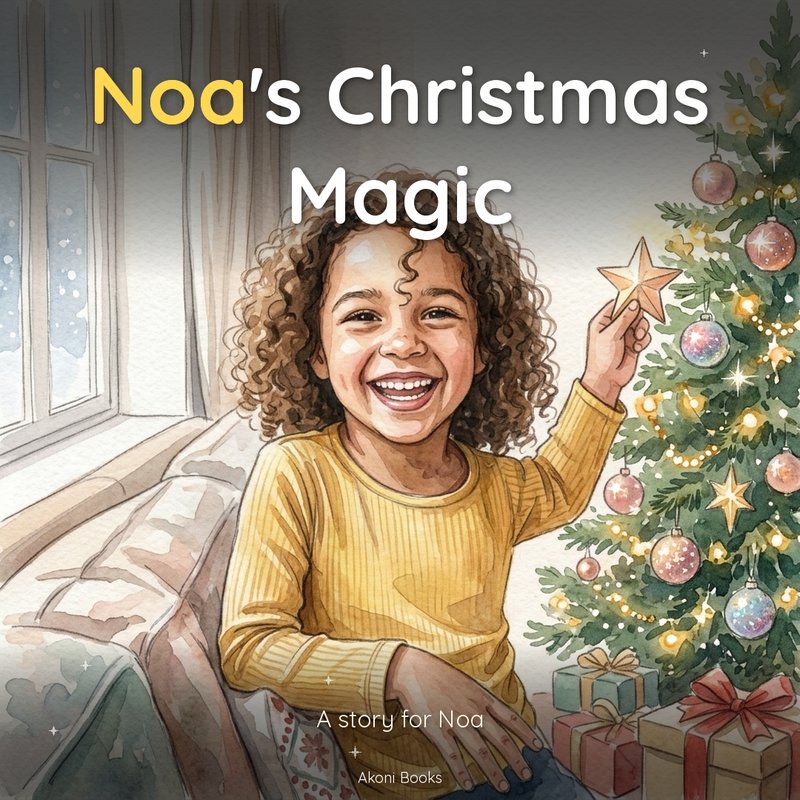
Christmas Magic: a storybook starring your child
A book takes one slot on the shelf, and the digital edition takes none. The pictures are drawn from one photo to look like your child, in one of nine art styles, and you see the cover and first pages before paying. Order a printed copy by December 5 and most US orders arrive before Christmas.
Digital $9.99 · Softcover $29.99 · Hardcover $39.99, shipping included
First book? Code WELCOME5 takes $5 off at checkout.
Preview it free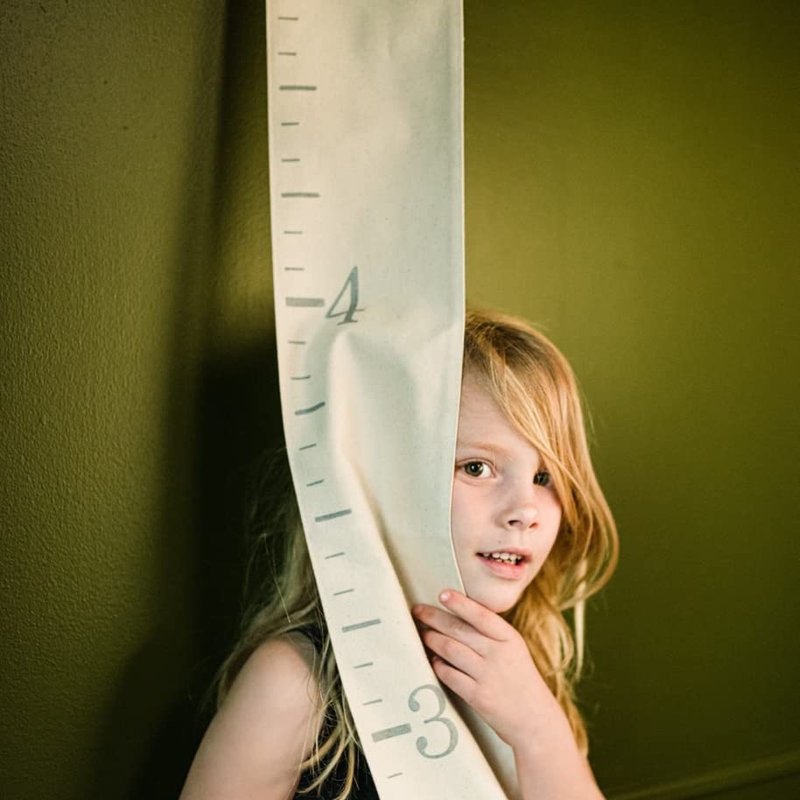
White Loft
It hangs flat on the wall from one grommet and rolls up when it is not needed. Cream canvas with gray ruler numbers and a fabric pen for marking each height and date.
$40.99 on Amazon
See it on Amazon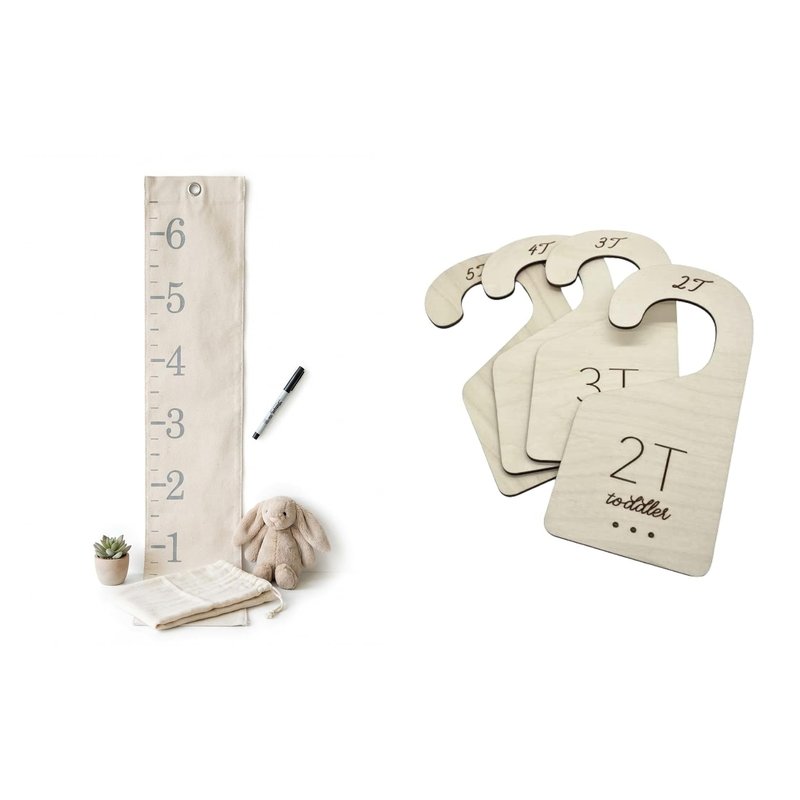
White Loft
The canvas chart plus four birch closet dividers for sizes 2T to 5T. One goes on the wall and the other on the closet rod, and the set costs 15% less than the two bought separately.
$54.35 on Amazon
See it on AmazonPrices checked October 2026; they can change.
Frequently Asked Questions
What are good non-toy gifts for a 2-year-old?
Look for gifts that match what two-year-olds already do: scribble, pour, carry, and imitate you. Chunky washable crayons with a roll of paper, a child-size apron with a whisk and wooden spoon, a sturdy tote, or rain boots all work well.
What are the best clutter-free gifts for kids?
Experiences come first: lessons, outings, memberships, and one-on-one days. Next are consumables like art supplies, baking kits, and seeds. Then come items with a clear home. I ask, “Where does this live after the holiday?” If I can name the spot, it’s a good candidate.
How do I tell relatives we don’t want more toys without hurting their feelings?
Offer a short, specific list instead of a rule, and explain that you’re keeping the playroom manageable. Framing it as something they can do, like taking your child to the museum, lands better than a “no.” If a toy arrives anyway, thank them warmly and decide later what stays.
Are experience gifts really better than physical gifts for kids?
They aren’t better in every case, but they have real advantages. They take up no space, they often involve time with a loved one, and they give a child something to look forward to. The one caution is overbooking: several memberships and classes can fill up your calendar. Pick one or two that you can follow through on. A mix usually works best, such as one small physical item to unwrap alongside an experience.
What non-toy gifts work for toddlers who don’t have many interests yet?
Toddlers are interested in things they can touch, carry, pour, and copy. Real household items in child sizes tend to win: small pitchers, wooden spoons, a watering can, an apron, a little tote. Board books, bath cups, and large crayons are good too. At this age, the best “gift” is often a routine you do together, like a weekly library trip or a baking morning. The objects matter less than the time.
How do I keep gifts from taking over the playroom after Christmas?
Make room before the holiday by clearing one shelf or bin, so gifts have a landing spot. Open presents slowly so each one gets attention. A week or two later, do a short check-in with your child and move anything that isn’t being used into a rotation bin for a month. A one-in, one-out rule also helps. Children are often good at choosing what to donate when they are the ones deciding.
What should I put in a stocking if I’m avoiding small plastic toys?
Think consumable and useful. Fresh crayons or colored pencils, stickers, and a small notebook with a special pencil all work. So do hair clips, fun socks, a favorite toothbrush, hot cocoa mix, a packet of seeds, or a handwritten coupon for time together. Everything on that list is used up quickly or tucks into a drawer, so nothing needs its own bin.
A Calmer Way to Give
If I could go back to that January day with the xylophone in my hands, I’d tell myself that the giver wasn’t the problem, and neither was I. We just hadn’t asked where the gift would live.
Once you ask that question, the answers get clearer: a class that leaves no trace, a book for the shelf, an apron for the hook, a baking kit for the pantry.
You don’t have to get it perfect. Try one or two of these this year, see how they land, and adjust. The goal is a house where the things children own are things they use. The best gift of all is the one that’s remembered: a day out, a pot of seedlings, a story read aloud.