
Organizing Kids’ Papers and Artwork
Learn how to manage your kids' paper and artwork avalanche with a daily processing station for school papers and a three-tier triage system for artwork, preserving memories without the clutter.
- Create a daily paper processing station with labeled slots for immediate sorting.
- Train your children to sort their papers into the correct slots daily.
- Use a three-tier system for artwork: Display, Archive, and Photograph & Release.
- Digitize most artwork using an app like Artkive to save space and create keepsakes.
Your child bounds through the door clutching a painted handprint turkey, a math worksheet with a gold star, a permission slip that needed signing yesterday, and a half-eaten Valentine’s card from someone named Brody. By Friday, you’ll have accumulated 20+ pieces of paper, and by June, you’ll have a stack tall enough to use as a doorstop. Studies estimate that the average school-age child brings home 1,000 to 2,000 pieces of paper per year. Multiply that by two or three kids and a few years, and you’re looking at a paper avalanche that would bury Marie Kondo herself. Here’s a system that handles the daily flood, preserves what matters, and lets you release the rest without guilt.
The Daily Paper Processing Station
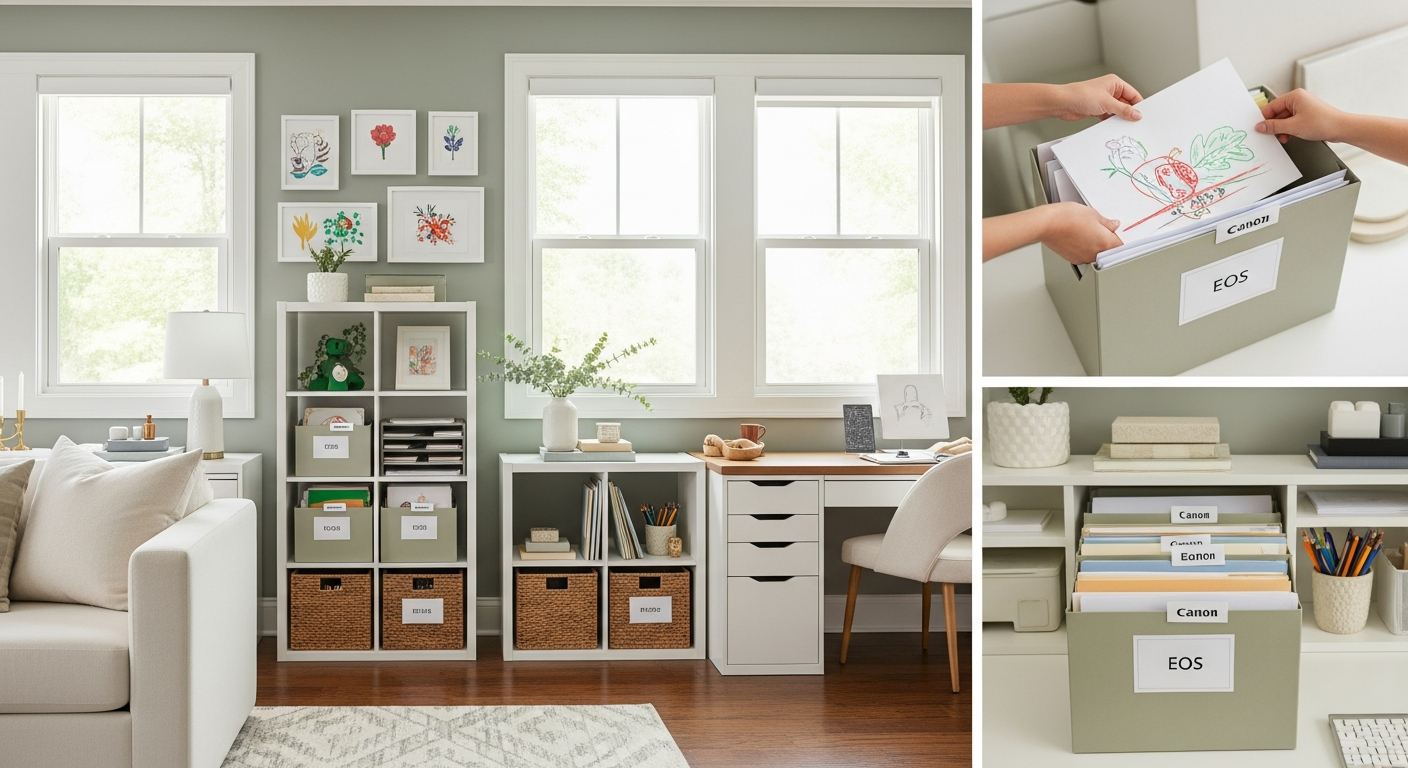
The most important thing you can do about kids’ papers is deal with them immediately—every single day. Papers that land on the counter and sit there for a week become invisible, and invisible papers breed. You need a processing station right where papers enter your home.
Set up a wall-mounted file sorter near the door or in the kitchen. The SimpleHouseware wall-mount 3-tier letter rack ($15 on Amazon) or the IKEA KVISSLE wall magazine rack ($15) work perfectly. Label the slots:
- Sign & Return – Permission slips, forms, anything that goes back to school
- Action – Event flyers, fundraiser info, things that need a decision
- Recycle – Informational sheets you’ve read, menus, duplicates
Train your kids to sort papers themselves the moment they get home. Even a first-grader can learn: “Does Mom need to sign this? Sign & Return slot. Is it telling us about something? Action slot. Already read it? Recycle.” The recycle slot gets emptied daily into the recycling bin. The Sign & Return slot gets checked every evening during dinner prep. The Action slot gets reviewed weekly.
For families with multiple kids, color-code the system. Each child gets their own colored folder or slot. The Smead Poly File Folders ($8 for a 6-pack at Staples) come in bright colors and fit standard wall organizers. When everything has a color and a slot, paper stops piling up.
The Artwork Triage: What to Keep, Display, and Let Go
Kids’ artwork is the emotionally loaded part of the paper problem. Every finger painting feels precious—but keeping every piece is physically impossible and eventually devalues the truly special ones. You need a triage system that honors your child’s creativity without drowning in paint-smeared construction paper.
The Three-Tier Approach:
Tier 1 – Display (5–10%): The best, most creative, most meaningful pieces go on display. Rotate them regularly so the display stays fresh and your child sees that their art is valued. More on display systems below.
Tier 2 – Archive (10–15%): Standout pieces that capture a moment in time—the first time they wrote their name, a self-portrait from each grade, holiday art, or anything with genuine emotional significance. These go into a long-term storage system.
Tier 3 – Photograph and Release (75–80%): This is the majority. Take a quick photo with your phone, then recycle or discard the physical piece. The photo preserves the memory without the bulk. This sounds heartless until you realize that nobody, including your child, will ever dig through a box of 500 worksheets and enjoy them. A digital album you can scroll through? That gets looked at.
Apps like Artkive (free basic version, premium at $8/month) are designed specifically for this. Snap a photo, tag it with the child’s name and date, and the app organizes everything chronologically. You can even order a printed photo book of the year’s art at the end of each school year ($30–50 per book)—a gorgeous keepsake that takes up one inch of shelf space instead of three cubic feet of box space.
Display Systems That Actually Look Good
Taping art to the fridge with magnets works, but it quickly looks cluttered and the pieces get food-splattered. A proper display system makes your child’s art look intentional and keeps it in good condition during its time on the wall.
Clothesline Display: String a wire, twine, or ribbon across a wall and clip artwork with mini clothespins. The IKEA DIGNITET curtain wire ($10) with RIKTIG curtain hooks ($3 for a 24-pack) creates a clean, gallery-like display. Swap pieces weekly or biweekly. This is the easiest system to maintain and kids can clip their own art.
Frames with Changeable Art: The Articlings Kids Art Frame ($30–45 for a set of 2) or the Lil DaVinci art cabinet ($25–40) have front-opening frames that let you swap artwork in seconds. Mount three or four in a gallery-wall arrangement and you have a permanent, polished display that changes with the seasons. Previous pieces stack inside the frame itself, creating built-in storage.
Magnetic Display Board: A sheet of galvanized steel from Home Depot ($15–25 for a 2×3-foot piece) mounted on the wall creates a giant magnetic surface. Use strong magnets to display art, photos, and school papers. It looks modern, works with any decor, and holds heavier pieces better than tape or clips.
The Fridge Alternative: If the fridge is your preferred display spot, upgrade from random magnets to a set of uniform magnetic clips ($8 for a 12-pack at Target). Using the same style of clip across all displayed pieces creates a cohesive look instead of a random collage. Limit displays to 4–6 pieces at a time.
Long-Term Storage: The Archive System
For the artwork and papers that make the Tier 2 cut—the pieces genuinely worth preserving—you need an archive system that protects them, organizes them, and takes up minimal space.
The Memory Box Method: Give each child one box. Just one. The Sterilite 28-quart storage box ($6 at Walmart) is a good size—large enough to hold a school year’s worth of selected pieces, small enough to enforce selectivity. When the box is full, it’s full. Something has to leave before something new goes in. This natural constraint teaches kids to curate their own work, which is a genuinely valuable life skill.
The Portfolio Method: An art portfolio case ($12–20 at Michaels or Blick Art Materials) holds oversized art flat and protected. The Itoya Art Profolio ($15 for the 11×17 size) has page protectors built in, so pieces slide in easily and are viewable without removing them. One portfolio per child per school year creates a beautiful archive.
The Accordion File Method: An expanding accordion file ($8–12 at Staples or Target) with 12 sections works perfectly for organizing papers by month or by school year. The Smead expanding wallet ($10) holds both flat papers and slightly bulky items like a folded art project or a small certificate.
Label the archive clearly: child’s name and school year. Store all archives together in one location—a closet shelf, under a bed, or in the attic. Review the archives once a year and further cull if needed. What felt precious in October may feel less significant in June, and that’s okay.
Digital Preservation: The Modern Keepsake
Digital preservation is the unsung hero of kids’ paper management. A photograph takes up zero physical space, is searchable, shareable with grandparents, and essentially permanent if backed up properly.
Create a simple system: one photo folder per child per year on your phone or computer. Name the folder “[Child Name] Art – 2026” and drop in photos throughout the year. Photograph artwork in natural light, flat against a neutral background, with no shadows. The phone cameras in most modern smartphones take perfectly adequate art documentation photos.
For 3D projects (sculptures, dioramas, constructions), take photos from multiple angles and include one shot with the child holding it. The child-holding-art photo captures scale and the pure joy of creation in a way that a flat photo of the object alone never does.
Back up everything. Use Google Photos (free for up to 15 GB), iCloud, or an external hard drive. Cloud storage ensures you won’t lose years of digital keepsakes to a crashed phone. Set up automatic backup and you’ll never have to think about it.
At the end of each school year, consider creating a photo book from the year’s digital archive. Services like Shutterfly ($25–40 per book, frequently 40–50% off with promo codes) and Chatbooks ($15–20 per book) make it easy to upload photos and create a bound book. One book per child per year creates a beautiful, compact record of their artistic development that the whole family will actually enjoy looking through—which is more than anyone can say about a cardboard box in the attic.
The goal of a paper and artwork system isn’t to eliminate everything. It’s to create a thoughtful filter that lets you enjoy the stream of creativity flowing through your home without being buried by it. When you have a system—a daily processing station, a display rotation, a selective archive, and a digital backup—you can receive that handprint turkey with genuine delight instead of quiet dread. And years from now, when you flip through a curated book of your child’s best work, you’ll be deeply glad you kept the gems and released the rest.


