Christmas Eve Box Ideas for Toddlers That Don’t Add Clutter
Learn how to create a clutter-free Christmas Eve box for your toddler by including only items you'd use that night anyway, ensuring a calm evening and avoiding extra gifts. This guide provides age-specific ideas and safety tips.
- Your Christmas Eve box should only hold items you'd use that evening anyway.
- Reuse the same Christmas Eve box container every year to avoid clutter.
- Prioritize safety for toddlers under 4, checking for small parts and choking hazards.
- Use the box to give your toddler's Christmas Eve a calming, predictable structure.
- Each box item should replace something you'd already plan for that night.
This post contains affiliate links. As an Amazon Associate I earn from qualifying purchases.
This guide gives you an age-by-age fill list for ages 1-4, a safety checklist, three sample boxes and a storage plan for one reusable Christmas Eve box. In a hurry? Jump to the fill-the-box tables by age or the list of what to leave out.
A common first-year box holds a plush reindeer, stacking cups, a sticker book and two board books, and by bedtime only the pajamas and one book have been used.
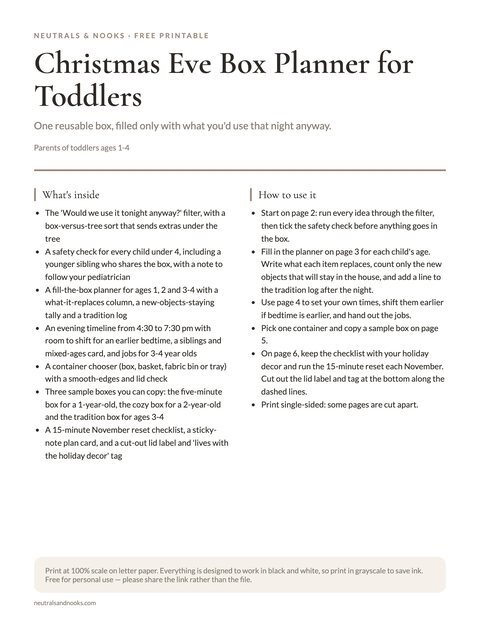
Free printable · 6 pages
Christmas Eve Box Planner for Toddlers
A would-we-use-it-tonight filter card, an under-fours safety check, an age 1, 2 and 3-4 fill-the-box planner with a what-it-replaces column, new-objects tally and tradition log, a 4:30 to 7:30 pm timeline with jobs for 3-4 year olds, a container chooser, three copyable sample boxes, and a storage plan with a cut-out lid label, November reset checklist and sticky-note plan.
Free. Your download link appears right here. You'll also join the Monthly Home Reset. Unsubscribe anytime. Privacy
Nothing in that box is bad; it is just an early round of presents. The rule here: the box holds only what you’d use that evening anyway, and it’s the same box every year, stored with the ornaments.
In this article (15 sections)
- What a Christmas Eve Box Actually Is (and What It Isn’t)
- The One Question That Decides What Goes In
- Christmas Eve Box Ideas by Age: 1, 2, 3 and 4 Year Olds
- Christmas Eve Box Ideas for a 1 Year Old
- Christmas Eve Box Ideas for a 2 Year Old
- Christmas Eve Box Ideas for 3 and 4 Year Olds
- Christmas Eve Basket Ideas for Toddlers
- Making the Box Reusable: Storage and the Yearly Reset
- Sample Boxes You Can Copy
- Siblings and Mixed Ages
- A Simple Christmas Eve Timeline
- What to Leave Out of the Box
- For the Christmas Eve box, from our sister brands
- Frequently Asked Questions
- Making the Box a Tradition
What a Christmas Eve Box Actually Is (and What It Isn’t)
A Christmas Eve box is a small container, opened on the evening of the 24th, that holds the things that make that one night feel special. It’s an evening kit, not a gift.
Safety firstThese rules apply to every child under 4, including a younger sibling who shares the box. An adult supervises the whole evening.
- Small-parts test: if it fits through a toilet-paper tube, it stays out of the box.
- Stickers are for supervised use only. Peel one at a time, keep the sheet away from any child who still mouths things, and collect every sticker afterward.
- Flashlights need a battery door closed with a screw. Store spare and button-cell batteries apart from the box, out of reach. If a battery is swallowed, go to the ER or call poison control (US 800-222-1222) right away.
- Foods: no whole grapes, nuts, popcorn, hard candy or chunks of raw carrot until about age 4. Quarter grapes lengthwise, use thin cheese slices or shreds, and cook or grate carrot. The reindeer’s carrot is for the reindeer.
- Drinks are warm, never hot. Test on your wrist, never heat milk in a sippy cup, and watch your child drink.
- Pajamas are the child’s true current size, snug-fitting or labeled flame-resistant.
- Nothing from the box goes in a sleep space.
Christmas Eve is long for small children. They can sense something is happening, but they can’t be told “tomorrow” in a way that means anything. A box gives the evening a shape: open it, change into pajamas, read the book, have the snack, do the quiet thing, go to bed. For toddlers who run on routine, a shape is the real present.
It goes wrong when the box quietly becomes a gift: new toys that stay in the house, items wrapped one by one, or a disposable box recycled on the 25th. None of that is harmful. It just undoes the calmer, less cluttered Christmas most of us wanted from a box.
So the approach in this article is built on three ideas:
- Fill it with things you’d use that night anyway. Pajamas, a book, a snack, one small activity.
- Let each item replace something. If the box adds a snack, that’s a snack you didn’t have to plan separately. If it adds a book, that’s tonight’s bedtime story.
- Reuse the same container every year. It lives with the holiday decor and comes out once a year.
If you’ve been through the toy-in, toy-out cycle at your own house, you’ll recognize the logic. It’s the same thinking behind a toy rotation: fewer things, chosen on purpose, with a clear place to live.
The One Question That Decides What Goes In
Before anything goes in the box, ask: “If this weren’t in the box, would we still do or use it tonight?”
- Pajamas? Yes. Every child sleeps in something on the 24th.
- A bedtime book? Yes. You read one anyway.
- A snack and a warm drink? Yes. Most families have some evening treat.
- A simple activity to calm down before bed? Usually yes. You’d probably put on a movie or find something quiet.
- A new plush animal? No. It’s an extra.
- A pack of tiny figurines? No, and they are a choking hazard for the under-fours anyway.
If the answer is yes, the item earns a place. If the answer is no, it’s a gift, and it can go under the tree with the others, where it can be counted and kept to a reasonable number.
This one filter replaces a whole shopping list. It also means you can build the box in about fifteen minutes from what’s already in the house, plus one new pair of pajamas or one new book if you want one.
The “replaces” column matters
Write down what each item replaces: the box pajamas replace tonight’s what-to-wear decision, and the box activity replaces the 4:30 pm slump. That keeps the tradition from stacking on top of everything else in December.
Christmas Eve Box Ideas by Age: 1, 2, 3 and 4 Year Olds
This is the core of the page. For each age, I’ve listed what to put in, why it earns its place, and what it replaces. I’ve kept it to gift types and what to look for, not products, so you can match it to what you already own.
TipToys, plush and other extras that would stay as new objects go under the tree. Pajamas and one book are the exception, because you’d buy them anyway.
Good to knowCheck every ingredient for your child’s known allergens, never serve honey under 12 months, and save new foods for another night. Cut round or firm fruit small, and brush teeth after the last snack.
Age 1
One-year-olds are mouthing everything and understand almost none of the ceremony. The box is mostly for you, and the goal is a gentle, safe evening.
| Item | Why it earns its place | What it replaces |
|---|---|---|
| Soft pajamas in their true current size, snug-fitting or labeled flame-resistant | They go on tonight and are worn all winter. Snug-fitting sleepwear is the safer choice for small children. | Buying pajamas separately later in December |
| One sturdy board book with a short, rhythmic text | Board books survive being chewed and thrown, and a rhythm is soothing at bedtime. | Tonight’s regular bedtime story |
| A soft-texture cloth or fabric book (no small attachments; check for loose threads or ribbon tags) | Something to hold while you read; safe for mouthing. | A “quiet toy” you’d hand over in the car or at dinner |
| A soft finger food they already eat, plus a sippy of their usual drink, served warm and never hot (never heated in the cup) | Marks the evening without introducing new foods on a tiring night. | A dessert or special snack you’d have to plan |
| The empty box itself, once everything is out and the lid is set aside, for supervised floor play only | Babies of this age are as happy with the container as with what’s in it. | Buying a “sensory toy” |
| A printed photo or the family’s Christmas card to look at together, held by an adult (no glitter or attachments) | Gives the grown-ups something to talk about and ties the night to the family. | Nothing; it’s a keepsake, and you’ll reuse it |
Age 2
Twos know something is going on, want to help, and have strong opinions. They also love a ritual they can repeat exactly.
| Item | Why it earns its place | What it replaces |
|---|---|---|
| Pajamas they can start to pull on themselves (elastic waist, big neck opening), still snug-fitting or labeled flame-resistant | Dressing is a skill they want to practice. It makes the opening part of the evening a task they own. | The evening pajama routine; a separate winter pajama purchase |
| A picture book about a winter night, a bedtime, or a family tradition | Becomes the book you reread every year, so the box starts to hold meaning. | A library book or the usual story |
| A snack in a small bowl, such as soft fruit cut small, a cracker with a spread, or a small baked treat (check ingredients for allergens) | Gives them a “party” feel at their own size. | A dessert or a plate of random leftovers |
| A warm (not hot) drink in their usual cup, tested on your wrist | The ritual matters more than the drink. | A glass of milk you’d offer anyway |
| One quiet activity: large-format stickers on paper (supervised use only), washable crayons and a single sheet, or a simple lacing card with a short, thick lace (supervised) | It is the 4:30 pm activity, bundled into the box. | A screen or the “I’m bored” slump |
| A small flashlight with a screw-closed battery door, for the “look for Santa” game; an adult fits the batteries and screws the door shut before handing it over | Turns the bedtime walk-through into an event. | A nightlight you’d turn on anyway |
Age 3 and 4
Three- and four-year-olds can anticipate, remember last year, and want to take part. This is the age when the box becomes a tradition they ask for.
| Item | Why it earns its place | What it replaces |
|---|---|---|
| Pajamas they picked from two options | A small choice gives ownership. It’s the one purchase you were going to make anyway. | A separate pajama shopping trip |
| A longer picture book, or a chapter-style book with pictures, read in installments | They can hold a story across a few pages, and it becomes a yearly marker. | Tonight’s bedtime story |
| A small tray of snack-plate items, such as thin cheese slices or shreds, soft fruit cut small, crackers | Feels like a party, and it works as a light dinner or after-dinner treat. | A dessert you’d plan |
| A mug of warm (not hot) milk or cocoa, tested on your wrist, with an adult nearby | Many kids love having “their” drink. | The usual evening drink |
| A craft you’d likely do in December anyway, such as paper-chain pieces, a simple card to write, or a tracing page | It is the “do something” of the afternoon. | A craft kit purchase |
| A “Santa snack” plate to prepare: a soft cookie broken small (check for allergens), milk in an unbreakable cup, and a carrot for the reindeer | Gives them a task that takes ten minutes and sits at the heart of the evening. Once it’s set, the plate goes out of reach of any child under 4. | Improvising at the last minute |
| A flashlight with a screw-closed battery door, or a small battery-free lantern, for the stair-and-hall walk | Makes the last part of the night an adventure. | A regular nightlight |
Below, each age gets only what the tables leave out: safety notes, the flow of the evening and small jobs.
Christmas Eve Box Ideas for a 1 Year Old
For a 1-year-old, keep the box small. It is for the evening you’re building and the photos you’ll take, not for the child’s expectations.
Keep it safe first
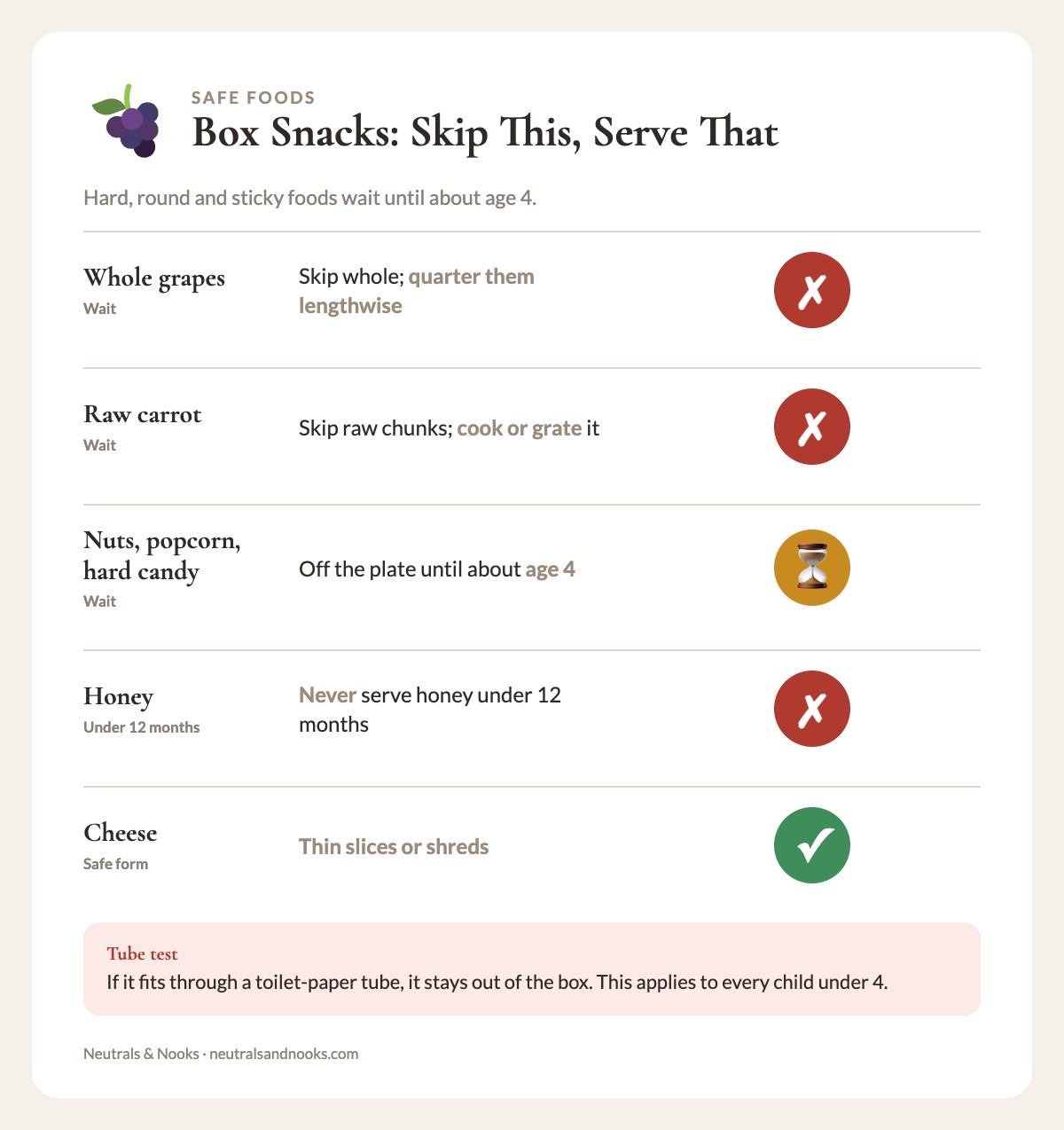
The Safety first box above covers the page-wide rules. At one, these three matter most:
- No loose batteries or button cells. Leave out anything with batteries at age 1; a flashlight in a shared box needs a screw-closed battery door.
- No hard, round, or sticky foods such as whole grapes, nuts, popcorn, hard candy or chunks of raw carrot. These stay off the plate until about age 4. Choose soft food cut small: grapes quartered lengthwise, thin cheese slices, carrot cooked or grated.
- No long ribbons or strings. A ribbon bow on a box is lovely, but remove it before handing the box over.
If your child has allergies or feeding needs, follow your pediatrician’s advice over anything in a blog post, including this one.
A simple 1-year-old box
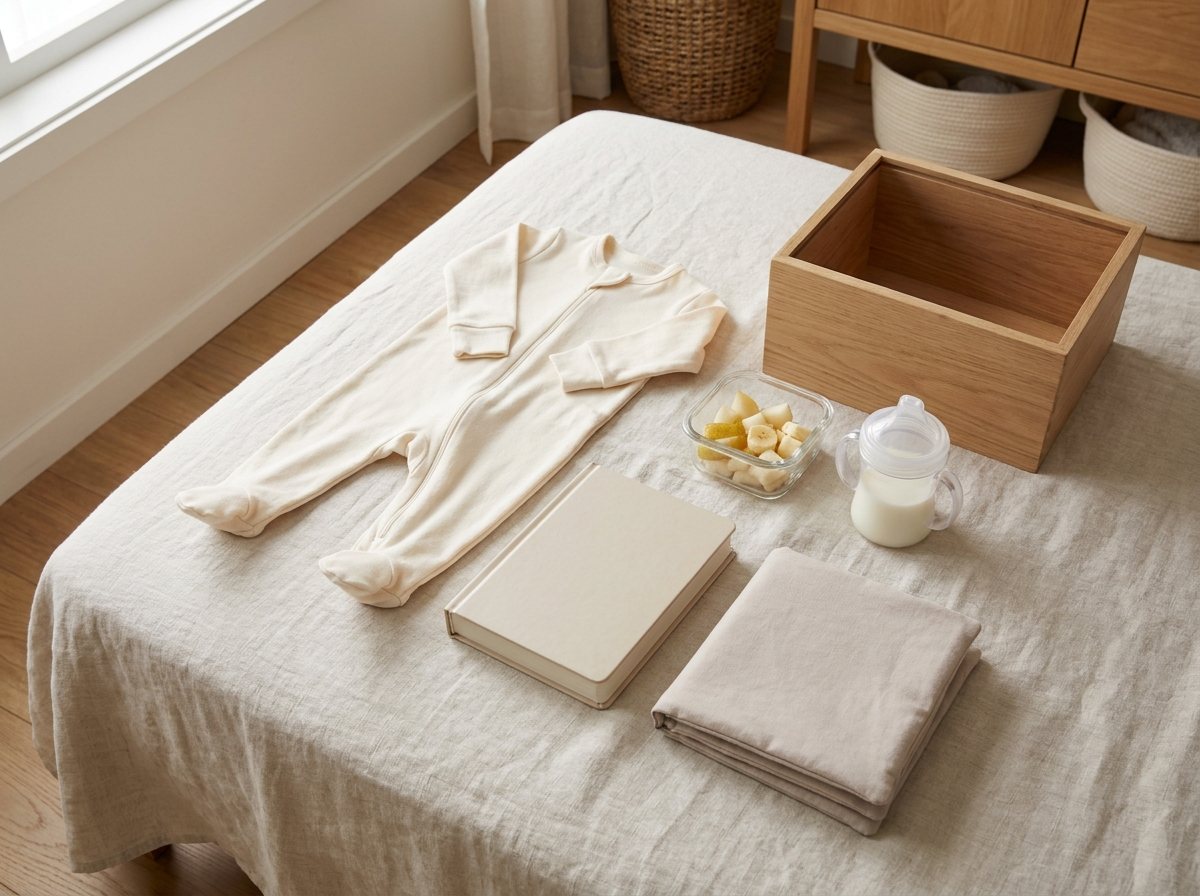
The age-1 table above is the full list, and the five-minute box in the samples below is a ready version. Only the pajamas and a book stay in the house after the 24th.
What to skip at this age
- Anything with a “squeaker” that could come loose
- Novelty plush with plastic eyes or embroidered buttons that can be pulled off
- Anything that needs batteries to be fun
- Holiday-themed toys you would feel guilty about giving away in February
You are allowed to make the box tiny. Once everything is out, the empty box is often the hit of the night. Take the lid off first, and keep it to supervised floor play only. Keep boxes, tissue and cloth out of any sleep space.
Christmas Eve Box Ideas for a 2 Year Old
For Christmas Eve box ideas for a 2-year-old, you’ve reached the age where a ritual starts to land. Twos love to repeat. They want the same book, the same cup, the same order of things. This is the year to give the box a sequence.
A two-year-old’s evening flow
The box works best with a set order:
- Open the lid together. This is the moment of surprise, and everything in it is already familiar.
- Pajamas on. Let them help, even if it takes five minutes.
- Snack and a warm drink. Sitting down at a table or on a blanket together.
- The quiet activity. Stickers on paper, crayons, or a lacing card.
- Brush teeth.
- The book. Read in the lamplight, with the flashlight game afterward if you want it.
- Bed.
Keep the order the same every year, so it becomes the part they know.
A word on activities
Choose an activity that doesn’t create a mess you’ll still be cleaning on Christmas morning. Large stickers on paper are tidy, but they are for supervised use only: peel one at a time, keep the sheet away from any child who still mouths things, and collect every sticker afterward. Washable crayons on one sheet of paper are tidy. Finger paint on the 24th at 7 pm is not tidy.
Also choose an activity that has a natural end. Something like “put all the stickers on the page” is finished when the sticker sheet is empty. “Color whatever you like” can run until bedtime, which is fine if you’ve planned for it, but it can also run past it.
The two-year-old trap
Twos decide fast that a thing is theirs, so a stuffed animal in the box can become a bedtime companion you track for years. Add one only on purpose.
Christmas Eve Box Ideas for 3 and 4 Year Olds
For Christmas Eve box ideas for kids in the 3-4 range, the box can be a true tradition. Many will start to anticipate it and ask for it. It’s also the age when “more” starts to feel like the point. That is exactly why this version is worth protecting.
Give them a job
Three- and four-year-olds love being in charge of something. The box is a good place for a small job:
- Set the snack plate. Let them arrange thin cheese slices, soft fruit cut small and crackers.
- Prepare the Santa snack. A soft cookie broken small (only if your child will eat it; check for allergens), milk in an unbreakable cup and a carrot for the reindeer (the carrot is for the reindeer, not your toddler). This takes ten minutes and delivers the biggest payoff of the night.
- Pick the pajamas from two. Offer two options and let them choose. The choice is part of the gift.
- Be the page-turner. Let them turn the pages of the bedtime book.
When a child has a job, the box becomes a project they’re part of instead of something that happens to them.
Safety firstOnce Santa’s plate is ready, set it out of reach of any child under 4, including a younger sibling. Clear it before you go to bed yourself, which is when Santa “eats” it anyway. The whole carrot is a choking hazard for small children.
Keep one thing a mystery
For older toddlers, you can include one unknown item: the pajamas, folded under a cloth napkin at the bottom of the box. It’s not a gift; it’s a reveal. They get the “what is it?” feeling, and you don’t have to add a toy.
Safety firstRemove all tissue and wrapping before a younger sibling reaches the box.
Christmas Eve Basket Ideas for Toddlers
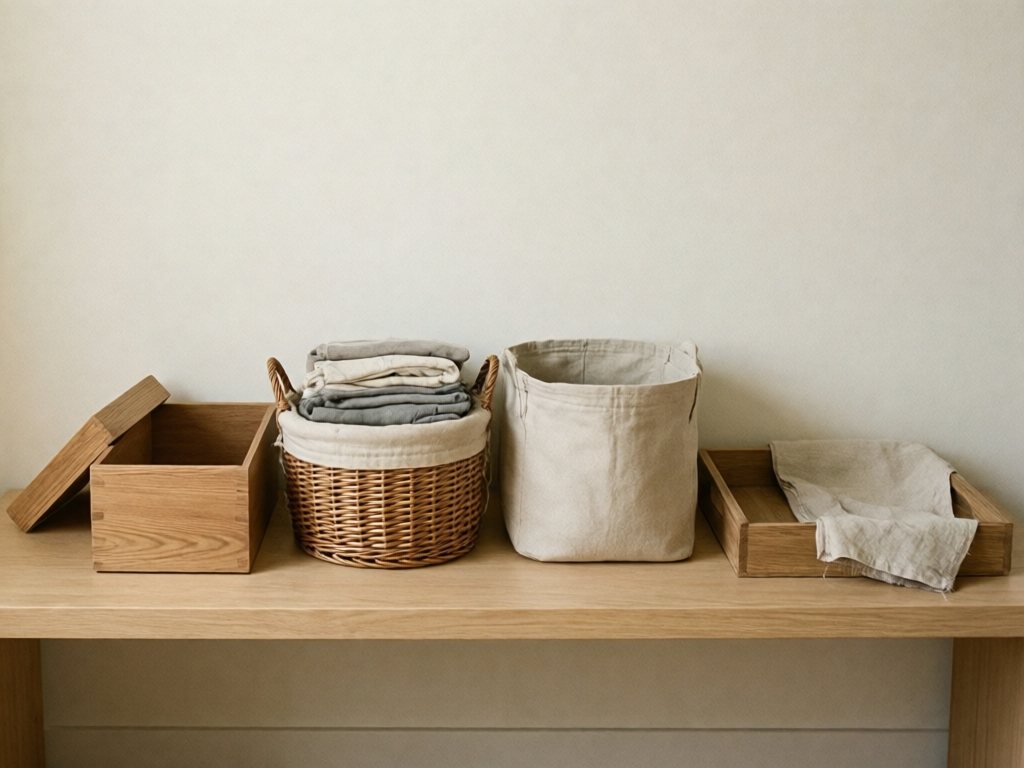
If you searched for Christmas Eve basket ideas for toddlers, you’re probably picturing a woven basket on a bench or at the foot of the bed. A basket is a lovely choice, and the same rules apply. Here are the practical differences between a box, a basket and a bin.
| Container | Good for | Watch out for |
|---|---|---|
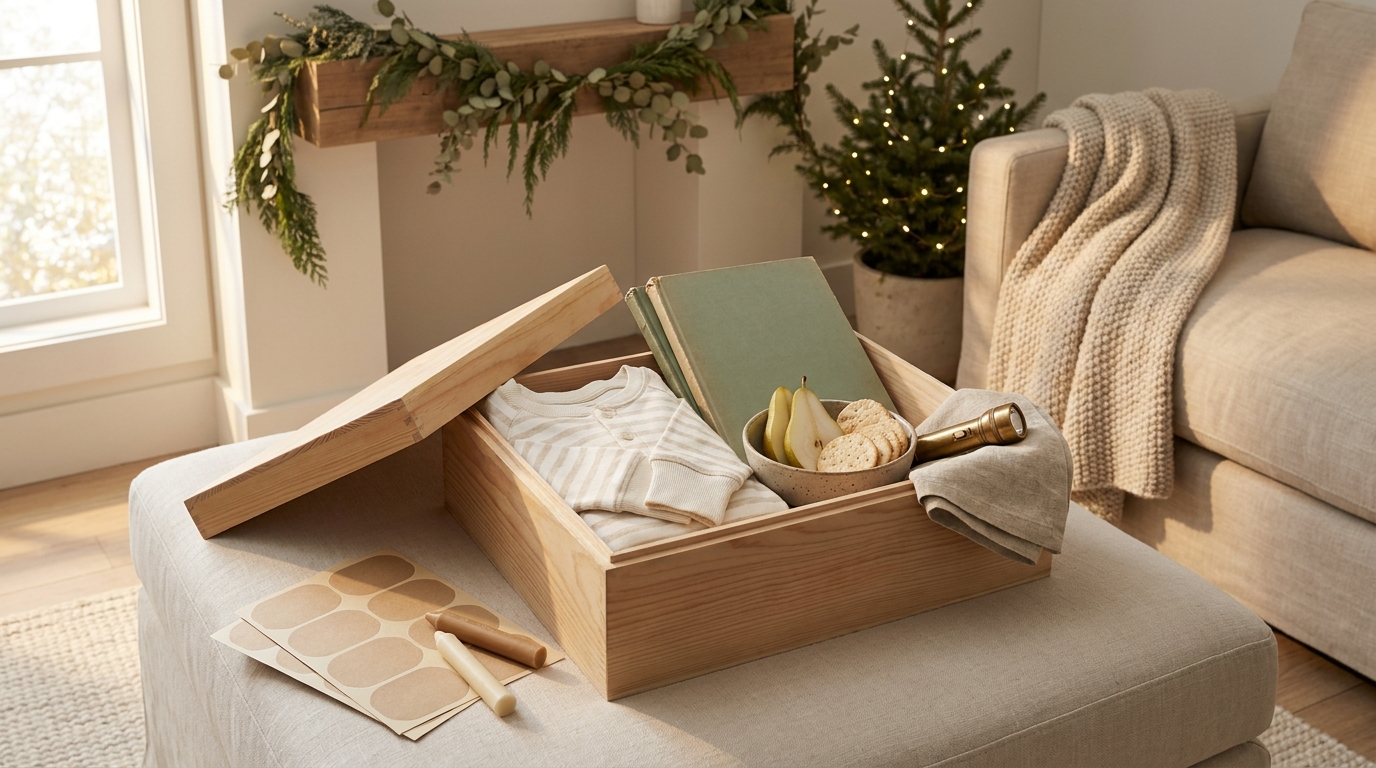
| Wooden or sturdy cardboard box with a lid | Keeps contents hidden until opening; stacks with decor storage; protects books. | Skip hinges, latches and heavy lids. Choose a loose-fitting lid or go lidless, and watch for a toddler climbing in. Never leave a lidded box where a toddler could climb inside unobserved. |
| Woven basket | Looks beautiful; works as a decor piece for the whole season; easy to carry. | Open weave can snag; line it with fabric if small items are inside. |
| Fabric bin | Soft, safe for toddlers to carry; folds flat for storage. | Less sturdy for books; can look slouchy. |
| Tray with a cloth over it | Zero storage space needed; the cloth is the reveal. | Not a container for the long term; the items need to live somewhere else. |
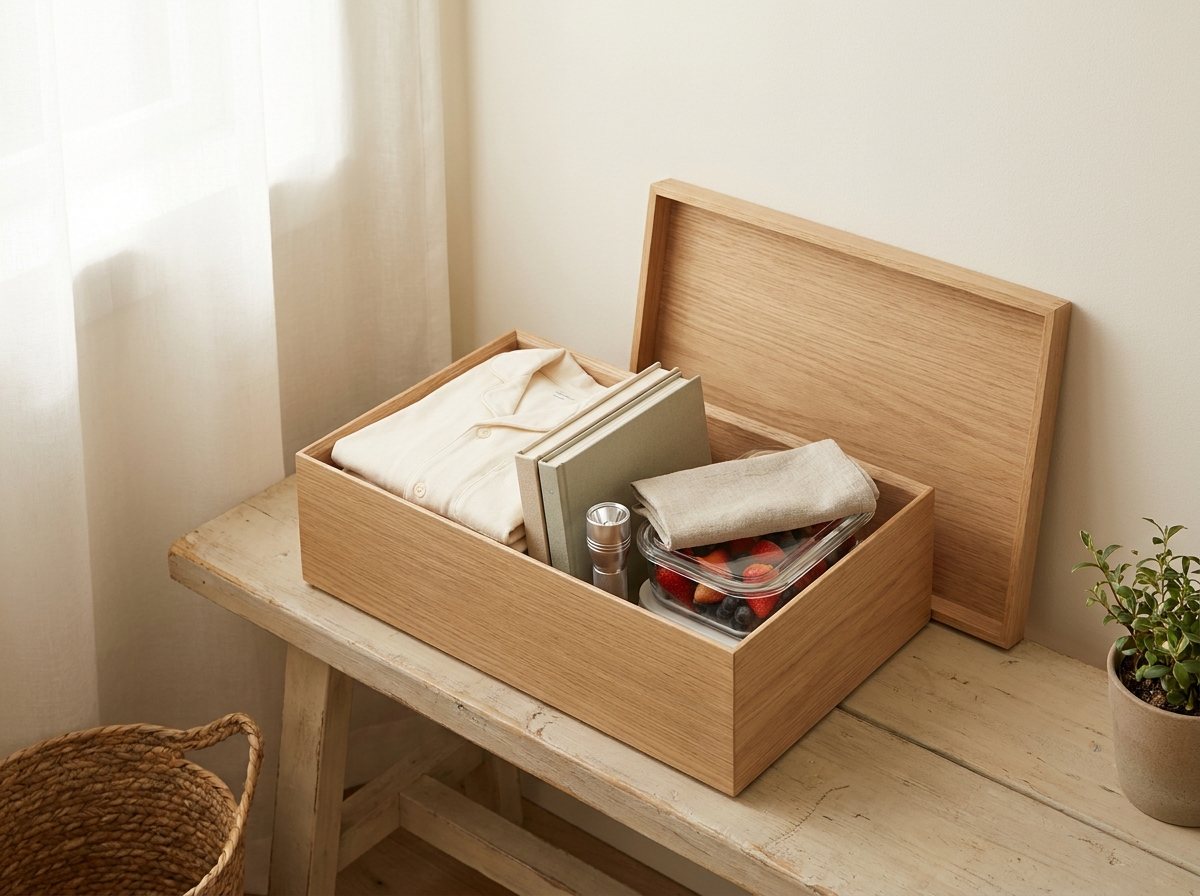
A good choice is a low wooden box about the size of a shoebox, with a loose-fitting lid and no hinge or latch. It holds a pair of folded pajamas, two books, and a small snack container, with room to spare. It also fits on the shelf with the stocking holders.
Safety firstTake the lid off and set it aside before a baby or toddler reaches the box, and never leave the lid on during floor play.
Choose one container and keep it
The single most useful decision is to pick a container you’d be happy to own for ten years. A box you keep and reuse isn’t clutter; it’s a tradition prop, like a stocking. A box you buy fresh each year, or one you dispose of on the 26th, is just one more thing to deal with.
Look for:
- A neutral finish that fits your home. Natural wood, rattan or plain canvas all work.
- A size that fits the age range. Too big and it looks empty; too small and you’ll overflow it.
- Smooth edges and no splinters. Check every inch with your palm.
- A loose-fitting lid or none, with no hinges or latches. Toddler fingers and heavy lids are a bad mix.
Making the Box Reusable: Storage and the Yearly Reset
The hidden cost of a Christmas Eve box is where it lives for the other eleven months. This is where an organizing mindset helps.
One home for the box
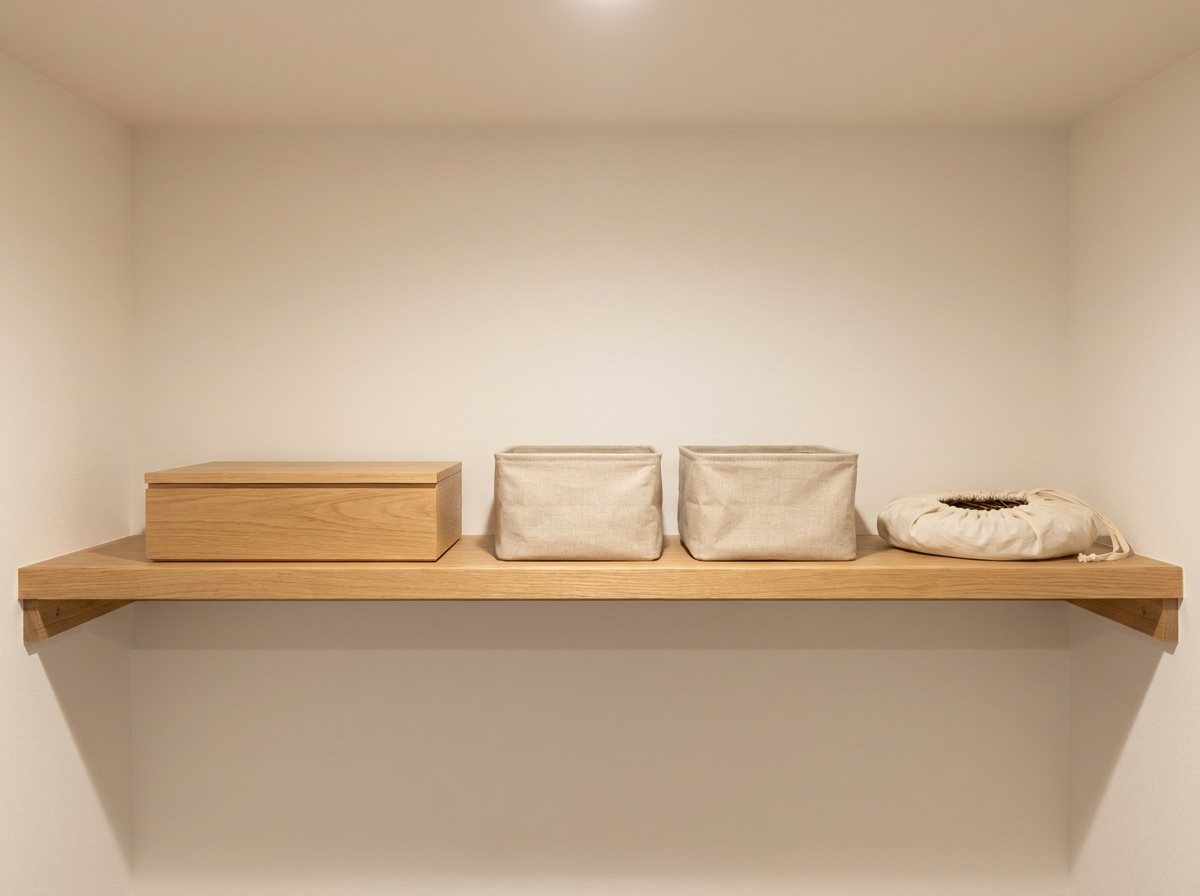
Store the box with your holiday decor, not in the kids’ room. If you already have a system for ornaments and wreaths, the box slots in. If you don’t, my guide to family holiday decor storage and organization walks through labeled bins, a seasonal shelf and a simple inventory so nothing gets lost between years.
Keep these things inside the box year-round:
- The box’s own lid or cloth
- The flashlight, with no batteries inside the box
- The tradition book, if it’s a Christmas-only title, so it doesn’t get lost in the regular shelf
Keep these things out of the box:
- Pajamas (they’re worn and washed; the next year’s pair is a fresh pick)
- Snacks (obviously)
- Spare and button-cell batteries, stored separately and out of reach
- Craft supplies that might dry out or go missing
The yearly reset
Each November, take the box out and run through a quick reset. A Sunday afternoon with a cup of tea works well:
- Empty everything out. Wipe the box inside and out.
- Check the flashlight. Fit fresh batteries only on the day, and screw the battery door shut.
- Decide what stays. Keep the tradition book. Retire anything the child has outgrown.
- Write the plan. A sticky note on the lid with “pajamas, book, snack, activity” is enough.
- Buy only what the plan needs. If you already have a book and a craft, buy only pajamas.
That reset takes about fifteen minutes and saves you the 22nd-of-December panic.
The decor connection
If you have a toddler in the house, you’ve probably already thought about safe decor placement. The same thinking from my guide on how to decorate for Christmas with kids around applies to the box. Keep it at child height only when you want it opened, and keep the contents free of small parts and cords.
Sample Boxes You Can Copy
Here are three complete setups at different effort levels. None of them requires a special shopping trip.
The five-minute box (1 year old)
- Pajamas in their true current size
- A board book you already own
- Soft finger food in a small container
- A cup of warm (not hot) milk
- A family photo, held by an adult
Replaces: bedtime routine, bedtime book, a dessert.
New objects staying: pajamas only.
The cozy box (2 year old)
- Pajamas with an elastic waist
- One new picture book about a winter night
- A bowl of sliced soft fruit and a cracker with spread
- A cup of warm (not hot) milk
- Large stickers and a single sheet of paper
- A small flashlight
Replaces: the book you’d read, the dessert, the 4:30 pm slump, the nightlight.
New objects staying: pajamas and a book.
The tradition box (3-4 year old)
- Pajamas they chose
- A picture book you’ll read every year
- A snack plate they arrange
- A mug of warm (not hot) milk or cocoa
- Paper-chain strips to add to the family chain
- The Santa snack plate to prepare
- A flashlight for the hallway walk
Replaces: the dessert, the craft afternoon, the bedtime story, the nightlight, the last-minute Santa snack scramble.
New objects staying: pajamas, a book, and a paper chain that goes on the tree.
Siblings and Mixed Ages
If you have a one-year-old and a four-year-old, the question is whether to build one box or two. Either can work.
One shared box works well when the evening is mostly the same for both. Everyone gets pajamas, everyone shares the book, everyone has a snack. The older child gets a job (setting the snack plate, turning the pages), and the baby is just along for the ride. Fewer items, fewer containers, less to store.
Two boxes can work if the ages are far apart and the activities are different. But it doubles the storage and the planning. I’d suggest one box split in two instead, with an open, shallow cardboard or wooden divider, or two small trays.
The baby’s side holds only age-1 items, and an adult hands them over one at a time. That way each child has “their” side, and you still store one container.
Safety firstSkip cloth pouches and drawstring bags in a box a baby shares. Use open trays or dividers with no strings, and keep the baby’s items with an adult until it’s time to use them.
A few guidelines:
- Keep the contents equal in effort, not in number. A four-year-old does not need the same number of items as a baby, but should have something with a bit more to do.
- Give the older child the “helper” role. It keeps them from feeling babied. An adult stays in charge of safety: supervise, and keep the older child’s stickers, crayons and snack pieces out of the baby’s reach.
- Match the book to the youngest child. A board book works for everyone. A longer story can be read after the baby is asleep.
For families sharing a bedroom, the setup of the room matters on Christmas Eve as much as on any other night. If your children share, my guide to shared kids’ room ideas for siblings covers how to keep a shared space calm enough for a big night.
A Simple Christmas Eve Timeline
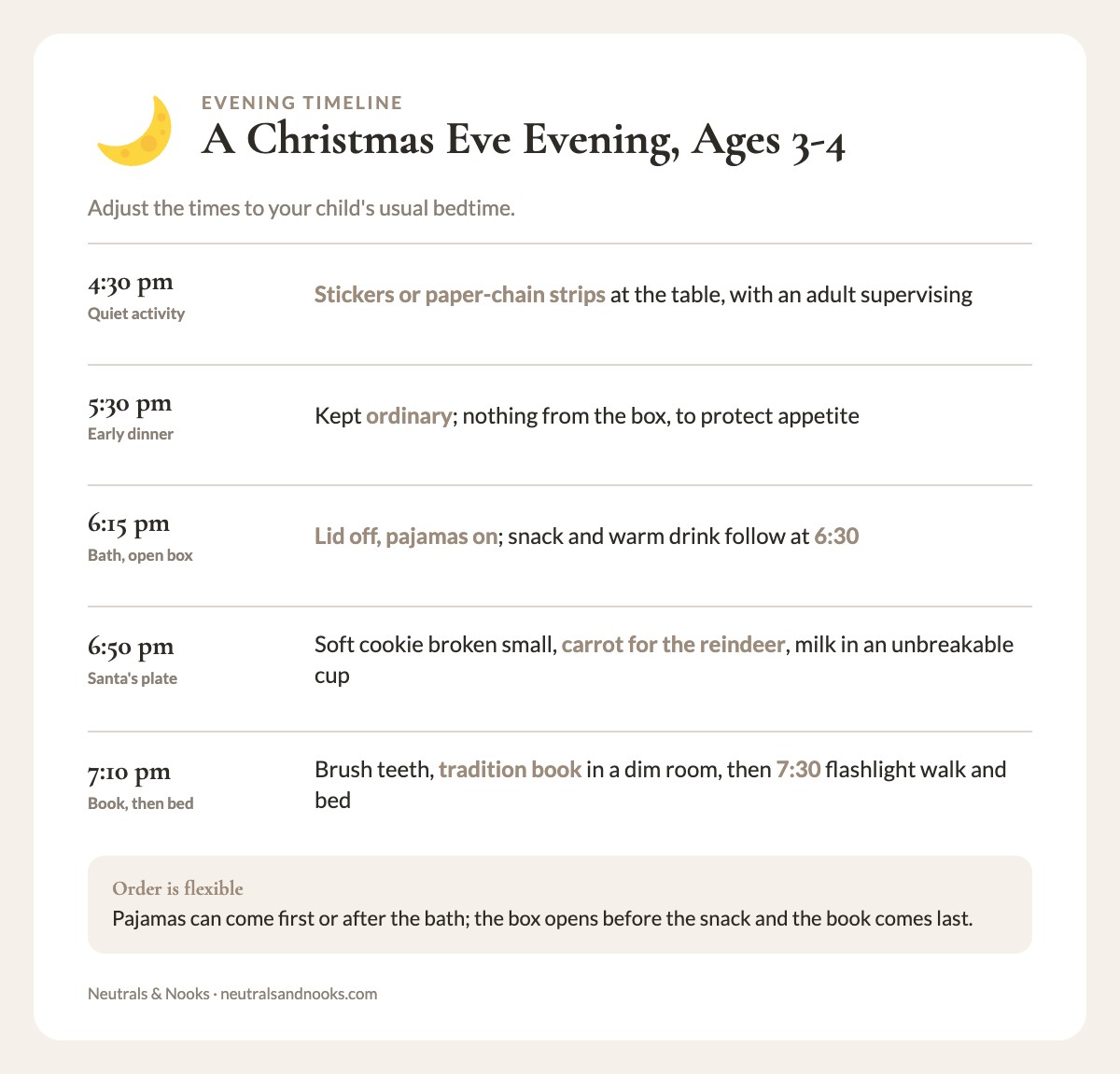
Here is a sample evening for ages 3-4. Adjust the times to your child’s usual bedtime, and for a two-year-old follow the shorter flow in the age-2 section.
| Time | What happens | Box item |
|---|---|---|
| 4:30 pm | Quiet activity at the table | Stickers (supervised, collected afterward), non-toxic crayons (look for the ASTM D-4236 label) or large paper-chain strips, kept away from any child who still mouths things |
| 5:30 pm | Early dinner, kept ordinary | Nothing, to protect appetite |
| 6:15 pm | Bath, then open the box | Lid off, pajamas on |
| 6:30 pm | Snack and warm drink | Snack plate and cup |
| 6:50 pm | Set out Santa’s plate (the child’s own snack was at 6:30) | Soft cookie broken small (only if eaten; check allergens), carrot for the reindeer, milk in an unbreakable cup. Set the plate out of reach of any child under 4 and clear it before the grown-ups go to bed; the whole carrot is a choking hazard. |
| 7:10 pm | Brush teeth, then a book in a dim room | The tradition book |
| 7:30 pm | Flashlight walk, then bed | Flashlight |
Everything has a time and a place, and the box doesn’t ask the family to do anything it wasn’t already doing.
If your toddler’s bedtime is earlier, move the whole sequence up. If they skip naps and fall apart at 5 pm, put the box first and let the quiet activity be the book.
TipThe order is flexible. Pajamas can come first or after the bath; what matters is that the box opens before the snack and the book comes last.
What to Leave Out of the Box
There are items that show up on every list and are worth skipping for toddlers.
- Small toys and figurines. They’re choking hazards for children under four and tend to scatter.
- Candy and hard sweets. Hard, round and sticky treats are risky for small children, and they add sugar right before sleep.
- Novelty items with batteries. If the battery compartment isn’t secured, leave it out.
- Wrapped surprises for every item. Wrapping everything turns the box into a second morning and creates a pile of paper.
- New stuffed animals. Unless a plush is a planned gift, it adds one more item to track.
- Anything you’ll feel guilty giving away. If you wouldn’t be comfortable donating it in March, don’t buy it in December.
If you do want a gift-style item, put it under the tree. For ideas that don’t add toys, see non-toy gifts for kids. Our Montessori gifts by age guide is a good place to find picks that earn a spot on the shelf and don’t take over the room.
From our sister brands
For the Christmas Eve box, from our sister brands
A book is the one thing nearly every Christmas Eve box has. Here is one that stars your toddler, plus a tradition that takes up no room in the box.
Akoni Books and White Loft are sister brands of this site. When you buy through these links we may earn a portion of the revenue, at no additional cost to you.

Akoni Books
The book in the box: Christmas Magic, starring your child
For ages 2 and up. The pictures are drawn from one photo to look like your child, and you see the cover and first pages before paying. The digital edition is ready in minutes if you are packing the box late. Order a printed copy by December 5 and most US orders arrive before Christmas.
Digital $9.99 · Softcover $29.99 · Hardcover $39.99, shipping included
First book? Code WELCOME5 takes $5 off at checkout.
Preview it free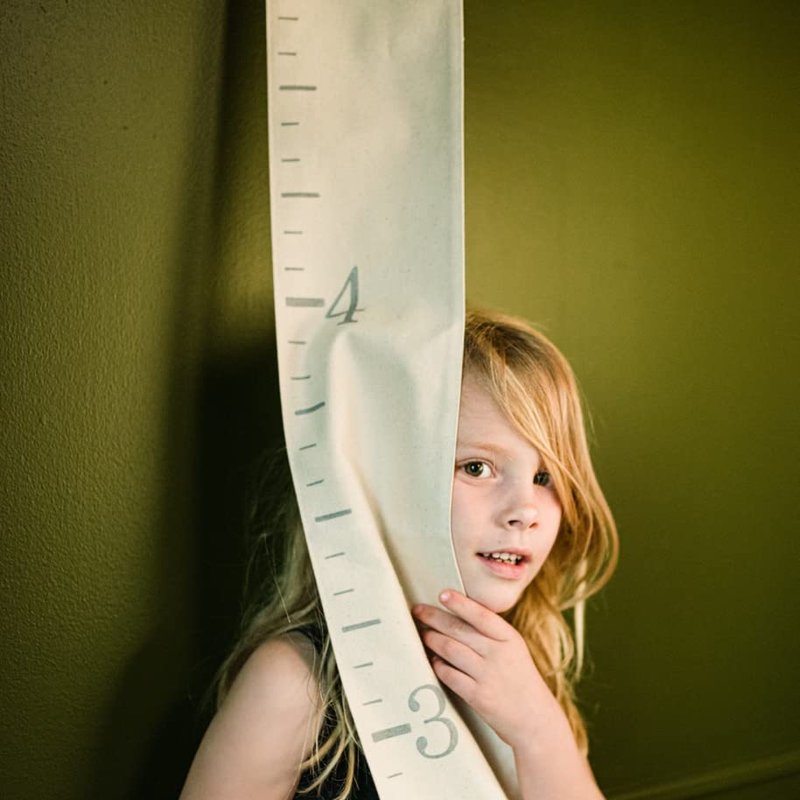
White Loft
A tradition in place of a thing: measure them every Christmas Eve and write the year beside the line. The chart hangs flat on the wall, so it adds nothing to the toy pile.
$40.99 on Amazon
See it on Amazon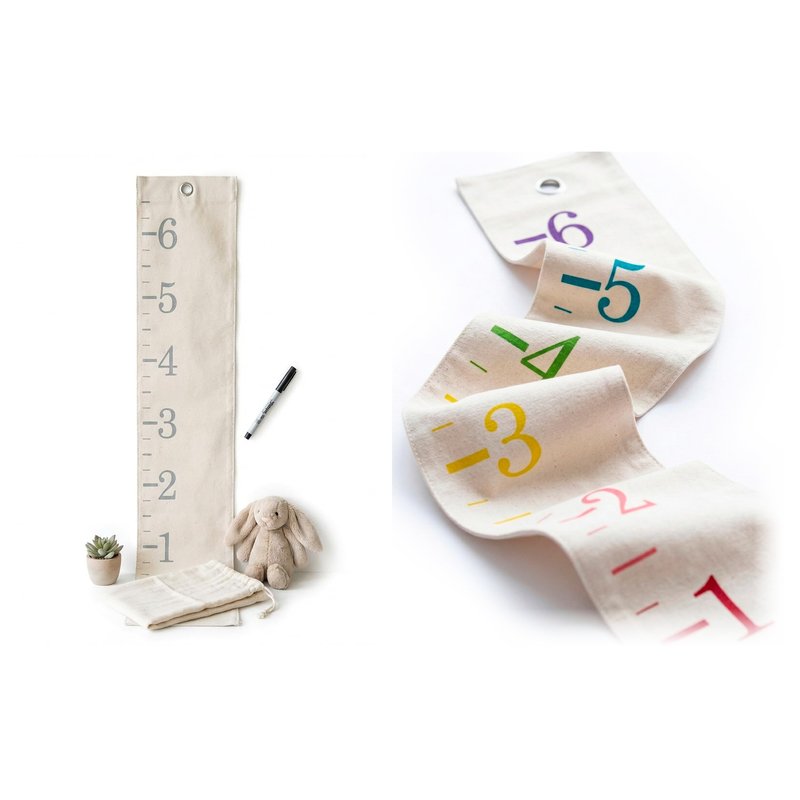
White Loft
For two children: the classic gray chart and the rainbow one, so each has their own Christmas Eve line. As a set it costs 15% less than the two bought separately.
$68.83 on Amazon
See it on AmazonPrices checked October 2026; they can change.
Frequently Asked Questions
What should I put in a Christmas Eve box for a toddler?
Use the “would we use it tonight anyway?” test. Pajamas, a bedtime book, a snack and a warm drink, and one small quiet activity cover almost every family. For a one-year-old, keep it to pajamas, a board book and a soft finger food. For two-year-olds, add a quiet activity like large stickers on paper. For three- and four-year-olds, add a job such as setting the snack plate or preparing a snack for Santa. Anything that will stay in the house as a new object, like a toy or plush, belongs under the tree rather than in the box.
What are good Christmas Eve box ideas for a 1 year old?
Keep it simple and safe. A soft pair of snug-fitting pajamas, one sturdy board book, a cloth book, a soft finger food they already eat, and a cup of their usual drink are plenty. Avoid small parts, loose batteries, long ribbons, and hard or round foods such as whole grapes, nuts or popcorn. A one-year-old will not remember the evening, so the box is really for the routine and the photos you take.
What are good Christmas Eve box ideas for a 2 year old?
Two-year-olds like sequence and repetition, so build a short routine: open the box, put on pajamas, have a snack and warm drink, do one quiet activity, then read the book. Choose pajamas in their true size with an elastic waist and a wide neck so they can help dress. Add a picture book you can reread each year and a small snack. Pick an activity with a natural end, like large stickers on a single sheet of paper. A small flashlight with a screw-closed battery door makes the last walk to bed feel like an event.
How do I keep a Christmas Eve box from becoming more clutter?
Do three things. First, fill it only with things you would use that night anyway, so nothing extra comes into the house. Second, choose one durable container and reuse it every year instead of buying or discarding a new one. Third, store it with your holiday decor and do a fifteen-minute reset each November: empty it, wipe it, check the flashlight, keep the tradition book, and buy only what is missing. A box that has a home and a plan is a tradition prop, not clutter.
Should the items in a Christmas Eve box be wrapped?
For toddlers, I would skip wrapping. Wrapping turns the box into a second round of presents, creates paper to clean up, and sets up a “what did I get” expectation that makes Christmas morning harder. A cloth napkin or just the open box is enough, and any tissue or wrapping is removed before a younger sibling reaches the box. The reveal is the box itself and the evening it starts, not each individual item.
Should I make one box or separate boxes for siblings?
For most families, one shared box with an open, shallow tray or divider for each child works best, with no cloth pouches or drawstrings. It keeps storage to a single container, and it still gives each child a side that is theirs. An adult hands the baby’s items over one at a time. Match the book and activity to the youngest child’s safety needs, and give the older child a helper role such as setting the snack plate or turning pages. Separate boxes make sense only when the children’s evenings are very different, such as a toddler and a much older sibling.
Is a Christmas Eve box or basket better for toddlers?
Either works, as long as it is sturdy, has smooth edges and is something you will keep. A low box with a loose-fitting lid and no hinge or latch protects books and stacks neatly with decor storage. A basket looks beautiful and works as seasonal decor, but line it if the weave could snag small items. A fabric bin is the softest option for a toddler to carry. The bigger question is not the shape but whether you will reuse it every year.
Making the Box a Tradition
A box that holds almost nothing can be the best one: pajamas, a book you reread every year, a plate of sliced fruit and a flashlight for the walk down the hall. Children often start to ask for it by name, and what’s in it matters less than the ritual.
The box doesn’t have to impress anyone. It only has to say: tonight is different, and we’re going to do it together. Fill it with what you’d use anyway, put it back on the shelf in January, and let the next morning have its own turn.