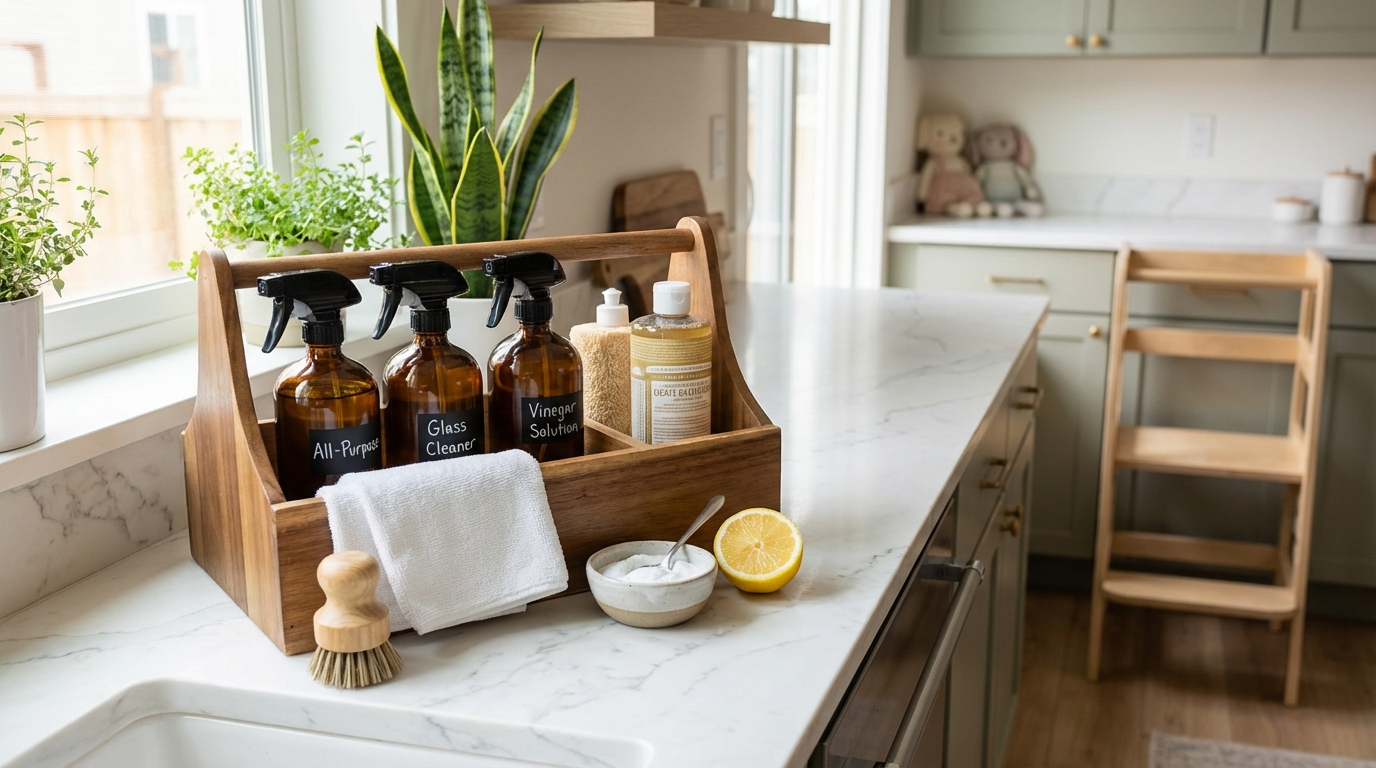
The Eco-Friendly Spring Cleaning Checklist for Families with Little Kids
Discover why eco-friendly spring cleaning is vital for your family, learning how children are more vulnerable to chemical exposure and gaining a safe, effective checklist for your home.
- Understand why children are more vulnerable to cleaning chemical exposure.
- Learn how kids' breathing, hand-to-mouth contact, and skin increase risks.
- Identify common harmful ingredients like quats, fragrances, and bleach.
- Access a safe, eco-friendly spring cleaning checklist for your home.
Once my daughter started crawling, I stopped trusting the cabinet under my sink. Every floor, baseboard and tub edge became something she touched and then tasted.
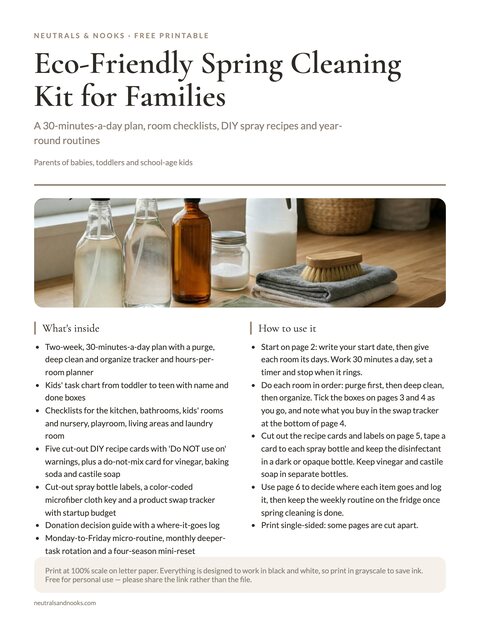
Free printable · 6 pages
Eco-Friendly Spring Cleaning Kit for Families
A 30-minutes-a-day cleaning plan with an hours-per-room tracker and a product swap budget, Purge, Deep Clean and Organize checklists for six room types, a kid task chart by age, a donation decision guide with a where-it-goes log, five DIY cleaner recipe cards with a never-mix note, cut-out bottle labels with a cloth color key, and a weekly and seasonal routine.
Free. Your download link appears right here. You'll also join the Monthly Home Reset. Unsubscribe anytime. Privacy
This page is a room-by-room spring cleaning checklist for homes with babies and little kids. It also covers simple cleaner recipes, what never to mix, chores by age, and a weekly routine. Conventional products used as directed are not a failure. This is what worked in our house.
- The checklist. Six rooms, 8-12 hours total, under “Eco-Friendly Spring Cleaning Checklist by Room.”
- The kit. $50-150, with DIY recipes and a never-mix list.
- Kids helping. Under 6 use plain water only. The chores-by-age table covers the rest.
In this article (8 sections)
- Why Non-Toxic Cleaning Matters More with Babies and Toddlers
- Non-Toxic Cleaning Products and Recipes for Families
- How to Spring Clean: Purge, Deep Clean, Organize
- Eco-Friendly Spring Cleaning Checklist by Room
- Spring Cleaning Chores for Kids by Age
- Where to Donate or Recycle Household Items
- Weekly Eco-Friendly Cleaning Routine for Families
- Frequently Asked Questions
Why Non-Toxic Cleaning Matters More with Babies and Toddlers
Kids’ bodies and habits raise the stakes for cleaning products. They breathe more air per pound of body weight than adults do, and they spend much of the day close to the floor. They also put hands and toys in their mouths constantly, so residue on a surface can end up there too.
Children’s skin is thinner than adult skin. Rinsing the surfaces they lie and play on, airing out the room and choosing fragrance-free products are sensible habits.
Cleaning Ingredients Worth Knowing About
These ingredients are common in conventional cleaners. They are exposure concerns, not diagnoses, and your pediatrician can answer questions about your own child.
| Ingredient | Found In | Concern for Kids |
|---|---|---|
| Quaternary ammonium compounds (quats) | Disinfectant sprays, wipes | Can irritate airways. The asthma link comes mainly from workplace studies. |
| Synthetic fragrance | Most scented cleaners | Can trigger allergies and irritation in sensitive kids. |
| Chlorine bleach (sodium hypochlorite) | Bathroom cleaners, whiteners | Irritates airways. Mixing it with vinegar, ammonia or other cleaners releases toxic gas. |
| Ammonia | Window cleaners, floor cleaners | Irritates airways. Never mix it with bleach. |
One study is worth naming. The CHILD Cohort Study is a Canadian birth-cohort study (Parks and colleagues, CMAJ, 2020). Babies in homes that used cleaning products most often were more likely to have recurrent wheeze or an asthma diagnosis by age 3. That is a link, not proof of cause.
My takeaway is to keep cleaning, but ventilate, rinse the surfaces kids touch and skip heavy fragrance.
Non-Toxic Cleaning Products and Recipes for Families
Safety firstNever mix bleach with vinegar, ammonia or any other cleaner, because it can release toxic gas. Never mix or layer hydrogen peroxide with vinegar either, and never combine soap with vinegar. Ventilate while you clean. Store every product, including homemade ones, labeled and locked or out of reach. Keep kids and pets out of the room until surfaces are dry. If someone swallows or inhales a product, call Poison Control at 1-800-222-1222.
This section covers both store-bought products and DIY recipes. Some people like mixing their own, and some want to grab a bottle and spray. Both can be non-toxic and effective.
The Commercial Products Worth Buying
These are products I’ve used and kept in rotation. Each has a trade-off, so I’ve listed it. You don’t need all five.
| Product | What It Does | Price Range | Why It’s Good |
|---|---|---|---|
| Branch Basics Concentrate | All-purpose (dilutes for every surface) | $49 for starter kit | One concentrate replaces 5+ products. No fragrance, no preservatives. Cleans grease and grime. Lasts 3-6 months depending on household size. Trade-off: the highest upfront price here. |
| Blueland Clean Suite | Tablet-based system (glass, bathroom, multi-surface) | $39 for starter kit | Tablets dissolve in water in reusable bottles, so there is little packaging waste. Good on everyday messes. Trade-off: weaker on heavy grease than Branch Basics. |
| Seventh Generation Dish Soap (Free & Clear) | Dish soap and general degreaser | $4-5/bottle | Easy to find at Target and grocery stores. No fragrance, plant-based surfactants. Works on dishes and as a general soap for DIY mixes. Trade-off: it is one soap, not a full kit. |
| Dr. Bronner’s Pure Castile Soap | Multipurpose soap base | $12-16 for 32 oz | Works for floors, counters, hand soap and laundry pre-treatment. Choose the “Baby Unscented” version for families. Trade-off: it needs diluting, and it can’t be combined with vinegar. |
| Therapy Clean Stainless Steel Cleaner | Stainless steel appliances | $10/bottle | Plant-based and works on fingerprints and smudges. Trade-off: it does one job only. |
A note on “green” marketing: The terms “natural,” “green,” and “eco-friendly” are not regulated on cleaning product labels. A product can say “natural” while containing synthetic fragrances and preservatives. Look for specific certifications: EPA Safer Choice, EWG Verified, or Green Seal. Or just read the full ingredient list — truly non-toxic products are usually transparent about what’s in them.
Non-Toxic DIY Cleaning Recipes
With a few inexpensive supplies you can make simple cleaners that cover most everyday jobs. Keep each one in a clearly labeled bottle, stored locked or out of reach.
| Recipe | Ingredients | Best for | Never use on |
|---|---|---|---|
| All-purpose spray | 1 cup white vinegar, 1 cup water | Counters, tables, sinks, highchair trays (rinse after) | Marble, granite, other natural stone, grout. |
| Glass and mirror cleaner (adults only) | 2 cups water, 2 tbsp vinegar, 2 tbsp 70% rubbing alcohol | Windows, mirrors, glass tabletops | Natural stone, TV and device screens. |
| Soft scrub paste | 1/2 cup baking soda, about 2 tbsp castile soap | Tubs, grout, sinks, stoves | Delicate or polished surfaces (test first). |
| Floor cleaner | 1 gallon hot water, 1 tbsp castile soap | Sealed hard floors | Unsealed wood, waxed floors. |
| Peroxide spot treatment (adults only) | 3% hydrogen peroxide, undiluted, kept in its dark bottle | Spot-treating stains on light, hard surfaces | Colored fabric, or anything wet with vinegar. |
All-Purpose Spray
- 1 cup distilled white vinegar
- 1 cup water
Works on: countertops, tables, appliance exteriors and bathroom sinks. On highchair trays, rinse with plain water after. Do NOT use it on marble, granite or other natural stone, because vinegar etches the surface. The vinegar table below lists every surface to avoid.
If you prefer soap, use castile soap and water instead, never both. This spray cleans but does not disinfect. Kids ages 6-10 may use it only when an adult mixes it and stays nearby.
Glass and Mirror Cleaner (Adults Only)
- 2 cups water
- 2 tablespoons distilled white vinegar
- 2 tablespoons rubbing alcohol (70% isopropyl)
Works on: windows, mirrors, glass tabletops. Streak-free when wiped with a microfiber cloth or newspaper.
Safety firstAn adult mixes and uses the glass cleaner. Rubbing alcohol is flammable and poisonous if swallowed. Keep the bottle away from heat and flames, ventilate, and store it labeled and locked or out of reach. Let the glass dry before kids touch it. For kids, plain water and a microfiber cloth cleans glass well.
Soft Scrub Paste
- 1/2 cup baking soda
- Enough castile soap to make a paste (about 2 tablespoons)
Works on: bathtubs, tile grout, sinks, baked-on stove messes. Apply, let sit 10-15 minutes, scrub with a brush, and rinse well.
Floor Cleaner
- 1 gallon hot water
- 1 tablespoon castile soap
Check your flooring maker’s care guide first, especially for hardwood, laminate and vinyl plank. Not for unsealed wood or waxed floors. Don’t add vinegar to the soap, and keep vinegar off these floors, grout and natural stone.
Peroxide Spot Treatment (Adults Only, Not a Disinfectant)
- 3% hydrogen peroxide, undiluted.
- Its original dark bottle, since peroxide breaks down in light.
Use it to spot-treat stains only, and test a small hidden area first. Rinse any food-contact surface with plain water afterward. Never mix or layer it with vinegar in one bottle or on the same wet surface.
Good to knowPeroxide used this way is a stain treatment, not a disinfectant. For raw meat, toilets and illness, use an EPA-registered disinfectant and follow the label for contact time. Rinse anything kids mouth with plain water afterward and let it air dry.
What about vinegar and baking soda together? Skip the combo. Vinegar is an acid and baking soda is a base, so they largely cancel each other out. The fizz is carbon dioxide, and the liquid left behind cleans worse than either one alone.
Use them separately. Baking soda is for scrubbing. Vinegar is for dissolving mineral deposits and cutting grease.
Where Vinegar Is and Isn’t Safe
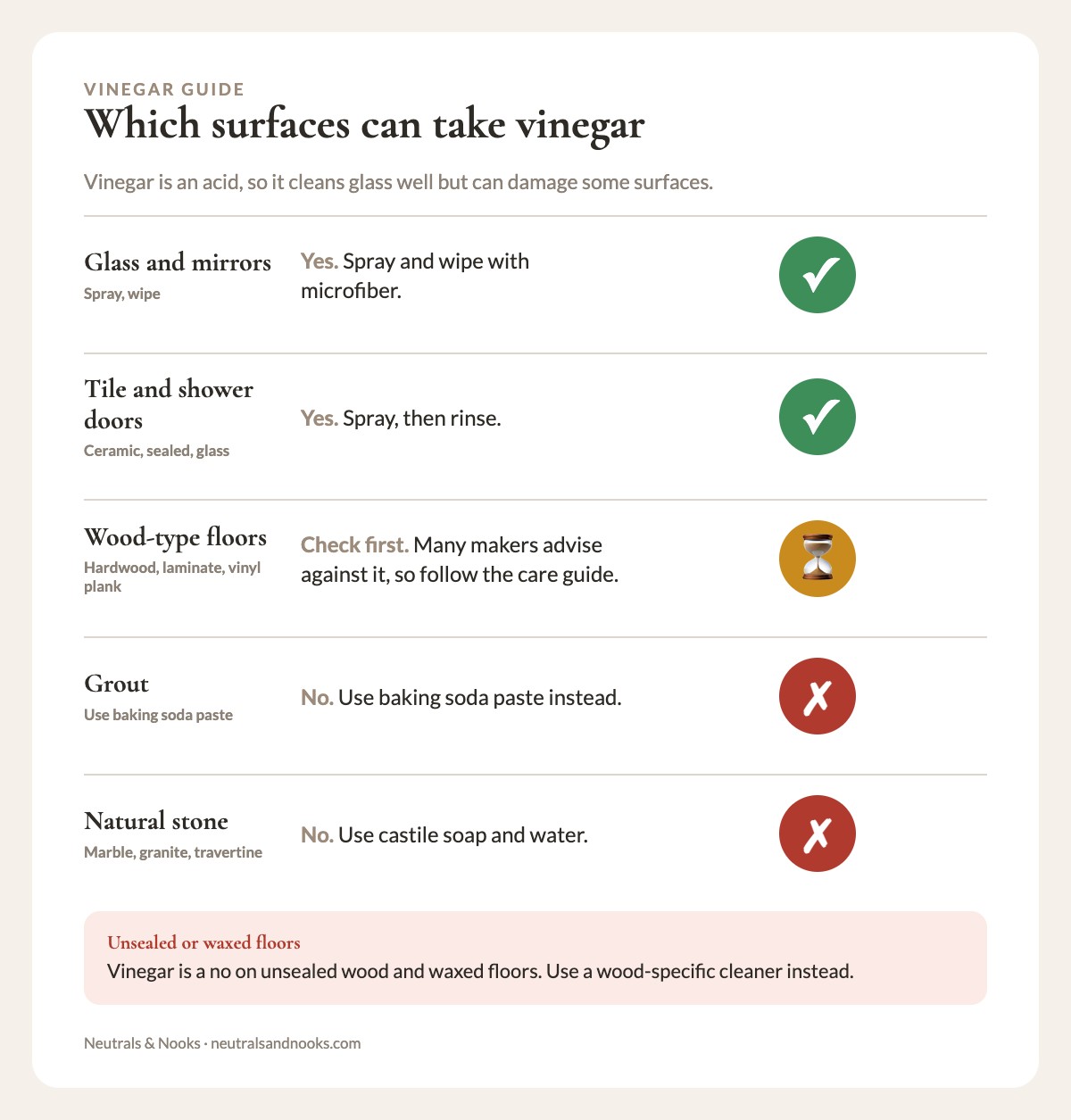
Vinegar comes up all through this checklist, so here is every surface in one place.
| Surface | Vinegar OK? | What to do |
|---|---|---|
| Glass and mirrors | Yes | Spray and wipe with microfiber. |
| Ceramic tile, sealed tile, glass shower doors | Yes | Spray, then rinse. |
| Shower heads | Usually | Check the care instructions first for brass, nickel or plated finishes. |
| Dishwasher | Rarely | It can wear rubber seals. Use a manufacturer-approved cleaner. |
| Hardwood, laminate, vinyl plank | Check first | Many makers advise against it. Follow the flooring care guide. |
| Unsealed wood or waxed floors | No | Use a wood-specific cleaner. |
| Grout | No | Use baking soda paste. |
| Marble, granite, travertine and other natural stone | No | Use castile soap and water. |
The Essential Tools
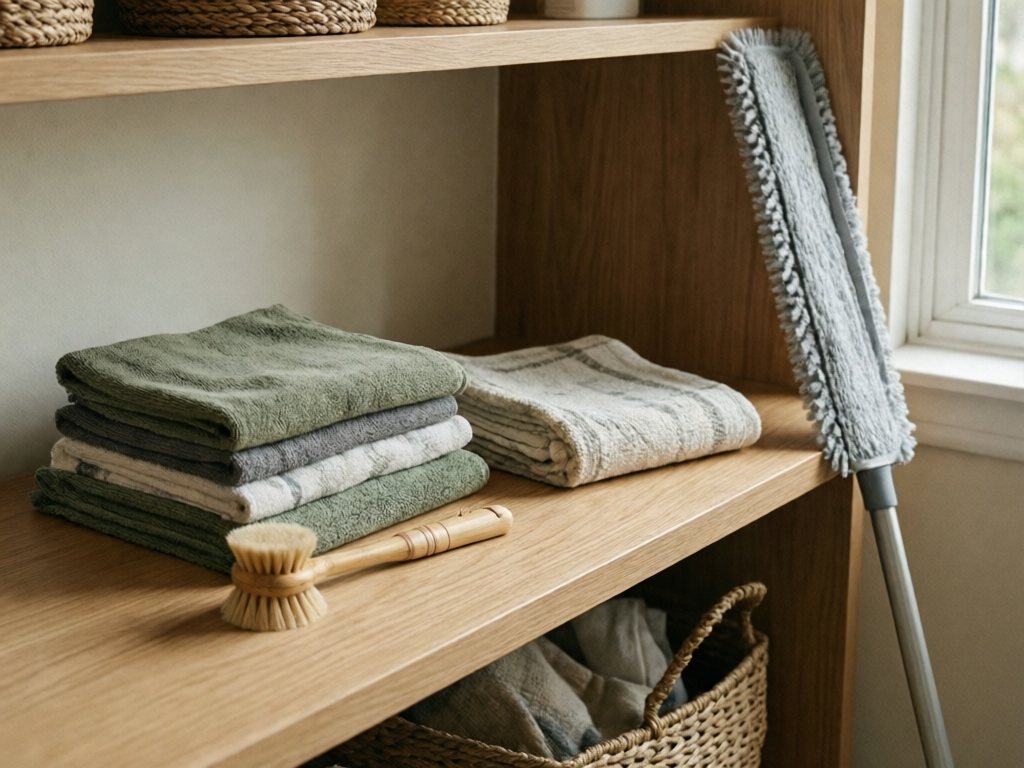
Products are only half the kit. Reusable tools save money and waste over time.
- Microfiber cloths (20-pack, around $15): Replace paper towels for most cleaning tasks. Machine washable hundreds of times. Color-code them: one color for kitchen, one for bathrooms, one for everything else.
- Scrub brushes with replaceable heads: Bamboo-handle brushes ($5-10) with replaceable natural bristle heads. One for dishes, one for bathrooms, one for grout.
- Reusable spray bottles (glass or thick PET): $8-12 for a set. Label them clearly.
- Swedish dishcloths: These compostable cellulose cloths ($10-15 for 10-pack) can replace many rolls of paper towels and can be sanitized in the dishwasher or microwave.
- Reusable mop with washable pads: Skip the disposable Swiffer pads. A microfiber mop ($25-40) with machine-washable pads does the same job without ongoing waste. The O-Cedar ProMist and Turbo Microfiber are both solid options.
- HEPA vacuum: If you’re investing in one tool, make it a vacuum with true HEPA filtration. It traps finer dust than many basic filters.
Approximate startup cost, with prices as of 2026:
- DIY route: about $50. That covers castile soap, pantry staples, spray bottles and a pack of microfiber cloths.
- Commercial route: about $120-150. The five products in the table add up to roughly $115-120, and a pack of cloths brings it into that range. You don’t need all five, and you can buy them gradually.
A mop, brushes and a vacuum are extra. Prices vary by store. Refills cost less, since concentrates and DIY ingredients last for months.
How to Spring Clean: Purge, Deep Clean, Organize
Every room below follows the same three phases, in this order.
- Purge. Remove anything expired, broken, outgrown or unused. If you haven’t used it since last spring, it goes.
- Deep clean. With the clutter out, clean every surface, including the ones you skip each week. Think behind the toilet, inside the oven, under the couch cushions and along the baseboards.
- Organize. Label bins, set zones and give everything a home.
The order matters. Cleaning before purging means cleaning things you then throw away. Organizing before cleaning puts systems on top of dirt.
If you’re looking for a broader home organization starting point, the declutter score quiz can help you identify which rooms need the most attention.
Eco-Friendly Spring Cleaning Checklist by Room
Print the Eco-Friendly Spring Cleaning Kit on this page and tape it to the fridge. Work through it over a weekend plus a few weeknights, or take one room per evening. The times assume one adult working alone.
| Room | Time | Top priority | Kid-safe helper task |
|---|---|---|---|
| Kitchen | 2-3 hours | Fridge and oven | Matching food storage lids. |
| Bathroom (each) | 1-2 hours | Tub, toilet and grout | Sorting worn towels into a rag pile. |
| Kids’ room or nursery (each) | 1.5-2 hours | Bedding and mattress | Putting books back on shelves. |
| Playroom | 1.5-2 hours | Washing toys that get mouthed | Putting toys in bins. |
| Living areas | 1.5-2 hours | Upholstery and dusting | Wiping door handles with a damp cloth. |
| Laundry room | 45 minutes to 1 hour | Lint trap and dryer vent | Matching socks. |
| Total for six rooms | 8-12 hours | One bathroom, one kids’ room | Add 1-2 hours per extra bathroom and 1.5-2 hours per extra kids’ room. |
Kitchen (Estimated Time: 2-3 Hours)
Start the eco-friendly swap in the kitchen. It’s where food is prepared, where kids eat off trays and sometimes off the floor, and where the heaviest cleaning happens.
If you already have a toddler-friendly kitchen setup, spring is the perfect time to reassess whether the zones still make sense as your child grows.
Purge:
- Expired food in the refrigerator. Check the condiment doors.
- Expired spices. Ground spices fade after 1-2 years, whole spices after 3-4.
- Chipped or cracked dishes, cups and containers.
- Food storage lids with no matching container.
- Expired cleaning products under the sink.
- Gadgets you never use.
- Kids’ dishes, cups and utensils they’ve outgrown.
Deep Clean:
Appliances:
- Refrigerator. Remove the shelves and drawers. Wash them with warm water and baking soda paste, then dry and replace them.
- Oven. With the oven off and cool, spread a thick paste of 1/2 cup baking soda and water inside. Avoid heating elements and gas ports. Leave it several hours or overnight, then wipe out every trace before heating. Check the manual first for self-cleaning ovens, and keep kids out of the kitchen while you work.
- Microwave. Heat a microwave-safe bowl of water with lemon slices and a wooden spoon in it for 5 minutes. Let it stand a minute or two, lift it out with oven mitts, then wipe. Keep children away, because the water can scald.
- Dishwasher. Check the manual, then use a manufacturer-approved cleaner. Go easy on vinegar here, since it can wear rubber seals.
- Range hood filter. Soak it for 15 minutes in hot water with 1/4 cup baking soda and a squirt of castile soap. Scrub and rinse.
Surfaces:
- Cabinet fronts, especially around the handles.
- Light switch plates and cabinet handles.
- Inside the trash can. Wash it with warm water and baking soda.
Floors and edges:
- Behind and under the refrigerator. Dusty coils work harder, and crumbs attract pests.
- Baseboards and floor edges, where crawling babies spend their time.
Organize:
- Refresh the family pantry organization system. Rotate stock, update labels and clean shelf liners.
- Reorganize under the sink. Every product, homemade bottles included, gets a label and goes behind a child lock or out of reach.
- Check the highchair and eating zone. Wipe every crevice and replace cracked suction plates or bowls.
Bathrooms (Estimated Time: 1-2 Hours Each)
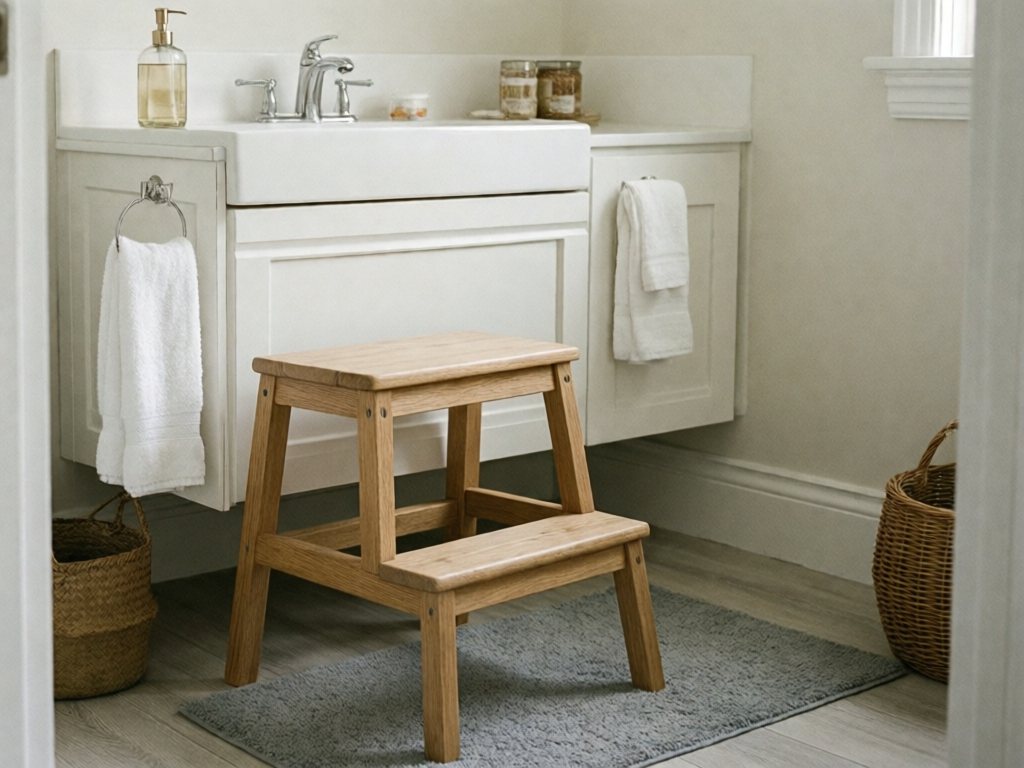
Bathrooms come second for the eco-friendly swap. The products traditionally used here, such as bleach-based toilet cleaners, chemical drain openers and mildew sprays, are some of the harshest in the house.
If you’ve been working on your bathroom counter organization, this deep clean is the perfect time to reassess what’s earning counter space.
Purge:
- Expired medications. Take them to a pharmacy for disposal instead of flushing or trashing them.
- Old sunscreen. Toss anything past its date. With no date, don’t keep a bottle past a year.
- Nearly empty bottles and samples you’ll never use.
- Worn-out towels and washcloths. Turn them into rags or donate them to an animal shelter.
- Bath toys with mold inside. Squeeze each one, and trash it if anything dark comes out.
- Bath products the kids have outgrown.
Deep Clean:
- Toilet. Sprinkle 1/2 cup baking soda into the bowl, scrub with a toilet brush and flush. Don’t add bleach or other toilet cleaners. Wipe the exterior with the all-purpose spray and a dedicated cloth. If someone has been sick, use an EPA-registered disinfectant on its own.
- Shower and tub. Scrub tile and tub with baking soda paste and rinse well. For soap scum on glass or sealed tile, spray vinegar as a separate step and rinse. Keep vinegar off grout and stone.
- Shower head. Fill a plastic bag with white vinegar and rubber-band it around the shower head. Leave it 30-60 minutes to loosen mineral deposits. Check the care instructions first for brass, nickel or plated finishes.
- Grout. Scrub with baking soda paste and an old toothbrush. For mold, follow the label of a mold cleaner. Extensive or recurring mold may need a professional.
- Under-sink cabinet. Empty it, wipe it, check for moisture or mold, and reorganize.
- Exhaust fan cover. Remove it, soak it in warm soapy water, scrub, dry and replace. A dusty fan can’t clear moisture, and trapped moisture leads to mold.
- Baseboards and floor edges.
- Behind the toilet.
Organize:
- Replace conventional products with eco-friendly alternatives.
- Set up a hand-washing station kids can reach, with a step stool and pump soap at their height.
- Check cabinet locks, toilet locks and non-slip mats. Our baby-proofing guide for the whole home covers the rest.
Kids’ Rooms and Nursery (Estimated Time: 1.5-2 Hours Each)
Purge:
- Outgrown clothing. Store or donate it using our guide to seasonal clothing storage for kids.
- Broken toys. Recycle what you can, and check whether the brand has a take-back program.
- Books they’ve outgrown. Donate them to Little Free Libraries, pediatric offices or local shelters.
- Dried-out art supplies.
- Outgrown baby gear such as swings, bouncers and infant tubs.
- Stuffed animals beyond a small favorite collection.
Deep Clean:
- Wash all bedding, including the mattress pad and pillow.
- Vacuum the mattress surface, where dust mites collect.
- Wipe the crib or bed frame with the all-purpose spray, then rinse with plain water.
- Clean inside all drawers and closet shelves.
- Wipe light switches, door handles and other often-touched surfaces.
- Clean windows and windowsills.
- Wash or vacuum curtains and blinds. Loose blind cords are a strangulation hazard, so use cordless blinds or cord cleats.
- Move furniture and vacuum behind it. Anchor dressers to the wall when they go back.
- Wipe baseboards and door frames.
- Wipe light-up toys and electronics with a slightly damp microfiber cloth. Never spray them directly.
Organize:
- Rotate seasonal wardrobes.
- Reorganize the dresser drawers and closet.
- Check whether the toy storage zones still work.
- Set up or refresh a kids’ reading nook.
Playroom (Estimated Time: 1.5-2 Hours)
The playroom gets its own section because the cleaning here is different. You’re washing things that go straight into mouths, and it holds more clutter than any other room.
Purge:
- Broken or incomplete toys, and anything untouched for 3+ months.
- Dried-out markers, broken crayons and used-up paint.
- Puzzle pieces with no matching puzzle.
- Happy Meal toys and party favors.
- Anything you’ve stepped on for weeks that no one has claimed.
Deep Clean:
- Hard plastic toys. Wash them in the sink with warm water and castile soap, rinse well and air dry. Dishwasher-safe toys can go through a cycle.
- Soft toys. Machine wash what you can. Put small stuffed animals in a pillowcase, tie it shut and wash on gentle.
- Play mats and rugs. Vacuum first. Wipe foam mats with the all-purpose spray, then rinse. Fabric rugs may need steam cleaning.
- Shelves, bins and storage units. Empty them, wipe every surface and reload.
- Art table and easel. Scrub paint and marker stains with baking soda paste.
- Walls. Use a melamine sponge on scuffs and crayon. Generic ones are usually cheaper than branded ones.
- Baseboards and corners.
Organize:
- Set up or refresh a toy rotation. Our spring playroom reset and toy rotation guide walks through it.
- Label all bins and shelves. Use picture labels for pre-readers.
- Keep a permanent “donate” box in the playroom.
Living Areas (Estimated Time: 1.5-2 Hours)
Safety firstButton and coin batteries can cause severe internal burns within hours. Tape the terminals, keep them out of reach and recycle them at a drop-off. If one is swallowed, go to the ER and call the National Battery Ingestion Hotline at 800-498-8666. Keep toddlers away from purge piles holding batteries, medications or sharp debris. Use cordless blinds or cord cleats, and anchor TVs and dressers to the wall.
Purge:
- Old magazines, newspapers and catalogs.
- Items that have drifted in from other rooms.
- Dead batteries from the remote drawer. Tape the terminals and recycle them, as the safety note above explains.
- Throw blankets and pillows that are stained or flat.
- DVDs and Blu-rays nobody watches. Donate them.
Deep Clean:
- Vacuum upholstered furniture. Remove the cushions and vacuum underneath and in the crevices. For odors, sprinkle baking soda on the fabric, wait 15 minutes and vacuum it up.
- Spot-clean upholstery stains with castile soap and warm water.
- Dust all surfaces, including door frame tops, ceiling fan blades and bookshelves.
- Clean the TV screen with a dry microfiber cloth. Never spray it.
- Wash throw blankets and decorative pillow covers.
- Clean windows inside, and outside where you can reach safely.
- Vacuum or mop under all furniture.
- Wipe all light switches, outlet covers and door handles.
- Clean air vents and registers. Remove the covers, wash them in the sink and vacuum the vent opening.
Organize:
- Set up a daily reset basket where stray items land before going back to their rooms.
- Refresh the bookshelf. Pull seasonal reads forward and store the winter books.
- Tidy the cords behind the TV, and anchor the TV and furniture to the wall.
Laundry Room (Estimated Time: 45 Minutes – 1 Hour)
The laundry room is the engine of your household, and spring cleaning is the time to service it. If you’ve been meaning to upgrade your laundry room organization, start with this deep clean and then assess what systems need improvement.
Purge:
- Products you no longer use.
- Orphan socks unmatched for three months. They’re rags now.
- Old or clumpy laundry products. Check the label and toss anything that looks or smells off.
Deep Clean:
- Check the washer manual, then run an empty hot cycle with a manufacturer-approved washer cleaner.
- Clean the rubber gasket on a front-loader. Pull it back and wipe, since mold often hides there.
- Clean the lint trap and the dryer vent hose, because lint buildup is a fire risk. First unplug the dryer, and shut off the gas valve if it’s a gas model.
- Wipe the exterior and top of both machines.
- Clean the laundry sink.
- Sweep and mop the floor, including behind the machines.
Organize:
- Restock eco-friendly laundry supplies.
- Set up a stain station with a spray bottle, a stain bar and a small soaking bucket.
- Check your sorting system. If clothes pile up unsorted, change it.
Spring Cleaning Chores for Kids by Age
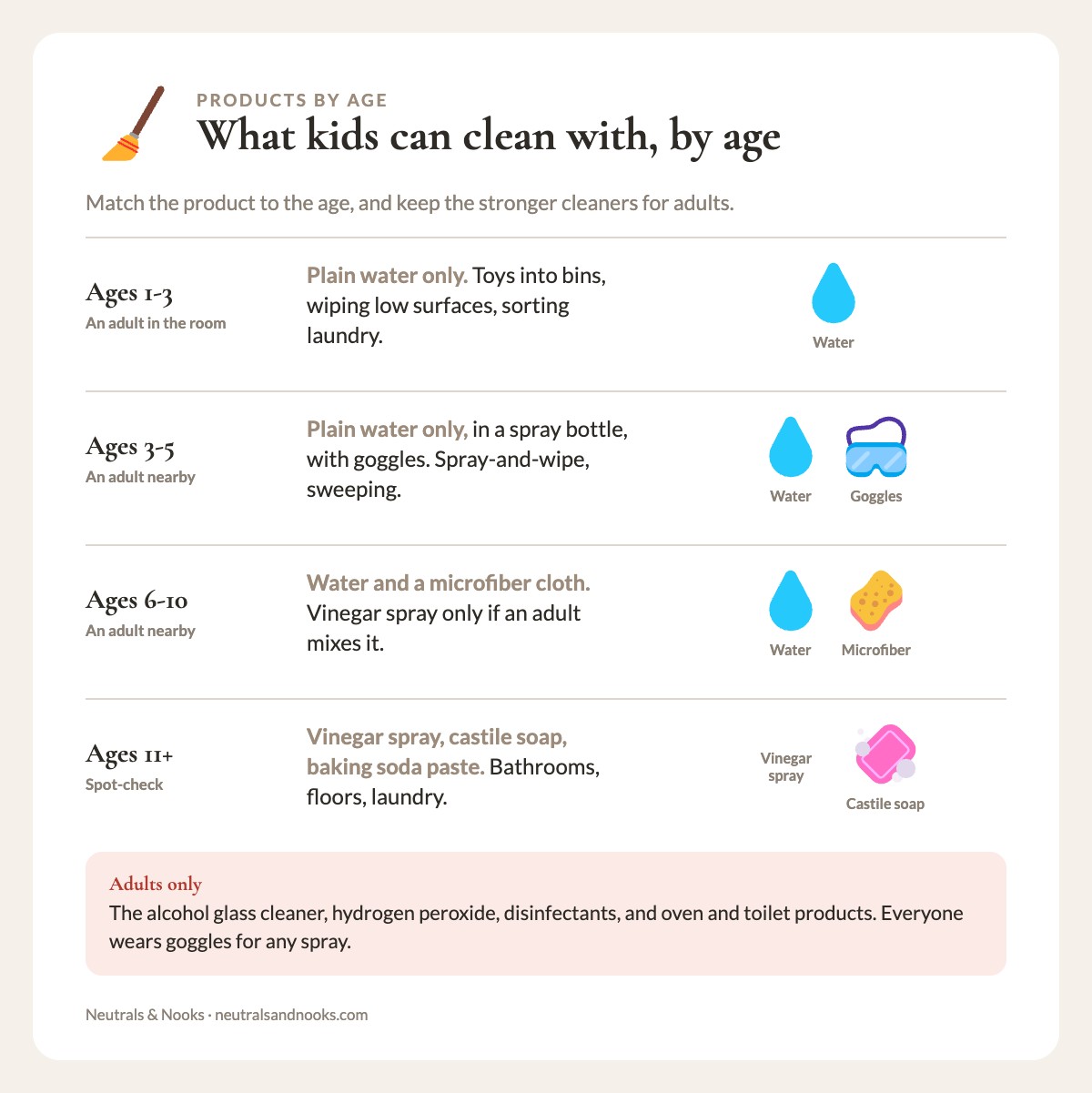
Kids can and should participate in spring cleaning. It teaches responsibility, builds life skills, and — let’s be practical — you need the help. Match the task to the developmental stage. That way it’s useful, not something you redo after they “helped.”
For a deeper dive on assigning cleaning tasks by age, we have a full guide on spring cleaning tasks kids can actually do.
Safety firstUnder 6: plain water only. Ages 6-10: water and a microfiber cloth, plus the vinegar all-purpose spray only when an adult mixes it and stays nearby. Ages 11 and up: the vinegar spray, castile soap and baking soda paste. Adults only: the alcohol glass cleaner, hydrogen peroxide, disinfectants, and oven and toilet products. Everyone wears goggles for any spray. Keep toddlers out of a room until surfaces are dry.
| Age | Safe tasks | Products allowed | Supervision |
|---|---|---|---|
| 1-3 | Toys into bins, wiping low surfaces, sorting laundry | Plain water only | An adult in the room. |
| 3-5 | Spray-and-wipe, sorting piles, sweeping, books on shelves | Plain water only, in a spray bottle, with goggles | An adult nearby. |
| 6-10 | Vacuuming, mirrors, bathroom sinks, own closet | Water and a microfiber cloth; the vinegar all-purpose spray if an adult mixes it | An adult nearby for the vinegar spray. |
| 11+ | Bathrooms, appliances, floors, laundry | Vinegar spray, castile soap, baking soda paste | Spot-check. Adults handle the alcohol cleaner, peroxide, disinfectants, and oven and toilet products. |
Toddlers (Ages 1-3)
At this age, “helping” is about participation and habit formation, not productivity. They’re learning that cleaning is a normal part of life.
- Putting toys in bins. Point to the bin, hand over a toy and celebrate when it lands close.
- Wiping low surfaces. Give them a microfiber cloth dampened with plain water.
- “Dusting” baseboards. A dry cloth is all they need.
- Sorting laundry by color. Make it a game: “Find all the blue things!”
- Throwing things in the trash. Stay close, because they will toss things you want to keep.
Preschoolers (Ages 3-5)
They can follow simple two-step instructions and take pride in visible results.
- Spraying and wiping. Fill a spray bottle with plain water only and have them wear goggles.
- Sorting into “keep,” “donate” and “trash” piles. Guide them through it.
- Matching socks.
- Putting books back on shelves.
- Wiping door handles and light switches. Give them a cloth dampened with plain water and a route.
- Sweeping with a child-sized broom. Use a real one, not a toy. The Melissa & Doug set is decent, but any kid-sized broom works.
School-Age Kids (Ages 6-10)
Real contribution starts here. They can complete tasks independently with clear instructions.
- Vacuuming a room. Supervise the younger ones.
- Cleaning mirrors and windows. They use water and a microfiber cloth. The alcohol glass cleaner stays with an adult.
- Emptying trash cans.
- Wiping bathroom sinks and counters. Water and a cloth work. The vinegar spray is fine if an adult mixes it and stays nearby.
- Organizing their own closet and drawers. Walk them through what to purge.
- Helping sort the donation pile.
- Mopping with a lightweight mop. A damp mop and plain water is enough.
- Making their own bed with fresh sheets. Most kids can manage this by age 7 or 8.
Tweens and Teens (Ages 11+)
They can handle most adult-level tasks with the gentler cleaners. Spring cleaning is a good time to give them ownership of a room or zone.
- Full bathroom cleaning. They use baking soda, castile soap and the vinegar spray. Disinfectants and toilet products stay with an adult.
- Kitchen appliance cleaning. The fridge and counter appliances are theirs. The oven and microwave are done with an adult.
- Vacuuming and mopping entire floors.
- Washing windows. Water or the vinegar spray works. The alcohol glass cleaner stays with an adult.
- Yard cleanup. Raking, sweeping the porch and cleaning outdoor furniture.
- Organizing shared spaces. Garage, mudroom and closets.
- Running laundry loads. From start to put-away.
A note on motivation: Don’t rely solely on “because I said so.” Connect the work to outcomes they care about. “Once the playroom is done, we’ll set it up for your friend’s visit on Saturday.” “After the garage is cleaned out, there’s room for your bike repair station.” External motivation is fine. This is true for adults too — I spring clean because I want to sit on my porch in the evening without looking at a chaotic house through the window.
Where to Donate or Recycle Household Items
The purge phase generates a lot of stuff. Where it goes matters — both for the environment and for your conscience. Dumping everything in a trash bag and hauling it to the curb defeats the eco-friendly purpose.
The Decluttering Decision Tree
For each item leaving your house, run it through this hierarchy:
- Can it be reused by someone else? Donate to shelters, thrift stores, buy-nothing groups, or friends.
- Can it be recycled? Check your municipality’s accepted materials (it varies more than you’d think).
- Can it be composted? Natural fiber textiles (cotton, wool, linen) that are too worn to donate can be composted if they’re free of synthetic blends.
- Does it need special disposal? Electronics, batteries, paint, medications, and fluorescent bulbs all require specific drop-off locations.
- Trash as a last resort.
Where to Donate (and Where NOT To)
| Item Type | Best Donation Option | Avoid |
|---|---|---|
| Kids’ clothing (good condition) | Local consignment shops, Once Upon a Child, Buy Nothing groups, women’s shelters | Dumping unsorted bags at a thrift store. |
| Toys (working, complete) | Local shelters, children’s hospitals, church toy drives | Donating broken or battery-dead toys. |
| Books | Little Free Libraries, pediatric offices, school libraries, local literacy programs | Unmarked donation bins. Check who runs them first. |
| Baby gear (not car seats) | Buy Nothing groups, crisis nurseries, Salvation Army | Gear that is broken or missing parts. |
| Electronics | Best Buy drop-off, municipal e-waste events | Regular trash. |
| Car seats | Retailer trade-in events when they’re running (check first) and manufacturer recycling programs. A seat that is unexpired, never crashed and complete can go to someone you know. | Using or passing on a seat that is expired, crashed or missing parts. |
| Textiles too worn to donate | Textile recycling bins, retailer garment-collection programs, composting (natural fibers only) | Regular trash, when a recycling option is nearby. |
The One-In, One-Out Rule for Maintaining Declutter
After the spring purge, adopt this ongoing practice: for every new item that enters the house, one item of similar type leaves. New toy? One toy gets donated. New outfit? One gets stored or passed along. This prevents the re-accumulation that makes next spring’s purge just as overwhelming as this one.
Weekly Eco-Friendly Cleaning Routine for Families
Spring cleaning is the reset. But the real win is maintaining it so next spring’s deep clean is a refresh, not a rescue mission.
The Weekly Micro-Routine (About an Hour, Spread Across the Week)
Do one short job a day instead of one marathon session.
Monday: Kitchen Reset
- Wipe all counters and appliance fronts (5 min).
- Scan the fridge. Move older items forward and toss anything past its prime (5 min).
Tuesday: Bathroom Wipe-Down
- Wipe sinks and counters with the all-purpose spray, and clean toilets with a separate cloth (10 min for 2 bathrooms). The spray cleans but doesn’t disinfect, so use an EPA-registered product on toilets during illness.
Wednesday: Floors
- Vacuum main living areas and kids’ rooms (15 min).
- Spot-mop any sticky or dirty areas (5 min).
Thursday: Surfaces and Dust
- Dust main living area surfaces (10 min).
- Wipe light switches and door handles throughout the house (5 min).
Friday: Catch-Up and Laundry Reset
- Catch up on anything missed during the week.
- Wash the week’s kitchen towels, rags and microfiber cloths.
Weekend: One Deeper Task
- Rotate through deeper tasks on a monthly schedule: inside the fridge (week 1), oven (week 2), windows (week 3), baseboards (week 4). This means every area gets a deep touch once a month, which prevents the annual spring clean from being a multi-day crisis.
The Seasonal Swap Checklist
At the start of each season, do a 30-minute mini-reset:
- Shift the focus. Winter is salt and boot residue. Spring is allergens and pollen. Summer is sunscreen and outdoor dirt. Fall is mud and leaves.
- Restock supplies. Refill the DIY spray bottles and reorder anything running low.
- Inspect the house. In spring, check damp areas for moisture and mold, look at window seals and replace the HVAC filter.
- Adjust the routine. Summer may mean more outdoor cleaning and less dusting. Winter means more boot-tray duty.
Dealing with the Imperfect Reality
Your house will not stay spring-clean-level clean with kids and pets in it, and it doesn’t need to. Aim for a baseline you can restore with a 15-minute evening reset on a messy day.
Frequently Asked Questions
Are eco-friendly cleaning products really as effective as conventional ones?
For everyday cleaning of countertops, floors, bathrooms and kitchen surfaces, yes. Branch Basics, Blueland, and DIY vinegar sprays or castile soap solutions handle daily grime and grease.
They fall short in a few cases. Extensive or recurring mold needs proper remediation or a professional. Disinfecting during illness needs an EPA-registered disinfectant. Baked-on oven grease takes the overnight baking soda paste and some scrubbing.
Is vinegar safe on all surfaces?
No. Vinegar is acidic and will damage natural stone (marble, granite, travertine), unsealed wood, waxed surfaces, and some metal finishes (particularly iron and aluminum). For stone countertops, use castile soap and water instead. Many hardwood, laminate and vinyl plank makers also advise against vinegar, so check your flooring care guide, and keep it off grout. For natural wood, use a wood-specific cleaner or a very diluted castile soap solution. Vinegar works well on glass and ceramic tile.
How do I disinfect without bleach during cold and flu season?
Use an EPA-registered disinfectant and follow the label for contact time. Some are hydrogen-peroxide-based and some are thymol-based, so you don’t need bleach. The 3% peroxide spot treatment in this guide is for stains and doesn’t count.
Wipe doorknobs, light switches and faucet handles as the label directs. Rinse toys and highchair trays with plain water afterward and let them air dry. Never spray disinfectant on toys that go in mouths.
My partner thinks eco-friendly products are a waste of money. How do I make the case?
Run the numbers. One Branch Basics concentrate dilutes into all-purpose, bathroom and glass cleaner, plus floor cleaner and hand soap, so it replaces several separate products.
The DIY route is cheaper still, since vinegar, baking soda and castile soap are inexpensive staples that last for months. Eco-friendly cleaning is often cheaper per use than conventional products.
If the cost argument doesn’t land, try the health angle. Little kids spend their days on the floor and put everything in their mouths, so fewer harsh and fragranced products is an easy swap.
How long does spring cleaning actually take if I’m doing it all?
Plan on 8-12 hours for six rooms: kitchen, one bathroom, one kids’ room, playroom, living area and laundry room. Add 1-2 hours for each extra bathroom and 1.5-2 hours for each extra kids’ room.
That’s not meant to happen in one day. A full weekend plus 2-3 weeknight sessions gets most homes through it. A partner sharing the work cuts the clock time roughly in half. Kids helping adds supervision time, so don’t expect them to shorten the job.
What about essential oils — are they safe around babies and toddlers?
Skip them. Essential oils are concentrated plant compounds, and some are harmful to young children and toxic to dogs and cats, especially tea tree. That’s why none of the recipes here include them.
If you still want a scent in a home with kids under 6 or pets, ask your pediatrician and vet first, keep the bottles locked away, and call Poison Control at 1-800-222-1222 if anything is swallowed. If your child has respiratory sensitivities or eczema, stay with unscented formulations.
Can I spring clean if I only have 30 minutes a day?
Yes. Thirty minutes a day gets a six-room home done in about three weeks, which fits the 8-12 hour total. Here is a three-week plan:
- Days 1-5: kitchen. Purge, deep clean, then organize.
- Days 6-8: bathroom.
- Days 9-11: kids’ room.
- Days 12-14: playroom.
- Days 15-17: living areas.
- Days 18-19: laundry room.
- Days 20-21: catch-up on anything skipped.
Set a timer and stop when it rings.
What household cleaners should never be mixed?
Never mix bleach with vinegar, ammonia or other cleaners, because it can release toxic gas. Never mix or layer hydrogen peroxide with vinegar, since the two make peracetic acid, an irritant. Don’t combine soap with vinegar either, because they cancel each other out.
Use one product at a time, rinse and dry between products, and ventilate the room. For baby-safe cleaning, plain water, castile soap and fragrance-free products are the simplest choices.